FROM NASSAU TO MANHATTAN: THE FALL OF FTX

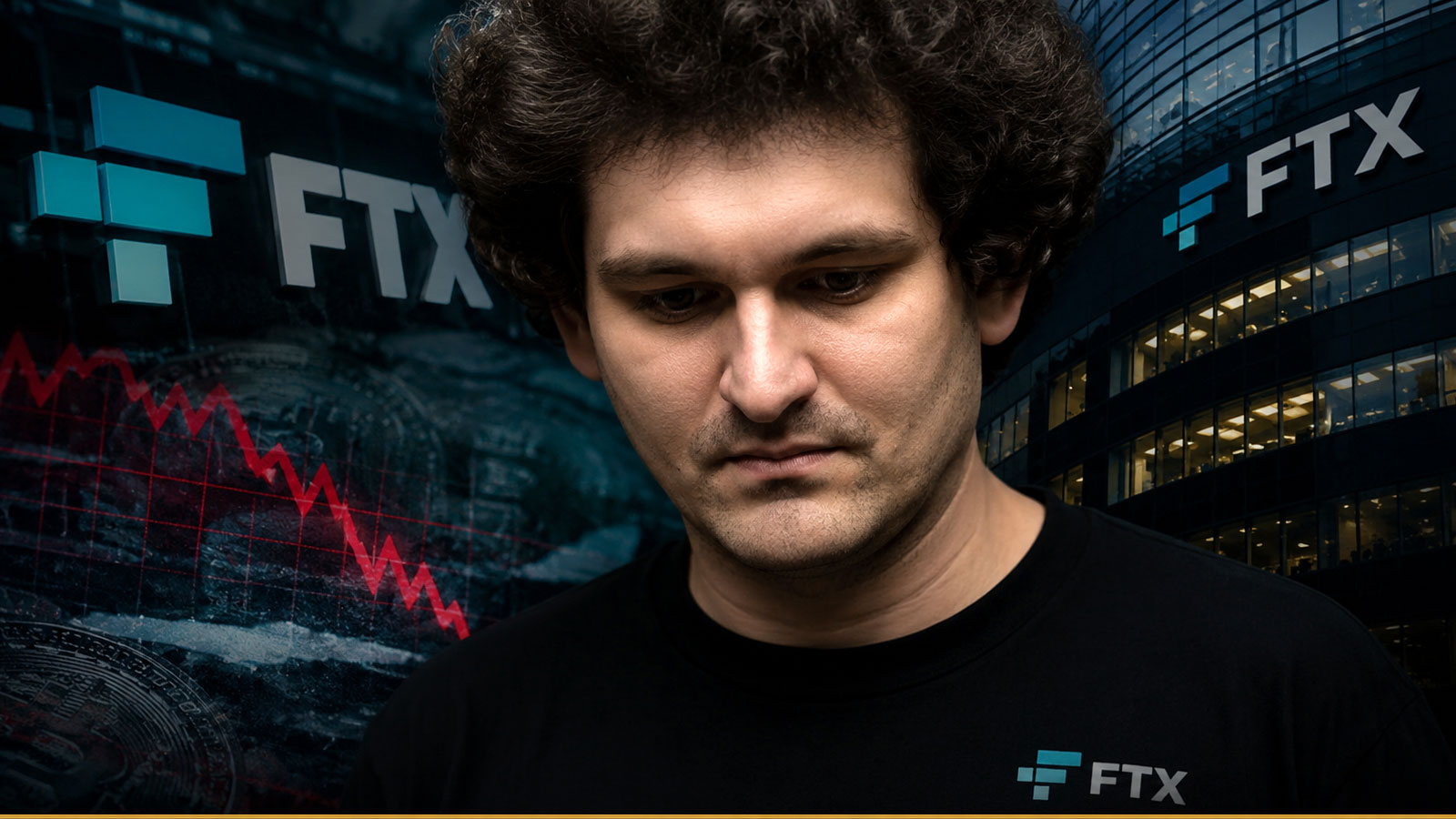
- On 22 December 2022, Samuel Bankman-Fried, founder and former chief executive of cryptocurrency exchange FTX, arrived in the United States following extradition from The Bahamas.
- The criminal investigation transformed FTX from a corporate collapse into one of the most consequential alleged financial frauds of the digital-asset era.
- Regulators alleged that behind that representation existed something fundamentally different.
- FTX’s exposure to Alameda’s substantial holdings of illiquid and affiliated assets, including FTX-linked tokens.
- The Commodity Futures Trading Commission went further, alleging conduct that resulted in losses exceeding $8 billion in FTX customer deposits.
EXECUTIVE FINDING
On 22 December 2022, Samuel Bankman-Fried, founder and former chief executive of cryptocurrency exchange FTX, arrived in the United States following extradition from The Bahamas.
Hours earlier, U.S. prosecutors revealed that two of his closest former associates — Caroline Ellison, former chief executive of Alameda Research, and Gary Wang, FTX co-founder and former chief technology officer — had already pleaded guilty to federal offences arising from the collapse and were cooperating with investigators.
The criminal investigation transformed FTX from a corporate collapse into one of the most consequential alleged financial frauds of the digital-asset era.
According to the U.S. Securities and Exchange Commission, Bankman-Fried had raised more than $1.8 billion from FTX equity investors, including approximately $1.1 billion from roughly 90 U.S.-based investors, while presenting FTX as a sophisticated and responsible cryptocurrency platform equipped with advanced risk controls.
Regulators alleged that behind that representation existed something fundamentally different.
The SEC accused Bankman-Fried of concealing:
- the diversion of FTX customer assets to Alameda Research
- special privileges granted to Alameda on the FTX platform
- and
FTX’s exposure to Alameda’s substantial holdings of illiquid and affiliated assets, including FTX-linked tokens.
The Commodity Futures Trading Commission went further, alleging conduct that resulted in losses exceeding $8 billion in FTX customer deposits.
But the story of FTX is larger than the alleged actions of a single founder.
FTX illustrates how a financial business can appear sophisticated because its legal structure is sophisticated.
It demonstrates the difference between:
corporate complexity
and
corporate control.
It shows how an exchange headquartered in one jurisdiction, serving customers across many others, linked to an affiliated trading company and operating through numerous legal entities can create a regulatory environment in which everyone sees a piece of the organisation while potentially no single authority sees the whole.
And it raises the central question of this dossier:
WHEN A FINANCIAL COMPANY IS GLOBAL BY DESIGN, WHO IS RESPONSIBLE FOR SEEING THE ENTIRE BALANCE SHEET?
THE FINDING
FTX marketed itself as a modern alternative to traditional finance.
Its appeal depended upon several ideas:
- technology could make markets more efficient
- automated risk systems could control leverage
- digital assets could move without the friction of traditional banking
and a new generation of entrepreneurs could build financial infrastructure faster than incumbent institutions.
But financial history repeatedly demonstrates that new technology does not eliminate old risks.
It can simply accelerate them.
Those risks include:
- related-party transactions
- commingling of assets
- weak segregation of customer funds
- concentrated control
- illiquid collateral
- conflicts of interest
- insufficient board oversight
- poor treasury controls
and inadequate independent verification.
The SEC alleged that FTX’s public presentation of sophisticated controls concealed a fundamentally different internal reality. According to the agency, customer assets were diverted to Alameda, Alameda enjoyed undisclosed preferential treatment, and FTX was materially exposed to assets whose value depended partly upon the FTX ecosystem itself.
For Kleptik, the central lesson is simple:
Technology does not replace governance.
An exchange can execute trades in milliseconds.
Its control failures can still be centuries old.
THE PEOPLE
SAMUEL BANKMAN-FRIED
Position: Co-founder and former CEO of FTX.
Bankman-Fried became one of the most recognisable figures in cryptocurrency.
He presented himself publicly as an advocate of regulation, institutionalisation of crypto markets and responsible growth.
That public identity matters because reputation functioned as an economic asset.
Investors were not simply investing in software.
They were investing in confidence.
The SEC alleged that Bankman-Fried raised more than $1.8 billion from equity investors while portraying FTX as safe and responsibly managed.
On 13 December 2022, U.S. authorities unsealed criminal charges against him.
The federal indictment included allegations involving:
- wire fraud
- commodities fraud
- securities fraud
- money laundering
and campaign-finance offences.
On 22 December, following proceedings in The Bahamas, he was extradited to the United States.
As of the archive date, the charges against Bankman-Fried remained allegations and had not been adjudicated at trial.
CAROLINE ELLISON
Position: Former CEO of Alameda Research.
Ellison’s role is central because Alameda sat at the core of the alleged flow of customer assets.
The CFTC charged Ellison in an amended complaint filed on 21 December 2022.
The agency alleged that she participated in the fraudulent scheme and that Alameda used customer funds in trading activity.
By the time Bankman-Fried was extradited, Ellison had pleaded guilty in federal court and agreed to cooperate with U.S. prosecutors.
GARY WANG
Position: FTX co-founder and former Chief Technology Officer.
Wang’s alleged role highlights another dimension of modern financial crime:
code can become an internal-control mechanism.
Or an internal-control bypass.
The CFTC alleged that Alameda received special privileges programmed into the FTX system, including exemption from ordinary auto-liquidation functions.
The SEC separately alleged that Wang helped create software functionality permitting customer assets to be diverted to Alameda.
Wang pleaded guilty and agreed to cooperate with authorities.
FTX AND ALAMEDA
To understand the collapse, one must understand the relationship between two entities.
FTX was the exchange.
Alameda Research was the trading firm.
The distinction should have mattered.
An exchange operates a marketplace.
A proprietary trading company participates in markets for its own benefit.
When the same controlling individuals influence both, conflicts become obvious.
The traditional financial system recognises similar risks.
A securities exchange should not secretly operate as the preferred financier of one participant.
A broker should not quietly grant one affiliated trading firm protections unavailable to ordinary customers.
A custodian should not make customer assets available to a related speculative business without clear legal authority and disclosure.
The CFTC alleged that Alameda received special treatment on FTX, including an exemption from the exchange’s normal automated liquidation system.
That is important because risk systems exist precisely to stop losses from expanding indefinitely.
If one participant cannot be liquidated under circumstances in which every other participant can be, the platform no longer operates under one common risk framework.
It operates under two.
THE RELATED-PARTY PROBLEM
Related-party transactions are not inherently improper.
Corporate groups transact internally every day.
But related-party relationships require stronger controls because the parties may not negotiate at arm’s length.
Consider:
↓
Trading Firm C borrows assets ultimately sourced from Exchange B customers.
The commercial conflict becomes obvious.
- Who protects Exchange B?
- Who represents its customers?
- Who determines the borrowing limit?
- Who values the collateral?
- Who decides when the position must be liquidated?
- Who ensures the transaction is commercially fair?
If all of those questions ultimately lead back to the same small group of executives, legal separateness may exist without meaningful economic independence.
THE ALLEGED CUSTOMER-FUND FLOW
The core allegations can be represented simply:
The most important word is:
LIQUIDITY
A financial institution can appear wealthy while being unable to return customer assets.
Assets and liquidity are not the same thing.
A company may own investments theoretically worth billions.
If those investments cannot be sold quickly at approximately their stated value, they may be useless when customers demand immediate withdrawals.
THE LIQUIDITY ILLUSION
Crypto markets created a particularly dangerous form of balance-sheet circularity.
An exchange can issue or support an affiliated token.
That token trades in a market.
The market price creates a valuation.
The token then appears as an asset on an affiliated company’s balance sheet.
That asset can potentially support borrowing.
But this creates a fundamental question:
Would the asset still be worth the stated amount if a large holder actually attempted to sell it?
If the market is thin, concentrated or dependent upon confidence in the issuer, the answer may be no.
The SEC specifically alleged that FTX investors were not adequately informed of risk arising from Alameda’s substantial holdings of overvalued and illiquid assets, including FTX-affiliated tokens.
This produces a classic circularity:
When confidence breaks, the loop reverses.
THE TOKEN COLLATERAL PROBLEM
Suppose a company owns:
100 million units of a token.
The last traded price is:
$20.
Its accounting or market value may appear to be:
$2 billion.
But if only a small fraction of the token trades freely, attempting to sell the entire position could collapse the price.
The actual liquidation value might be dramatically lower.
Financial investigators therefore need three valuations:
MARK-TO-MARKET VALUE
Last traded price × quantity.
REALISABLE VALUE
Estimated proceeds if the asset were actually sold.
DISTRESS VALUE
Estimated proceeds during a forced sale.
In a liquidity crisis, the third number becomes the relevant one.
THE RISK ENGINE
FTX repeatedly emphasised technology and automated risk management.
That makes the allegations concerning Alameda’s treatment particularly significant.
The CFTC alleged that Alameda was exempt from FTX’s ordinary auto-liquidation system.
Under normal conditions, customers whose leveraged positions fell below required margin levels could be automatically liquidated.
According to the CFTC, Alameda could not be liquidated in the same way because an exception had been hard-coded into the system.
This changes the interpretation of “automated control.”
A control is only as independent as the people who can override it.
The relevant Kleptik test becomes:
- Who can alter the code?
- Who approves exceptions?
- Who reviews them?
- Who audits privileged accounts?
- Can one executive override limits?
- Are special permissions logged?
- Does the board understand them?
- Does the regulator know they exist?
Technology can automate governance.
It can also automate preferential treatment.
THE $8 BILLION QUESTION
The CFTC alleged that the conduct at issue resulted in losses exceeding $8 billion in FTX customer deposits.
That number immediately creates a forensic problem:
WHERE DID THE MONEY GO?
A complete reconstruction requires categorising every significant outflow.
Potential categories identified in regulatory allegations included:
- Alameda trading activity
- venture investments
- real estate
- political contributions
- operational expenditure
- corporate acquisitions
- loans
and transfers among affiliated entities.
But investigators should never treat a single aggregate number as the money trail.
The proper approach is transaction-level reconstruction.
FOLLOW THE MONEY
Kleptik should create a forensic ledger divided into five stages.
STAGE 1 — CUSTOMER DEPOSITS
- What did customers transfer?
- Fiat currency?
- Bitcoin?
- Ether?
- Stablecoins?
- Other tokens?
- Into which accounts or wallets?
STAGE 2 — INITIAL CUSTODY
- Which legal entity received the asset?
- Was the account titled to FTX?
- Alameda?
- A payment processor?
- Another affiliate?
- What did the customer agreement say?
STAGE 3 — INTERNAL TRANSFER
Were funds transferred between FTX and Alameda?
On what contractual basis?
Was the transaction recorded as:
- loan
- receivable
- margin balance
- intercompany transfer
or something else?
STAGE 4 — EXTERNAL DEPLOYMENT
- Where did the asset go?
- Trading counterparties?
- Venture investments?
- Property?
- Political contributions?
- Loans?
- Corporate acquisitions?
STAGE 5 — RECOVERY
- What remained recoverable?
- Cash?
- Crypto?
- Equity investments?
- Property?
- Claims against insiders?
- Claims against counterparties?
The difference between Stage 1 and Stage 5 is the real economic loss.
CORPORATE GEOGRAPHY
FTX’s legal geography is central to the investigation.
The exchange was internationally oriented.
The SEC described FTX as based in The Bahamas.
But its customers, investors, employees, executives, counterparties and affiliates crossed multiple jurisdictions.
This creates the corporate geography problem.
A multinational financial group may divide itself by:
- product
- customer location
- regulatory licence
- tax domicile
- intellectual property
- employment
- treasury
- technology
and ownership.
For investigators, legal entities can obscure the economic whole.
THE KLEPTIK ENTITY MAP
Every entity in the FTX group should be classified by:
- LEGAL NAME
- JURISDICTION
- REGULATOR
- SHAREHOLDER
- DIRECTORS
- BANK ACCOUNTS
- CUSTOMER CONTRACTS
- ASSETS
- LIABILITIES
- RELATED-PARTY BALANCES
- EMPLOYEES
- INTELLECTUAL PROPERTY
- LICENCES
Only then can investigators answer:
- Which company actually owed customers money?
- Which company held their assets?
- Which company transferred them?
- Which company controlled the platform?
- Which regulator saw which part?
THE BAHAMAS
FTX’s location in The Bahamas became one of the defining characteristics of the collapse.
But this requires careful analysis.
The fact that a company operates from an offshore financial jurisdiction does not itself imply wrongdoing.
The correct question is:
WHY DID THE COMPANY CHOOSE THAT JURISDICTION?
Potential legitimate factors can include:
- digital-asset legislation
- licensing environment
- taxation
- work permits
- physical proximity to the United States
- regulatory specialisation
- quality of life
- capital requirements
and governmental support for a developing industry.
A serious investigation should distinguish jurisdiction selection from jurisdiction shopping.
The first is ordinary business.
The second occurs when companies deliberately distribute activities so that no regulator receives a complete view of the risks.
REGULATORY FRAGMENTATION
A financial regulator generally supervises:
a specific legal entity;
performing a specific regulated activity;
within a defined jurisdiction.
A crypto group can operate across many boundaries simultaneously.
For example:
Exchange entity — Jurisdiction A.
Trading firm — Jurisdiction B.
Customers — Jurisdictions C through Z.
Bank account — Jurisdiction D.
Stablecoin issuer — Jurisdiction E.
Founders — Jurisdiction F.
Technology company — Jurisdiction G.
Holding company — Jurisdiction H.
This creates a problem:
Each regulator may understand its own box.
Who understands the arrows between the boxes?
That is where systemic risk hides.
THE EXTRADITION
Bankman-Fried’s extradition on 22 December 2022 demonstrates that corporate geography does not necessarily protect individual executives from criminal jurisdiction.
He was arrested in The Bahamas after U.S. charges were filed and subsequently transferred to the United States.
The process illustrates a critical principle of international financial enforcement.
A company can operate globally.
A defendant remains physically somewhere.
That makes extradition treaties one of the most powerful tools in financial-crime enforcement.
The relevant sequence is:
In crypto, jurisdiction may be digital.
Custody of the defendant remains physical.
THE COOPERATORS
The revelation that Ellison and Wang had already pleaded guilty dramatically changed the prosecution landscape.
Their cooperation gave prosecutors potential access to:
- internal communications
- decision-making processes
- software functionality
- balance-sheet knowledge
- bank relationships
- related-party arrangements
and the intentions of senior executives.
In complex financial prosecutions, insider cooperation can be more valuable than millions of pages of records.
Documents show:
what happened.
An insider may explain:
why it happened.
But cooperating witnesses also create evidentiary issues.
They may receive sentencing consideration.
Their credibility must therefore be tested against independent records.
The proper Kleptik approach is:
- INSIDER STATEMENT
- DOCUMENT
- TRANSACTION RECORD
- CONTEMPORANEOUS COMMUNICATION
- =
- CORROBORATED FACT
THE INVESTOR PROBLEM
FTX’s collapse raises questions not only about regulators but also about sophisticated investors.
The SEC said FTX raised more than $1.8 billion in equity capital.
That means professional investors conducted or relied upon due diligence before committing substantial capital.
Kleptik should ask:
- What information did they request?
- Did they receive audited financial statements?
- Did they review related-party exposures?
- Did they investigate Alameda?
- Did they examine board governance?
- Did they test segregation of customer assets?
- Did they review treasury controls?
- Did they inspect privileged platform accounts?
- Did they understand which entity held customer funds?
- Did they request consolidated group financials?
- If not, why not?
REPUTATION AS COLLATERAL
Venture markets frequently operate on network trust.
A respected investor invests.
Another investor interprets that investment as validation.
A prominent law firm advises the company.
That creates further confidence.
A celebrity endorses the brand.
The brand becomes mainstream.
A stadium bears its name.
Its founder appears with regulators and politicians.
Each association functions like a layer of informal due diligence.
But none substitutes for:
- bank reconciliation
- custody verification
- audited financial statements
or independent governance.
FTX demonstrates the danger of what Kleptik calls:
REPUTATIONAL COLLATERAL
The organisation appears safer because credible institutions stand near it.
Not necessarily because those institutions verified what lies inside it.
POLITICAL ACCESS
Bankman-Fried was also a significant political donor.
The original federal indictment included campaign-finance allegations involving contributions made in the names of other persons and corporate contributions.
At the archive date, these remained allegations against Bankman-Fried.
The political dimension matters independently because financial companies actively seeking regulation may simultaneously spend money within the political system responsible for designing that regulation.
That creates another potential conflict:
A political contribution is not automatically corrupt.
But transparency becomes especially important when the contributor’s business depends heavily upon pending law or regulation.
THE PEP REVERSE PROBLEM
Banks conduct enhanced due diligence on politically exposed persons because political power creates corruption risk.
FTX suggests the reverse question should also be asked:
WHEN DOES A FINANCIAL EXECUTIVE BECOME POLITICALLY EXPOSED THROUGH ACCESS?
A person need not hold public office to develop significant political influence.
Large donors, major employers, industry representatives and individuals repeatedly meeting senior officials may acquire practical political access.
This does not make them PEPs in the formal legal sense.
But it creates a legitimate investigative category:
politically connected financial actors.
THE BANKING QUESTION
Crypto companies still require traditional financial infrastructure.
Customers deposit fiat money.
Employees receive salaries.
Companies pay suppliers.
Real estate purchases require settlement.
Political donations interact with banks.
The supposedly decentralised crypto economy repeatedly returns to centralised financial institutions.
Kleptik should therefore identify:
- Which banks serviced FTX entities?
- Which serviced Alameda?
- Which payment processors received customer funds?
- Were account titles clear?
- Did banks understand flows between related entities?
- What customer due diligence was undertaken?
- Did transaction monitoring identify unusual related-party movements?
- Did financial institutions file suspicious activity reports?
The last question may never be publicly answerable because such reports are confidential.
Absence of public evidence is not proof that no report existed.
CUSTOMER TERMS VERSUS ECONOMIC REALITY
One of the most important legal questions in any collapsed exchange concerns ownership of customer assets.
When a customer deposits assets, what legally occurs?
Are the assets:
- held in trust?
- custodied?
- loaned?
- transferred outright?
- pooled?
- rehypothecated?
- subject to set-off?
This cannot be answered from the user interface.
It must be answered from the contract.
Kleptik should therefore compare:
WHAT CUSTOMERS THOUGHT THEY WERE BUYING
against
WHAT THE LEGAL TERMS ACTUALLY PROVIDED
against
WHAT THE COMPANY ACTUALLY DID
The difference between those three categories is often where financial litigation begins.
THE COLLAPSE TIMELINE
2017
Alameda Research is established.
2019
FTX launches.
The SEC later alleges that the fraudulent conduct extended from at least May 2019 through November 2022.
2019–2022
FTX expands rapidly and raises more than $1.8 billion from equity investors, according to the SEC.
2021–2022
FTX’s brand visibility accelerates through sponsorships, advertising and political engagement.
At peak, the CFTC later stated that FTX.com’s daily trading volume exceeded $20 billion and the business achieved a reported valuation of approximately $32 billion.
Early November 2022
Questions concerning Alameda’s balance sheet and exposure to FTX-linked assets trigger growing market concern.
6–8 November 2022
Customer withdrawal pressure accelerates.
A proposed rescue transaction involving Binance is discussed and then abandoned.
11 November 2022
FTX and numerous affiliated entities enter U.S. bankruptcy proceedings.
Bankman-Fried resigns as CEO.
12 December 2022
Bankman-Fried is arrested in The Bahamas following U.S. criminal charges.
13 December 2022
The SEC and CFTC publicly announce civil fraud actions.
The SEC alleges diversion of customer funds, Alameda’s special treatment and concealed related-party risk.
The CFTC alleges losses exceeding $8 billion in customer deposits.
19 December 2022
Caroline Ellison and Gary Wang plead guilty in sealed federal proceedings.
21 December 2022
The SEC and CFTC announce civil claims against Ellison and Wang.
Both acknowledge liability in the CFTC proceedings.
21–22 December 2022
Bankman-Fried is extradited from The Bahamas to the United States.
22 December 2022
U.S. prosecutors publicly reveal Ellison and Wang’s guilty pleas and cooperation.
At this point, FTX has moved from:
- liquidity crisis
- to
- bankruptcy
- to
international criminal investigation.
DOCUMENTARY RECORD
U.S. DEPARTMENT OF JUSTICE
The December 2022 federal indictment against Bankman-Fried forms the principal criminal record as of the archive date.
It includes allegations involving fraud, money laundering and campaign finance.
SECURITIES AND EXCHANGE COMMISSION
The SEC’s 13 December 2022 complaint is one of the most important records for understanding the alleged investor deception.
It alleges:
- diversion of customer funds
- Alameda’s special privileges
- undisclosed related-party exposure
- use of customer funds for investments, real estate and political donations
and false representations concerning risk controls.
COMMODITY FUTURES TRADING COMMISSION
The CFTC complaint provides detailed allegations concerning how FTX and Alameda operated internally.
It alleges customer losses exceeding $8 billion and describes special privileges afforded to Alameda.
ELLISON AND WANG PROCEEDINGS
The guilty pleas of Ellison and Wang establish that, as of 22 December 2022, the case had already produced admissions of criminal conduct by two senior insiders.
Their cooperation materially strengthens prosecutors’ ability to reconstruct internal decision-making.
WHAT THE AUTHORITIES SAY
The SEC alleges that Bankman-Fried built and maintained a years-long scheme in which FTX customer funds were diverted to Alameda while investors were told that FTX had sophisticated controls and Alameda did not receive undisclosed preferential treatment.
The CFTC alleges that FTX, Alameda and Bankman-Fried engaged in fraud and material misrepresentations that resulted in losses exceeding $8 billion in customer deposits.
Federal prosecutors accuse Bankman-Fried of multiple criminal offences and have obtained guilty pleas from Ellison and Wang.
Those allegations against Bankman-Fried have not yet been adjudicated as of the archive date.
WHAT BANKMAN-FRIED SAYS
As of 22 December 2022, Bankman-Fried has not been convicted of the charges filed against him.
He has publicly disputed characterisations of his conduct and has previously suggested that the collapse reflected mistakes, risk-management failures and liquidity problems rather than intentional theft.
Kleptik should therefore distinguish:
the government’s allegation of fraud
from
Bankman-Fried’s position concerning his intent.
Intent will be one of the central issues in any subsequent criminal proceeding.
WHAT THIS DOSSIER DOES NOT ESTABLISH
This dossier does not establish that:
- every FTX employee knew customer funds were being transferred to Alameda
- every FTX investor failed to conduct due diligence
- every Bahamas official acted improperly
- The Bahamas created the FTX collapse
- every FTX-related political donation was illegal
- every bank serving FTX failed its AML obligations
- every affiliated company participated in fraud
or every crypto exchange operates under similar conditions.
The dossier also does not treat criminal allegations against Bankman-Fried as adjudicated facts as of 22 December 2022.
His co-defendants’ guilty pleas establish their own admissions.
They do not automatically establish every allegation against every other person.
RIGHT OF REPLY
Before publication, Kleptik should seek comment from:
- Samuel Bankman-Fried and legal counsel
- Caroline Ellison and counsel
- Gary Wang and counsel
- FTX restructuring representatives
- Alameda Research restructuring representatives
- Securities Commission of The Bahamas
- relevant FTX Bahamas entities
major investors where their due-diligence processes are specifically examined
financial institutions where Kleptik intends to make findings concerning account controls
Any bank, investor, law firm, auditor or adviser included in a detailed future investigation must receive specific questions tied to the evidence concerning that institution.
Association with FTX alone does not justify implying misconduct.
UNANSWERED QUESTIONS
At the archive date, the collapse has generated more questions than answers.
1. CUSTOMER ASSETS
What was the exact quantity and legal ownership status of customer assets transferred from FTX to Alameda?
2. THE FIRST TRANSFER
When did the practice begin?
Who authorised it?
3. INTERNAL ACCOUNTING
How were transfers recorded in FTX’s books?
4. THE CODE
Who designed, authorised and knew about Alameda’s special platform privileges?
5. CREDIT LIMITS
What formal limit, if any, existed on Alameda’s ability to draw upon FTX resources?
6. COLLATERAL
What assets were accepted as support for Alameda’s obligations?
How were those assets valued?
7. FTT
How concentrated was ownership of FTT?
How much genuine external liquidity existed?
8. BOARD GOVERNANCE
Which FTX entities had functioning boards?
What information did directors receive?
9. AUDIT
Which entities had independently audited financial statements?
Did the audits consolidate related-party exposure?
10. INVESTORS
What due diligence did major institutional investors conduct before funding FTX?
11. BANKS
Which financial institutions handled customer fiat deposits?
12. PAYMENT PROCESSORS
Were customer funds ever received through accounts held in names other than the FTX entity customers believed they were dealing with?
13. REAL ESTATE
What properties were acquired with FTX- or Alameda-linked funds?
Who held legal title?
14. VENTURE INVESTMENTS
How much customer money, if any, funded venture investments?
15. POLITICAL CONTRIBUTIONS
Which contributions were ultimately funded by FTX, Alameda, executives or customer-derived funds?
16. THE BAHAMAS
Which specific FTX activities were regulated by Bahamian authorities?
Which were outside that regulatory perimeter?
17. JURISDICTIONAL GAPS
Which entity or risk fell between regulators?
18. RECOVERABLE ASSETS
How much of the customer shortfall can ultimately be recovered?
19. INSIDER LOANS
What loans or transfers were made to executives or affiliated parties?
20. THE CORE QUESTION
Did FTX fail because of:
- fraud
- reckless risk-taking
- governance collapse
- liquidity mismatch
- or
all of the above?
The criminal process will determine some of those questions.
The bankruptcy process may answer others.
KLEPTIK INTELLIGENCE ASSESSMENT
ASSESSMENT: HIGH CONFIDENCE
FTX contained severe related-party governance risk arising from its relationship with Alameda Research.
Regulatory complaints and the guilty pleas of senior insiders provide substantial support for this conclusion.
ASSESSMENT: HIGH CONFIDENCE
Alameda received platform treatment unavailable to ordinary FTX customers.
The CFTC specifically alleged exemption from normal auto-liquidation functions, and Gary Wang acknowledged liability in the regulator’s proceedings.
ASSESSMENT: HIGH CONFIDENCE
Customer assets were at the centre of the regulatory and criminal investigation.
Both the SEC and CFTC allege substantial diversion or misuse of customer resources.
ASSESSMENT: HIGH CONFIDENCE
The legal separation between FTX and Alameda did not provide sufficient practical protection against conflicts between the exchange and the trading firm.
The known regulatory allegations concerning preferential treatment strongly support this assessment.
ASSESSMENT: MODERATE-TO-HIGH CONFIDENCE
FTX’s multi-jurisdictional corporate structure increased the difficulty of obtaining a consolidated view of group risk.
The extent to which regulatory fragmentation directly caused or facilitated the failure remains to be established.
ASSESSMENT: HIGH CONFIDENCE
Reputation, institutional investment and political visibility materially increased public perceptions of legitimacy surrounding FTX.
These factors were not substitutes for independent control verification.
ASSESSMENT: OPEN
As of 22 December 2022, the full degree of criminal responsibility attributable to Bankman-Fried and any other unconvicted individuals remains unresolved.
That determination belongs to subsequent judicial proceedings.
THE KLEPTIK VIEW
The collapse of FTX is often described as a crypto story.
That is too narrow.
FTX is a corporate-governance story.
A related-party story.
A liquidity story.
A custody story.
A political-access story.
A regulatory-arbitrage story.
And potentially one of the largest financial-fraud stories of its generation.
Cryptocurrency supplied the technology.
Human beings supplied the governance.
That distinction matters.
The alleged vulnerabilities at FTX were not exotic.
Customers deposited assets.
A related company obtained access to those assets.
The related company took risk.
Collateral became questionable.
Liquidity disappeared.
Customers demanded their money.
The institution could not immediately provide it.
Banks have failed through versions of that sequence for centuries.
The innovation was not the financial logic.
It was the speed.
And the jurisdictional complexity.
A crypto exchange can serve customers in dozens of countries without opening branches in those countries.
Its assets can move globally in seconds.
Its trading firm can operate through affiliated entities.
Its executives can live in one country.
Its investors can sit in another.
Its servers can be somewhere else.
Its customers may have no idea which legal company actually owes them money.
The result is an institution that looks borderless during growth and becomes intensely jurisdictional during collapse.
Because when customers ask for their assets, suddenly everyone needs to know:
- Which entity held them?
- Which law applies?
- Which regulator had authority?
- Which court controls the insolvency?
- Which country possesses the defendant?
- And who owns what remains?
The promise of cryptocurrency was that users would no longer need to trust financial intermediaries.
But customers of centralised exchanges did exactly that.
They trusted an intermediary.
They trusted its interface.
They trusted its brand.
They trusted its founder.
They trusted its investors.
They trusted its regulators.
They trusted its risk engine.
And they trusted that a balance displayed on a screen represented an asset that would still exist when they asked for it back.
FTX’s collapse therefore produces one of the simplest principles in financial investigation:
A CUSTOMER BALANCE IS NOT A CUSTODY PROOF.
And one of the most important:
IF YOU CANNOT IDENTIFY WHO HOLDS THE ASSET, YOU DO NOT YET UNDERSTAND THE BUSINESS.
KLEPTIK METHODOLOGY
Kleptik investigations distinguish carefully between:
- criminal allegations
- civil regulatory allegations
- guilty pleas
- bankruptcy facts
- independently verified transactions
- and
analytical conclusions.
This dossier is deliberately dated 22 December 2022.
Its legal-status descriptions reflect information publicly available as of that date.
Later convictions, sentences, bankruptcy recoveries or judicial findings are not retrospectively inserted into the historical narrative.
For this dossier, Kleptik relies principally upon:
- the U.S. Department of Justice
- the Securities and Exchange Commission
- the Commodity Futures Trading Commission
- federal court filings
- and
publicly available information concerning FTX’s bankruptcy and extradition proceedings.
Bankman-Fried is described as charged, not convicted, because that was his legal status on the archive date.
Caroline Ellison and Gary Wang are described as having pleaded guilty, because their guilty pleas had been publicly confirmed by 22 December 2022.
Kleptik does not infer misconduct merely from:
- investment in FTX
- employment by FTX
- professional representation of FTX
- banking FTX
- political contact with Bankman-Fried
- operating in The Bahamas
- holding FTT
or conducting business with Alameda.
Such relationships become investigative evidence only when connected to specific acts, knowledge, transactions or control failures.
Forensic money tracing should rely wherever possible upon:
- bank statements
- wallet addresses
- blockchain transactions
- general ledgers
- intercompany balances
- loan agreements
- property records
- investment documents
and court-filed evidence.
Corporate relationships should be verified through:
- registry records
- shareholder documents
- board records
- licensing data
and bankruptcy filings.
Digital records must be preserved with:
- source URL or file
- retrieval date
- transaction hash where relevant
- wallet attribution methodology
and confidence level.
Wallet ownership should never be asserted solely because a third-party analytics source labels an address.
Attribution must distinguish:
- confirmed owner
- service attribution
- probable cluster
- and
unidentified address.
Political donations should be analysed separately from criminal allegations.
A lawful donation is not evidence of corruption.
Proximity between a donation and political meeting is not proof of a quid pro quo.
Any claim of improper influence requires additional evidence.
EVIDENTIARY LABELS
ESTABLISHED
Supported by an authoritative record, guilty plea, uncontested bankruptcy filing or independently verified documentation.
CRIMINALLY CHARGED
Formal allegation brought by a prosecuting authority. It does not establish guilt.
REGULATORY ALLEGATION
Claim contained in SEC, CFTC or another regulator’s complaint and not yet finally adjudicated.
GUILTY PLEA
Formal admission of criminal liability in court.
KLEPTIK VERIFIED
Fact independently corroborated by Kleptik through primary documentary evidence.
KLEPTIK ASSESSMENT
Analytical conclusion derived from verified or clearly attributed evidence.
TRANSACTION LEAD
Financial movement requiring further attribution or documentary explanation.
RELATED-PARTY INDICATOR
Relationship requiring enhanced scrutiny but not inherently improper.
UNVERIFIED
Information not sufficiently corroborated to be presented as fact.
DOCUMENT STATUS
KLTK-2022-004
Subject: FTX / Alameda Research / Samuel Bankman-Fried
Archive date: 22 December 2022
Status at archive date: Active criminal, civil regulatory and bankruptcy proceedings
Historical treatment: Frozen to information available as of report date
© KLEPTIK — Investigations into Power, Money and the Systems Designed to Hide Both