GOLD BARS, POLITICAL POWER AND THE PEP PROBLEM

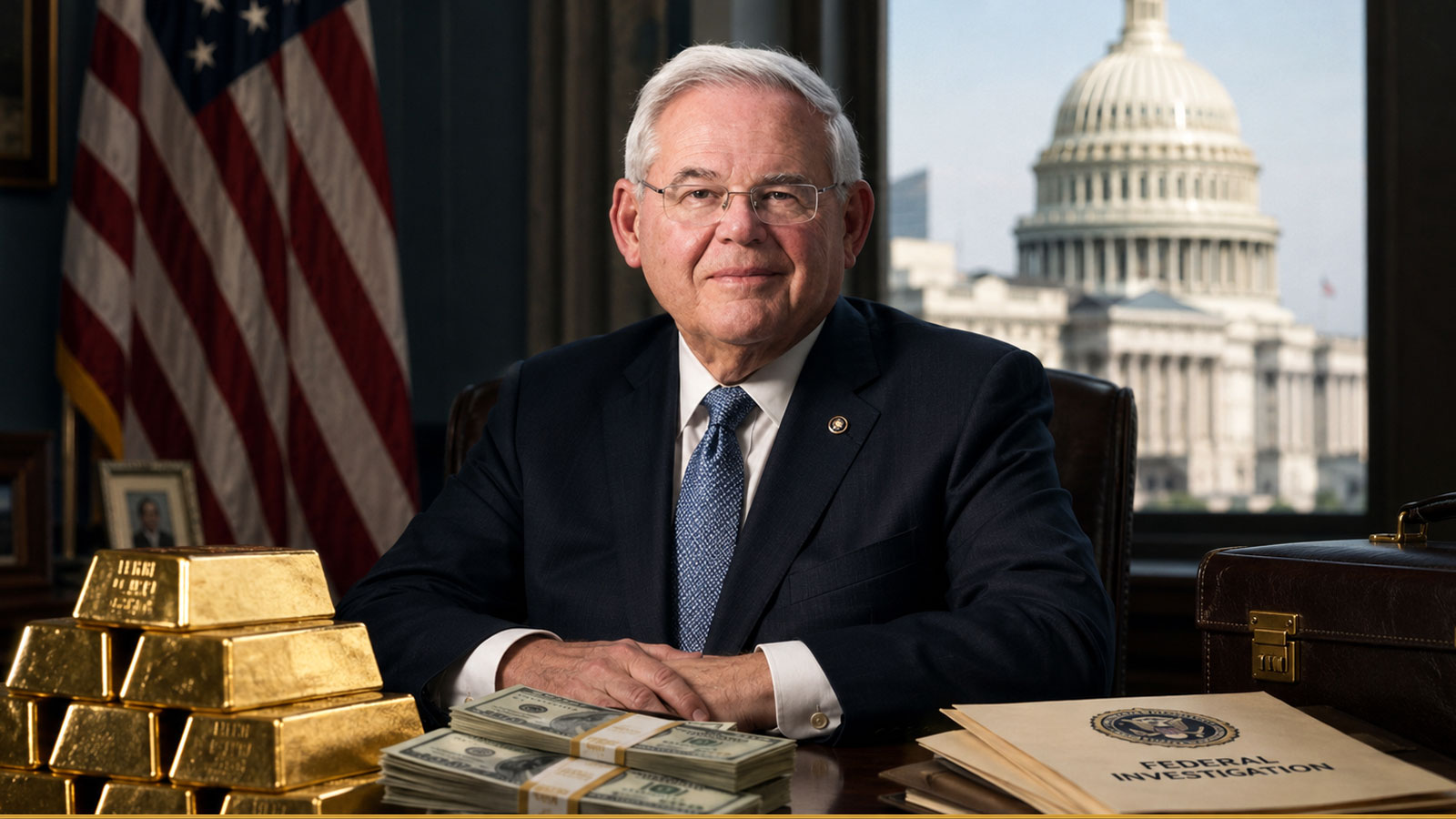
- The government alleged a years-long bribery scheme running from approximately 2018 through 2022.
- The alleged benefits were unusually tangible.
- and compensation connected to what prosecutors described as a low-or-no-show job.
- During an FBI search of the Menendez residence in June 2022, agents found more than $480,000 in cash in the home, much of it in envelopes and concealed in clothing, closets and a safe.
- More than $70,000 was found in a safe-deposit box associated with Nadine Menendez.
EXECUTIVE FINDING
On 22 September 2023, federal prosecutors in Manhattan unsealed an indictment against sitting United States Senator Robert Menendez, his wife Nadine Menendez, and New Jersey businessmen Wael Hana, Jose Uribe and Fred Daibes.
The government alleged a years-long bribery scheme running from approximately 2018 through 2022.
According to prosecutors, Robert and Nadine Menendez accepted hundreds of thousands of dollars in things of value from the businessmen in exchange for the senator agreeing to use his official position and influence to protect or advance their interests and, in aspects of the alleged scheme, benefit the Government of Egypt.
The alleged benefits were unusually tangible.
They included:
- cash
- gold bars
- a Mercedes-Benz convertible
- payments toward Nadine Menendez’s mortgage
- home furnishings
and compensation connected to what prosecutors described as a low-or-no-show job.
During an FBI search of the Menendez residence in June 2022, agents found more than $480,000 in cash in the home, much of it in envelopes and concealed in clothing, closets and a safe. More than $70,000 was found in a safe-deposit box associated with Nadine Menendez. Agents also found more than $100,000 worth of gold bars and the Mercedes convertible prosecutors alleged had been supplied as part of the scheme.
But the most important feature of the case for Kleptik is not the spectacle of cash or gold.
It is the architecture surrounding them.
The indictment describes a network in which alleged benefits did not necessarily move directly from a foreign government to a senator.
Instead, the structure allegedly involved:
- a U.S. senator
- his spouse
- businessmen
- a businessman with connections to Egyptian officials
- commercial interests
- government decisions
and benefits delivered in multiple forms.
This is precisely the type of structure conventional politically exposed person screening can miss.
A compliance database identifies:
ROBERT MENENDEZ — U.S. SENATOR — PEP.
That is useful.
But it does not automatically identify:
- his spouse’s commercial relationships
- his friends’ businesses
- the ownership of companies benefiting from foreign-government decisions
- people seeking his intervention
or the movement of economic value through third parties.
The central finding of this dossier is therefore:
PEP RISK IS A NETWORK, NOT A NAME.
THE FINDING
Financial institutions often treat politically exposed persons as a classification exercise.
A customer is screened.
A database returns:
PEP.
The institution then applies enhanced due diligence.
But corruption rarely restricts itself to the PEP’s personal account.
Benefits can move through:
- family members
- friends
- business partners
- donors
- companies
- employment arrangements
- property
- loans
- vehicles
- commodities
or gifts.
Political influence can move in the opposite direction through:
- phone calls
- meetings
- letters
- recommendations
- pressure on officials
- access to government
- foreign-policy positions
and regulatory intervention.
The corruption architecture therefore has two parallel flows.
VALUE FLOW
POWER FLOW
The alleged exchange exists where those two flows intersect.
THE PEOPLE
ROBERT MENENDEZ
Position as of report date: United States Senator from New Jersey.
Political significance: Senior federal legislator with substantial foreign-policy influence, including leadership responsibilities on the Senate Foreign Relations Committee.
PEP classification: High-level domestic politically exposed person.
Status as of 22 September 2023: Criminally charged and presumed innocent unless and until proven guilty.
Federal prosecutors charged Menendez with:
- conspiracy to commit bribery
- conspiracy to commit honest-services fraud
- and
conspiracy to commit extortion under color of official right.
The indictment alleged that he agreed to use his power and influence to benefit Hana, Uribe and Daibes and to benefit the Government of Egypt.
NADINE MENENDEZ
Relationship: Wife of Robert Menendez.
Her alleged role illustrates why PEP analysis must extend to close family.
According to prosecutors, she introduced Menendez to Wael Hana and participated in the alleged exchange of benefits and political assistance.
The indictment alleged that benefits to the Menendez household included mortgage assistance, employment-related compensation, a vehicle, cash, gold and furnishings.
Status as of report date: Criminally charged and presumed innocent.
WAEL HANA
Background: New Jersey businessman originally from Egypt.
DOJ said Hana maintained close connections with Egyptian officials. Prosecutors alleged that he was part of the bribery arrangement and benefited from Menendez’s actions relating to a halal-certification business that received an exclusive role from Egyptian authorities.
His role is central to the foreign-influence dimension of the case.
He allegedly sat at the intersection of:
U.S. political access
and
Egyptian governmental relationships.
JOSE URIBE
Business background: New Jersey insurance and trucking business interests.
Prosecutors alleged that Uribe provided the Mercedes-Benz convertible to Nadine Menendez in exchange for Menendez’s efforts relating to New Jersey criminal investigations involving Uribe’s associates.
His alleged role illustrates that bribery need not concern federal legislation.
Political influence can also be valuable when applied toward:
- law enforcement
- state investigations
- prosecutorial matters
or regulatory problems.
FRED DAIBES
Business background: New Jersey real-estate developer and banker.
Prosecutors alleged that Daibes supplied cash, furniture and gold bars while Menendez sought to influence matters connected with Daibes’s federal criminal case.
The indictment therefore placed a pending federal prosecution inside the alleged exchange architecture.
That is a particularly serious form of influence risk.
THE SPOUSE AS AN INTERMEDIARY
One of the most important compliance lessons in the Menendez case concerns the spouse.
A spouse may have:
- independent businesses
- independent accounts
- independent employment
- independent property
and legitimate income.
But close family is included in PEP frameworks precisely because benefits can be delivered indirectly.
The risk architecture can look like:
The legal question is not whether a spouse is financially independent.
The investigative question is:
WHO ULTIMATELY BENEFITS?
THE HOUSEHOLD ECONOMY
Traditional AML analysis frequently treats customers individually.
Corruption analysis should often treat the politically exposed household as an economic unit.
For a high-risk PEP, investigators should examine legitimate sources of household wealth:
- salary
- investment income
- property
- business interests
- spousal income
- inheritance
- loans
and gifts.
Then compare that legitimate profile against significant acquisitions or liabilities.
Examples:
Mortgage suddenly reduced.
Luxury vehicle appears.
Large quantities of cash accumulate.
Gold is acquired.
Furniture is supplied.
A spouse receives unusual employment compensation.
Each item alone may have a legitimate explanation.
The purpose of enhanced due diligence is to establish that explanation.
FOLLOW THE GOLD
Gold is especially interesting from an anti-money-laundering perspective.
It is:
- valuable
- portable
- globally recognised
- relatively compact
and capable of storing substantial wealth outside ordinary deposit accounts.
That does not make ownership of gold suspicious.
But commodities can present distinct tracing challenges.
Unlike a bank transfer, a physical gold bar does not automatically contain an account statement identifying:
- payer
- recipient
- purpose
and transfer date.
Investigators therefore rely upon:
- serial numbers
- purchase records
- dealer records
- receipts
- photographs
- communications
- fingerprints
and testimony.
The Menendez indictment specifically identified gold bars among property prosecutors sought to forfeit, including two one-kilogram bars and multiple one-ounce bars seized from the residence.
THE CASH
Cash creates the same problem in more extreme form.
More than $480,000 was found in the Menendez residence during the June 2022 search, according to prosecutors.
But possession of cash is not itself proof of corruption.
The investigative process must answer:
- Where did it come from?
- When was it received?
- Who handled it?
- Was it reported?
- Was it withdrawn from legitimate accounts?
- Did denominations match known withdrawals?
- Were envelopes linked physically to alleged payers?
- Did communications correspond with transfers?
DOJ said some envelopes contained fingerprints or DNA associated with Daibes or his driver.
That type of physical evidence can connect an otherwise anonymous asset to a possible source.
FOLLOW THE BENEFIT
The Menendez allegations demonstrate why “payment” is too narrow a corruption concept.
An economic benefit can take many forms.
CASH
Direct liquidity.
GOLD
Portable store of value.
VEHICLE
High-value consumption asset.
MORTGAGE PAYMENT
Reduction of household debt.
EMPLOYMENT
Income without equivalent economic work, if proven.
FURNISHINGS
Non-cash household benefit.
BUSINESS OPPORTUNITY
Potentially valuable commercial access.
A sophisticated PEP review must therefore identify economic enrichment, not merely bank transfers.
THE LOW-OR-NO-SHOW JOB
Prosecutors alleged that benefits included compensation for a low-or-no-show job for Nadine Menendez.
Employment can be a particularly effective method of disguising value because salaries appear legitimate.
The accounting records show:
PAYROLL EXPENSE
The bank sees:
SALARY
The tax return may show:
EMPLOYMENT INCOME
But investigators must ask:
- Was work actually performed?
- What were the duties?
- Who supervised the employee?
- What hours were worked?
- Was compensation commercially reasonable?
- Why was the person hired?
- Was the hiring connected to a PEP?
This is the employment equivalent of the sham-consulting agreement.
THE HALAL MONOPOLY
One of the most significant allegations involved a company associated with Wael Hana and the certification of halal food exports to Egypt.
According to the indictment, Egyptian authorities granted Hana’s business an exclusive role concerning halal certification for U.S. food exports to Egypt.
Prosecutors alleged that Menendez subsequently pressured a senior U.S. Department of Agriculture official regarding concerns raised about that monopoly.
The commercial significance is obvious.
Government-granted exclusivity can create enormous private value.
The structure becomes:
The investigative question is:
Was political influence used to protect the government-created commercial advantage?
That is what prosecutors alleged.
MONOPOLY AS A GOVERNMENT ASSET
A government does not need to transfer money to create wealth.
It can create wealth by granting:
- licence
- concession
- exclusive certification rights
- spectrum
- mining rights
- port rights
- import authority
or monopoly.
The recipient can then monetise that governmental decision.
For Kleptik, government-created exclusivity should therefore be analysed like a public asset.
Questions include:
- Who selected the company?
- Was there competition?
- What qualifications were required?
- Who owned the beneficiary?
- What political relationships existed?
- How much revenue did exclusivity create?
- Did officials in another country intervene to preserve it?
THE EGYPT CONNECTION
The indictment alleged that Menendez took actions intended to benefit the Government of Egypt.
This element made the case far more than a conventional domestic bribery prosecution.
As a senior senator involved in foreign policy, Menendez possessed influence over matters important to foreign governments.
Foreign governments may care about:
- military assistance
- arms transfers
- diplomatic positions
- human-rights criticism
- foreign aid
- appointments
- legislation
and public statements.
A senator with foreign-policy authority therefore has something extremely valuable:
ACCESS TO SOVEREIGN DECISION-MAKING.
POLITICAL POWER AS AN ASSET
Political influence has an economic analogue.
A bank account holds money.
A politician holds authority.
Both can be deployed.
Political authority can generate value by:
- approving
- blocking
- recommending
- pressuring
- introducing
- delaying
- endorsing
or providing information.
That means corruption analysis should measure not simply what a politician received, but what the politician was capable of providing.
THE POWER INVENTORY
For any PEP investigation, list actual powers.
In Menendez’s case, relevant powers potentially included:
- Senate foreign-policy influence
- access to executive officials
- ability to contact federal agencies
- ability to recommend nominees
- public political authority
- access to non-public governmental processes
and capacity to communicate with foreign-government representatives.
The stronger the institutional authority, the greater the value of improper access.
THE USDA INTERVENTION
The indictment alleged that Menendez contacted a senior Department of Agriculture official regarding concerns about the halal certification monopoly associated with Hana.
According to prosecutors, the senator sought to pressure the official regarding the issue.
For Kleptik, the important analytical structure is:
The investigation must then ask:
- Was there a legitimate policy reason?
- Was the intervention consistent with normal constituent activity?
- Was the private business connected to benefits received by the PEP household?
That final connection is where an ordinary political intervention may become part of a bribery theory.
CONSTITUENT SERVICE VERSUS CORRUPT INTERVENTION
Politicians routinely assist constituents.
That is legitimate.
They contact agencies.
Write letters.
Request information.
Advocate for businesses.
The dividing line is not the intervention.
It is the exchange.
LEGITIMATE MODEL
No personal benefit.
CORRUPT MODEL
The presence of a personal benefit fundamentally changes the analysis.
THE URIBE ALLEGATIONS
Prosecutors alleged that Menendez sought to interfere with New Jersey criminal matters connected to people associated with Jose Uribe.
The indictment alleged that Uribe helped provide a Mercedes-Benz convertible for Nadine Menendez, with monthly payments continuing until June 2022.
The alleged structure is especially useful as a corruption case study because the value was not delivered in cash.
It was delivered as an asset with recurring financing.
FOLLOW THE CAR
A vehicle can create a traceable transaction chain:
Dealer.
Purchase agreement.
Financing.
Registration.
Insurance.
Monthly payments.
Bank account.
Driver.
Beneficial user.
That makes vehicles potentially easier to trace than cash.
Investigators should compare:
PAYMENT TIMELINE
against
POLITICAL INTERVENTION TIMELINE.
Where those timelines correspond, additional scrutiny is justified.
Correlation is not proof.
But it tells investigators where to look.
THE DAIBES ALLEGATIONS
Fred Daibes had his own federal criminal matter.
Prosecutors alleged that between December 2020 and 2022 Menendez attempted to influence the federal prosecution in exchange for cash, furniture and gold bars provided by Daibes.
The indictment alleged that Menendez recommended a candidate for U.S. Attorney whom he believed he might be able to influence regarding Daibes’s case and later contacted senior officials concerning that prosecution.
The DOJ release also noted that the prosecutors handling Daibes’s case did not treat the matter differently because of Menendez’s contacts.
That distinction matters.
An attempted corrupt intervention can exist even where the targeted institution refuses to comply.
SUCCESS IS NOT REQUIRED FOR RISK
Investigators should distinguish:
corrupt agreement
from
successful corrupt outcome.
A PEP may attempt to influence an official.
The official may refuse.
The absence of success does not necessarily erase the alleged exchange.
This is important because corruption risk should not be measured only by final governmental outcome.
Attempted use of office is itself material.
THE NOMINATION CHANNEL
Political appointment powers are a particularly valuable form of influence.
A senior politician may recommend:
- prosecutors
- judges
- regulators
- ambassadors
- agency officials
board members.
The appointment itself may be entirely proper.
But if an appointment decision is allegedly influenced by an expectation that the appointee will later assist a private benefactor, the appointment process becomes part of the corruption architecture.
Kleptik should therefore treat appointments as a separate power-transfer mechanism.
PEP SCREENING IS TOO STATIC
Most PEP systems ask:
Is the customer politically exposed?
Yes / no.
That is insufficient.
The real questions are dynamic.
- What office does the person hold?
- What powers come with that office?
- Who is in the person’s immediate family?
- Which businesses interact with the family?
- Which people repeatedly provide economic benefits?
- Which donors also have active government interests?
- Which foreign governments seek the person’s influence?
- Which associates suddenly obtain licences or contracts?
This produces a richer model:
PEP + NETWORK + POWER + BENEFIT + TIMING
THE PEP NETWORK MODEL
A sophisticated PEP file should map at least five circles.
CIRCLE 1 — OFFICEHOLDER
The PEP.
CIRCLE 2 — FAMILY
Spouse.
Children.
Parents.
Other close family where relevant.
CIRCLE 3 — BUSINESS ASSOCIATES
Partners.
Employers.
Consultants.
Major donors.
CIRCLE 4 — ECONOMIC BENEFICIARIES
Companies or individuals receiving government-created value.
CIRCLE 5 — FOREIGN INTERESTS
Foreign governments.
State-owned enterprises.
Diplomatic representatives.
Government-linked investors.
This is how political corruption becomes visible as a network.
FOLLOW THE TIMELINE
Corruption cases depend heavily upon chronology.
The central analytical tool should be a synchronized timeline:
For example:
- vehicle payment
- text message
- call to official
- governmental action
gold transfer.
The investigator should never assume causation merely from sequence.
But repeated sequence can identify patterns requiring explanation.
THE COMMUNICATION LAYER
Financial evidence is only half of a bribery investigation.
Communications may establish intent.
Relevant evidence can include:
- texts
- encrypted messages
- emails
- calendar invitations
- call records
- photographs
- meeting notes
and messages concerning payments.
The strongest corruption cases often combine:
- MONEY
- with
- MESSAGE
- with
OFFICIAL ACTION.
Each confirms a different part of the story.
THE BUSINESSMAN AS INTERMEDIARY
The businessmen in the indictment allegedly provided both the economic benefits and the private interests requiring official assistance.
This creates a dual role.
They are not simply donors.
They are not simply friends.
According to prosecutors, they were people with active economic or legal matters who allegedly supplied value to the Menendez household.
That is an important risk indicator.
DONOR VERSUS BENEFICIARY
Political donations themselves are legal within applicable rules.
But corruption analysis must distinguish a donor from a beneficiary of official action.
The higher-risk profile is:
- large donor
- significant private commercial interest
- repeated access
- governmental intervention
personal benefits outside normal political contributions.
None alone proves corruption.
Together they create a meaningful investigative pattern.
THE FOREIGN-STATE LAYER
The alleged Egypt dimension adds another structure:
This creates a question broader than bribery:
CAN A FOREIGN STATE ACQUIRE POLITICAL INFLUENCE THROUGH PRIVATE COMMERCIAL INTERMEDIARIES?
That is precisely why financial investigators should examine commercial relationships around politicians involved in foreign policy.
DIRECT FOREIGN PAYMENT IS NOT REQUIRED
Foreign influence is easiest to detect when:
foreign government
↓
pays politician.
But a more difficult structure is:
The presence of a commercial intermediary creates distance.
Distance creates deniability.
That is why the beneficial ownership of influence matters.
THE INVESTIGATIVE MONEY MAP
A Kleptik forensic map should separate benefits by source.
HANA-RELATED BENEFITS
Cash.
Home furnishings.
Other alleged benefits identified in the indictment.
URIBE-RELATED BENEFITS
Vehicle-related payments.
DAIBES-RELATED BENEFITS
Cash.
Gold.
Furniture.
Then place each alleged official intervention beside the corresponding benefit flow.
This prevents the investigation from blending separate alleged quid-pro-quo relationships into one generic corruption narrative.
SOURCE OF WEALTH
A core AML question is whether accumulated assets are consistent with known income.
For a senior politician, the relevant exercise should include:
- salary
- investment returns
- property gains
- spousal income
- inheritance
- business income
and documented savings.
Then compare with:
- cash
- gold
- vehicles
- real-estate improvements
- debt repayment
and other substantial assets.
An unexplained difference is not proof of corruption.
It is a source-of-wealth anomaly.
SOURCE OF FUNDS VERSUS SOURCE OF WEALTH
These concepts should remain distinct.
SOURCE OF FUNDS
Where did the specific $100,000 come from?
SOURCE OF WEALTH
How did the person accumulate enough legitimate wealth to own $5 million?
For PEPs, both matter.
The Menendez case demonstrates why physical assets make the distinction especially important.
A person may possess valuable property without any corresponding bank transfer.
The source-of-wealth question remains.
CASH REPORTING AND TRANSPARENCY
Public officials are often subject to financial disclosure rules.
But those systems may not necessarily provide real-time visibility into every household asset.
That creates a gap between:
- legal disclosure
- banking due diligence
- tax reporting
and criminal investigation.
Kleptik should compare those systems.
Did the relevant disclosure framework require declaration of:
- gold?
- cash?
- vehicle benefits?
- spousal income?
- outside employment?
- gifts?
- debts?
The effectiveness of transparency depends upon what must actually be disclosed.
THE GOLD-BAR PROBLEM FOR DISCLOSURE SYSTEMS
Financial disclosure regimes are frequently designed around conventional assets:
- stocks
- bonds
- companies
- property
income.
But portable stores of value can exist outside these categories.
Gold.
Jewellery.
Art.
Collectibles.
Crypto.
Cash.
A modern PEP disclosure system should therefore ask:
WHAT ASSETS CAN HOLD VALUE OUTSIDE THE BANKING SYSTEM?
That is increasingly important in corruption investigations.
DOMESTIC PEP BLINDNESS
International AML practice often focuses more aggressively on foreign PEPs than domestic political figures.
A foreign minister opening an account abroad may trigger obvious enhanced scrutiny.
A senior domestic politician using a local bank may appear institutionally familiar.
That familiarity can create complacency.
The Menendez case demonstrates that domestic political status does not reduce corruption risk.
It simply changes the context.
THE PEP FAMILIARITY EFFECT
Risk teams should be cautious of the assumption:
“He is well known.”
Public visibility is not due diligence.
A person can be:
- famous
- elected
- regularly covered by media
and still require rigorous source-of-wealth review.
Indeed, political prominence increases the need for independent verification.
WHAT BANKS SHOULD HAVE ASKED
For any financial institution serving a senior PEP household, relevant questions might include:
- Why is the customer holding unusually large amounts of physical cash?
- What is the source of significant gold holdings?
- Who pays for a luxury vehicle?
- Why is a third party making mortgage-related payments?
- What is the spouse’s employer?
- What work is performed?
- Are significant transactions connected with political donors or constituents?
- Does a business counterparty have active matters before government?
Banks may not have visibility into all of these issues.
But the questions illustrate why static PEP screening is insufficient.
THE PEP RISK SCORE
Kleptik proposes a more advanced analytical framework.
OFFICE POWER
How significant is the official’s authority?
ECONOMIC NETWORK
How extensive are the household’s outside business relationships?
FOREIGN EXPOSURE
Does the officeholder influence international policy?
PRIVATE BENEFITS
Are unusual gifts or transfers identified?
ACTIVE INTERESTS
Do benefit providers have matters requiring government action?
TIMING
Do benefits align with official interventions?
TRANSPARENCY
Are disclosures complete?
SOURCE OF WEALTH
Are assets consistent with legitimate income?
This creates a dynamic risk model rather than a binary PEP flag.
THE POLITICAL-INFLUENCE LEDGER
Every major PEP investigation should maintain two ledgers.
LEDGER A — BENEFITS RECEIVED
Date.
Payer.
Recipient.
Value.
Form.
Documentation.
LEDGER B — OFFICIAL ACTIONS
Date.
Office involved.
Government agency.
Person contacted.
Action requested.
Outcome.
Then compare them.
That is the political equivalent of transaction monitoring.
THE QUID-PRO-QUO MATRIX
| Kleptik should construct a matrix for each alleged relationship. | Alleged benefit provider | Alleged benefit |
|---|---|---|
| Alleged governmental interest | Alleged political action | Wael Hana |
| Cash / furnishings / other benefits alleged by prosecutors | Halal-certification business / Egypt-related interests | USDA and Egypt-related actions alleged |
| Jose Uribe | Mercedes-Benz payments | New Jersey criminal matters involving associates |
| Political intervention alleged | Fred Daibes | Cash / gold / furniture |
| Federal criminal prosecution | Intervention with federal officials alleged | This table reflects prosecutorial allegations as of 22 September 2023 and does not constitute a finding of guilt. |
THE SEARCH WARRANT
The June 2022 search of the Menendez residence appears as a pivotal evidentiary event.
According to DOJ, investigators recovered:
- more than $480,000 in cash from the residence
- more than $70,000 from Nadine Menendez’s safe-deposit box
- gold bars
- home furnishings
and the Mercedes prosecutors linked to Uribe.
The search transformed an influence investigation into a physical-evidence case.
PHYSICAL EVIDENCE VERSUS INTERPRETATION
An object may establish possession.
It does not automatically establish corrupt purpose.
Gold bar:
physical fact.
Who supplied it:
evidentiary question.
Why it was supplied:
intent question.
What was expected in return:
bribery question.
This distinction should be maintained throughout investigative reporting.
FORFEITURE
The indictment sought forfeiture of property prosecutors alleged constituted or was derived from proceeds of the charged conduct.
Identified property included:
- the Menendez residence
- the Mercedes-Benz C300
- $486,461 seized from the residence
- $79,760 from a safe-deposit box
- two one-kilogram gold bars
- eleven one-ounce gold bars
and funds held in a specified business account.
A forfeiture allegation does not itself establish the government’s ownership claim.
It identifies the assets prosecutors contend are traceable to charged offences.
FOLLOW THE ASSET
Each forfeiture target becomes an investigative node.
For every asset:
Acquisition date.
Purchase price.
Payer.
Legal owner.
Beneficial user.
Financing.
Insurance.
Storage.
Declared value.
Source of funds.
Connection to alleged official action.
That is how physical assets become a financial timeline.
CHRONOLOGY
2018
According to prosecutors, the alleged corrupt relationship begins around this period.
Nadine Menendez introduces Robert Menendez to Wael Hana, whom DOJ described as a longtime friend with connections to Egyptian officials.
2018–2022
Prosecutors allege Robert and Nadine Menendez accept hundreds of thousands of dollars in benefits from Hana, Uribe and Daibes in exchange for the senator’s agreement to use official power and influence.
2019
According to the indictment, the Mercedes-Benz arrangement associated with Uribe begins.
2020–2022
Prosecutors allege Menendez attempts to influence matters connected with Daibes’s federal prosecution.
16 June 2022
The FBI executes search warrants connected with the Menendez residence and safe-deposit box.
Investigators recover substantial cash, gold and other assets.
2022–2023
Federal investigation continues.
22 September 2023
Federal prosecutors unseal the indictment against Robert Menendez, Nadine Menendez, Wael Hana, Jose Uribe and Fred Daibes.
27 September 2023
The defendants are expected to make initial appearances in Manhattan federal court, according to the charging announcement.
As of this dossier’s archive date, none of the newly charged defendants has been convicted in this case.
DOCUMENTARY RECORD
FEDERAL INDICTMENT
United States v. Robert Menendez et al.
The indictment is the core documentary source.
It sets out the alleged benefit flows, governmental interventions, forfeiture claims and chronology.
U.S. ATTORNEY’S OFFICE — 22 SEPTEMBER 2023
The official charging announcement provides the government’s public summary of the case and identifies the defendants, alleged bribes and principal political acts.
WHAT THE AUTHORITIES SAY
Federal prosecutors allege that between 2018 and 2022 Robert and Nadine Menendez engaged in corrupt relationships with Hana, Uribe and Daibes.
They allege hundreds of thousands of dollars in benefits were delivered in exchange for Senator Menendez agreeing to use his official position to protect and enrich the businessmen and benefit the Government of Egypt.
DOJ specifically identifies:
- cash
- gold
- a luxury convertible
- mortgage-related payments
- employment compensation
- and home furnishings
among the alleged benefits.
The charging announcement expressly states that the allegations are accusations only and that all defendants are presumed innocent unless and until proven guilty.
WHAT MENENDEZ SAYS
As of the report date, Robert Menendez denies wrongdoing.
Kleptik should accurately record the defence position and avoid presenting the government’s theory as an established fact.
The criminal process has only begun.
The questions at trial, if the case reaches one, are likely to include:
- whether benefits were actually bribes
- whether official actions were part of a corrupt exchange
- whether Menendez knew the source and purpose of particular benefits
and whether the government’s evidence establishes criminal intent.
WHAT THIS DOSSIER DOES NOT ESTABLISH
This dossier does not establish that:
- Robert Menendez is guilty of the charged offences
- Nadine Menendez is guilty
- Wael Hana is guilty
- Jose Uribe is guilty
- Fred Daibes is guilty
- the Government of Egypt itself participated in a bribery conspiracy
- every political intervention undertaken by Menendez was improper
- every gift or payment identified by prosecutors was necessarily a bribe
- every relationship between a politician and donor is corrupt
or possession of cash or gold is inherently suspicious.
The report describes the charging theory existing on 22 September 2023.
Criminal liability has not been adjudicated as of that date.
RIGHT OF REPLY
Before publication, Kleptik should seek comment from:
- Robert Menendez and counsel
- Nadine Menendez and counsel
- Wael Hana and counsel
- Jose Uribe and counsel
- Fred Daibes and counsel
Embassy of Egypt / relevant Egyptian governmental authority
IS EG Halal or related company representatives where specifically discussed
Any federal or state official whose conduct is described in more detail should receive an opportunity to clarify the context of the relevant interaction.
Where Kleptik intends to publish a specific allegation beyond the indictment, the affected party must be told precisely what documentary evidence forms the basis of the proposed report.
UNANSWERED QUESTIONS
The indictment provides a detailed alleged architecture.
It does not answer everything.
1. CASH SOURCE
Can every seized bundle of cash be traced to a legitimate withdrawal or alleged payer?
2. GOLD PROVENANCE
Where were each of the relevant gold bars purchased?
3. SERIAL NUMBERS
Do purchase records correspond with the bars recovered?
4. HOUSEHOLD FINANCES
What were the legitimate combined sources of wealth of Robert and Nadine Menendez?
5. SAFE-DEPOSIT BOX
What was the history of the cash held there?
6. VEHICLE
Who made every payment associated with the Mercedes?
7. EMPLOYMENT
What work did Nadine Menendez perform for businesses identified by prosecutors?
8. MORTGAGE
What third-party mortgage-related payments were made and how were they documented?
9. HANA
What was the complete ownership and revenue history of the halal-certification business?
10. EGYPTIAN EXCLUSIVITY
How was the exclusive certification arrangement granted?
11. USDA
What concerns did U.S. agricultural officials raise?
12. FOREIGN POLICY
Which Menendez actions concerning Egypt were ordinary Senate activity and which prosecutors allege formed part of the exchange?
13. URIBE
What exact investigative matters did he allegedly seek assistance with?
14. DAIBES
What contacts occurred concerning his federal prosecution?
15. APPOINTMENT PROCESS
Did the U.S. Attorney recommendation process intersect with the Daibes matter as prosecutors allege?
16. DISCLOSURES
Were any alleged benefits required to appear in Senate financial disclosures?
17. BANKS
Did financial institutions servicing the relevant accounts identify unusual activity?
18. POLITICAL DONATIONS
What lawful political contributions existed between the businessmen and Menendez-linked committees, and how should those be distinguished from alleged personal benefits?
19. FOREIGN GOVERNMENT
What direct communications existed between Egyptian officials and the alleged intermediary network?
20. THE NETWORK QUESTION
Did political influence move through a coordinated network—or are prosecutors combining separate relationships into one overarching theory?
The criminal proceedings will be central to answering that question.
KLEPTIK INTELLIGENCE ASSESSMENT
ASSESSMENT: HIGH CONFIDENCE
The indictment describes a sophisticated alleged corruption architecture extending beyond direct cash payments and involving multiple forms of household economic benefit.
ASSESSMENT: HIGH CONFIDENCE
The case demonstrates why close family members must form part of any serious PEP-risk analysis.
The alleged benefits and relationships described by prosecutors frequently involve Nadine Menendez as an intermediary or household beneficiary.
ASSESSMENT: HIGH CONFIDENCE
Government-created commercial rights, prosecutorial discretion and foreign-policy influence can all carry significant economic value.
The indictment alleges attempts to use political power across each of these domains.
ASSESSMENT: HIGH CONFIDENCE
Traditional PEP databases are insufficient to understand corruption risk if they do not capture spouses, business associates, major benefit providers and active government interests.
This is an analytical conclusion derived from the structure described in the indictment.
ASSESSMENT: MODERATE-TO-HIGH CONFIDENCE
Physical assets such as cash, gold and vehicles can function as alternative value-transfer mechanisms outside ordinary bank-to-bank payment flows.
This creates additional challenges for both AML monitoring and public financial disclosure.
ASSESSMENT: OPEN
Whether the alleged benefits constituted bribes and whether Menendez entered into corrupt quid-pro-quo arrangements remain unresolved as of 22 September 2023.
Those are questions for the criminal proceedings.
THE KLEPTIK VIEW
The gold bars made the story famous.
They may not be the most important part.
Political corruption is usually described as a money problem.
But money is only one side of the transaction.
The other side is power.
The businessman has:
- cash
- gold
- a car
- employment
commercial opportunities.
The politician has:
- access
- influence
- appointments
- agency contacts
- government information
foreign-policy authority.
Corruption exists when those two forms of value are deliberately exchanged.
That is why this case should change how investigators think about politically exposed persons.
A PEP database can tell a bank:
This customer is a senator.
It cannot automatically tell the bank:
- who is paying the senator’s spouse
- who purchased the vehicle used by the household
- who supplied the gold stored inside the home
- which businessman has an active federal prosecution
- which businessman owns a company benefiting from a foreign-government monopoly
or which foreign state may benefit from the senator’s actions.
Those relationships must be mapped.
The true unit of analysis is not:
the politician.
It is:
THE POLITICAL ECONOMIC NETWORK AROUND THE POLITICIAN.
That means following:
- family
- friends
- business interests
- donors
- employment
- gifts
- property
- foreign relationships
and timing.
The compliance industry calls these people politically exposed because their public power creates risk.
But the Menendez indictment suggests a more precise formulation.
The risk does not come simply from being political.
The risk comes from possessing something others may want to buy.
Access.
Protection.
Intervention.
Influence.
Information.
Government-created value.
That is why investigators should never stop with:
WHO PAID?
They must also ask:
WHAT DID THEY NEED FROM GOVERNMENT?
And then:
WHO IN THE POLITICAL NETWORK COULD DELIVER IT?
KLEPTIK METHODOLOGY
This dossier is dated 22 September 2023 and is intentionally fixed to the factual and legal position existing on that date.
No subsequent trial verdict, plea, conviction, sentence or superseding allegation is incorporated into the historical narrative.
Kleptik distinguishes between:
- physical evidence
- prosecutorial allegation
- documentary chronology
- political activity
- commercial relationships
- and
criminal findings.
As of the archive date, all defendants charged in the newly unsealed indictment are presumed innocent unless and until proven guilty.
The principal evidentiary sources for this dossier are:
the federal indictment in United States v. Menendez et al.;
and
the U.S. Attorney’s Office for the Southern District of New York’s 22 September 2023 charging announcement.
Kleptik does not classify a lawful political contribution as a bribe merely because the contributor later receives governmental assistance.
It does not classify constituent service as corruption merely because a politician contacts a government agency.
It does not infer wrongdoing from friendship, ethnicity, family relationship, political donation or foreign-government contact.
A bribery hypothesis requires convergence of evidence involving:
- benefit
- knowledge
- intent
- official action
- and
expected return.
Financial analysis should treat each alleged benefit independently.
For cash:
trace withdrawal and physical provenance.
For gold:
identify serial numbers, dealers, purchasers and payment records.
For vehicles:
trace purchase, finance, insurance and beneficial use.
For employment:
verify work performed and compensation.
For mortgage payments:
trace payer, amount and purpose.
For commercial monopolies:
identify the governmental act creating the economic benefit.
Political-action analysis should separately reconstruct:
- calls
- letters
- meetings
- appointments
- agency interventions
- foreign-policy positions
and relevant governmental outcomes.
Only after the financial and political timelines are independently built should they be compared.
This methodology reduces confirmation bias.
PEP investigations should include:
- the officeholder
- spouse
- close family where relevant
- controlled businesses
- material business partners
- major benefit providers
and persons with significant matters before the officeholder’s government.
Family membership or association alone must never be presented as evidence of wrongdoing.
Right-of-reply requests must identify the precise alleged benefit and alleged official intervention so that subjects can respond meaningfully.
EVIDENTIARY LABELS
ESTABLISHED
Supported by an authoritative record or independently verified documentary evidence.
PHYSICAL EVIDENCE
Asset or item documented as seized, recovered or otherwise physically identified.
CRIMINALLY CHARGED
Formal accusation filed by prosecutors; not proof of guilt.
OFFICIAL ALLEGATION
Factual assertion made by prosecutors or investigators but not adjudicated as of the archive date.
PEP NETWORK INDICATOR
Relationship relevant to political-risk analysis but not itself evidence of misconduct.
ECONOMIC BENEFIT INDICATOR
Transfer of value requiring explanation in the context of a PEP relationship.
OFFICIAL-ACTION INDICATOR
Governmental intervention potentially relevant to an influence analysis but not by itself evidence of corruption.
KLEPTIK VERIFIED
Independently corroborated through primary documentary records.
KLEPTIK ASSESSMENT
Analytical conclusion derived from identified evidence.
INVESTIGATIVE LEAD
Information requiring further documentary verification.
UNVERIFIED
Information not sufficiently corroborated for factual publication.
DOCUMENT STATUS
KLTK-2023-007
Subject: Robert Menendez / PEP Network / Alleged Bribery and Foreign Influence
Archive date: 22 September 2023
Status at archive date: Federal indictment unsealed; criminal proceedings pending
Historical treatment: Fixed to report date
© KLEPTIK — Investigations into Power, Money and the Systems Designed to Hide Both