THE HIDDEN DEBTS

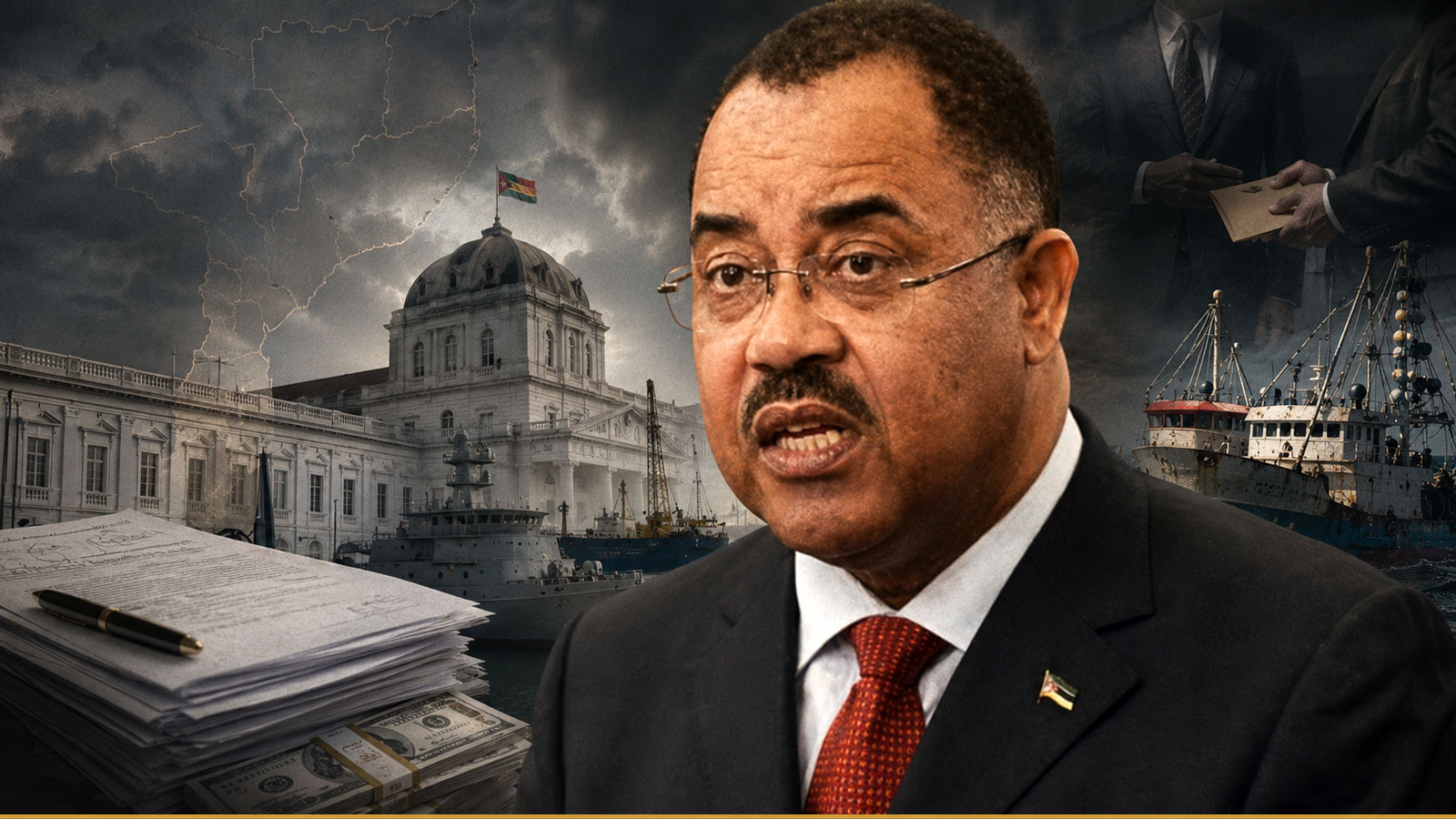
- He was also ordered to forfeit $7 million —the amount prosecutors proved he received in bribes.
- The sentence followed Chang’s August 2024 conviction after a four-week federal trial.
- The mechanism was extraordinary because the principal asset being sold was not a mining licence, public contract or piece of government land.
- Between approximately 2013 and 2015, more than $2 billion in loans were arranged for three companies owned and controlled by the Mozambican state:
- The stated purpose was to finance maritime projects involving coastal surveillance, tuna fishing and shipyard development.
EXECUTIVE FINDING
On 17 January 2025, former Mozambican Finance Minister Manuel Chang was sentenced in Brooklyn federal court to 102 months in prison for his role in a $2 billion international fraud, bribery and money-laundering scheme.
He was also ordered to forfeit $7 million—the amount prosecutors proved he received in bribes.
The sentence followed Chang’s August 2024 conviction after a four-week federal trial.
The jury found him guilty of:
conspiracy to commit wire fraud
and
conspiracy to commit money laundering.
The mechanism was extraordinary because the principal asset being sold was not a mining licence, public contract or piece of government land.
It was:
THE CREDIT OF THE REPUBLIC OF MOZAMBIQUE.
Between approximately 2013 and 2015, more than $2 billion in loans were arranged for three companies owned and controlled by the Mozambican state:
- Proindicus S.A.
- Empresa Moçambicana de Atum, S.A. — EMATUM
- and
Mozambique Asset Management — MAM.
The stated purpose was to finance maritime projects involving coastal surveillance, tuna fishing and shipyard development.
Chang, then Mozambique’s Minister of Finance, signed government guarantees supporting the loans.
But according to evidence accepted by the jury, more than $200 million of the loan proceeds was diverted into bribes and kickbacks.
More than $150 million was used to bribe Chang and other Mozambican officials, while approximately $50 million went in kickbacks to bankers involved in arranging financing.
Chang personally received approximately:
$7 MILLION
in exchange for signing guarantees that exposed the Mozambican state to billions of dollars of debt.
The companies later defaulted and missed more than $700 million in loan payments, inflicting substantial losses on investors and placing the financial consequences of the scheme onto Mozambique and the international market.
The scandal became known internationally as Mozambique’s “hidden debts” affair because major obligations were accumulated through state-owned enterprises and government guarantees without the transparency normally expected around sovereign borrowing.
The central question for Kleptik is therefore larger than the conviction of one finance minister:
HOW CAN A PUBLIC OFFICIAL TURN A COUNTRY’S SOVEREIGN CREDIT INTO PRIVATE CORRUPTION PROCEEDS?
THE FINDING
A corrupt official can sell many things.
A permit.
A government contract.
A mining concession.
A customs exemption.
A prosecution decision.
But a finance minister controls something more powerful:
THE STATE’S ABILITY TO BORROW.
When a government guarantees debt, it effectively tells lenders:
If this company cannot repay, the state stands behind the obligation.
That promise has enormous economic value.
Without the guarantee, a state-owned company may be unable to borrow billions.
With it, international banks and investors may provide capital because the sovereign balance sheet sits behind the transaction.
The guarantee therefore becomes a public asset.
THE CORRUPTION ARCHITECTURE
The scheme can be reduced to a six-part structure:
The bribe was private.
The liability became public.
THE $7 MILLION EXCHANGE
Chang received approximately $7 million in bribes in exchange for signing guarantees on behalf of Mozambique.
The economic imbalance is striking.
Private payment:
$7 million.
Government-backed borrowing enabled:
more than $2 billion.
This represents one of the central economics of public corruption.
A relatively modest private payment can unlock an enormous public financial commitment.
THE LEVERAGE RATIO
Kleptik proposes a useful corruption metric:
CORRUPTION LEVERAGE RATIO
Public value exposed
÷
private benefit received.
Using broad figures:
- $2 billion in loans
- ÷
- $7 million bribe
- ≈
286 TO 1
The exact ratio should not be interpreted as proof that Chang personally controlled every dollar of the loans.
It demonstrates something more general:
A corrupt decision by a high-level public official can expose taxpayers to amounts vastly exceeding the official’s private benefit.
WHO PAID THE REAL PRICE?
Chang received millions.
The scheme’s other participants allegedly or admittedly received substantial benefits.
But when the loans failed, the burden did not remain with the bribe recipients.
It migrated.
To:
Mozambique.
Investors.
Creditors.
Taxpayers.
Public services.
Future government borrowing.
That is what makes sovereign corruption uniquely destructive.
THE PUBLIC-PRIVATE ASYMMETRY
Private participant receives:
bribe.
Commission.
Kickback.
Contract revenue.
Banking fee.
The public receives:
debt.
Default.
Higher borrowing costs.
Fiscal pressure.
Reputational damage.
The economic benefit and economic risk are separated.
That separation is the corruption opportunity.
MANUEL CHANG
POSITION
Minister of Finance of Mozambique during the relevant period.
PEP STATUS
Highest-level national politically exposed person with direct authority over sovereign financial commitments.
ROLE ESTABLISHED AT TRIAL
A federal jury found that Chang accepted $7 million in bribes in exchange for signing guarantees supporting more than $2 billion in loans.
SENTENCE
102 months in federal prison.
$7 million forfeiture.
THE POWER OF A SIGNATURE
One signature by a finance minister can potentially change the risk profile of an entire transaction.
Without sovereign guarantee:
Bank considers the finances of a state-owned company.
With sovereign guarantee:
Bank also considers the credit of the country.
That transforms:
corporate debt
into
quasi-sovereign debt.
The official signature therefore has direct monetary value.
PUBLIC AUTHORITY AS COLLATERAL
Normally collateral might be:
- property
- cash
- equipment
shares.
Here, the real support was the state’s promise.
The corruption allegation therefore involved effectively using:
PUBLIC CREDIT AS COLLATERAL FOR A PRIVATE SCHEME.
This is why sovereign guarantees require exceptionally strong controls.
THE THREE STATE-OWNED COMPANIES
The financing involved three government-controlled entities.
PROINDICUS S.A.
Intended to undertake coastal-surveillance and maritime-security functions.
EMATUM
Empresa Moçambicana de Atum.
Presented as a state-backed tuna-fishing venture.
MAM
Mozambique Asset Management.
Intended to develop and maintain shipyard-related infrastructure.
The loans were tied to maritime projects involving equipment and services supplied by Privinvest Group, a UAE-based shipbuilding business.
THE STATE-OWNED ENTERPRISE PROBLEM
State-owned enterprises occupy an unusual position.
They can look commercial.
Company.
Board.
Bank account.
Revenue projection.
But the ultimate economic risk may belong to the government.
This creates an opportunity for public debt to move outside the ordinary sovereign-budget process.
OFF-BALANCE-SHEET SOVEREIGN RISK
The danger appears when government liabilities accumulate through entities rather than directly through the treasury.
The legal borrower may be:
State Company A.
But if the government guarantees repayment, the economic borrower may effectively be:
THE COUNTRY.
That is why SOE debt must be analysed together with explicit and implicit sovereign guarantees.
THE HIDDEN-DEBT MODEL
- STATE COMPANY
- borrows
- ↓
- GOVERNMENT GUARANTEES
The liability may have existed economically long before it became visible politically.
FOLLOW THE GUARANTEE
A corruption investigation normally follows money.
This case requires following the guarantee first.
For each financing:
- Who requested the guarantee?
- Who reviewed it?
- What financial analysis existed?
- Was Parliament informed?
- Was central-bank approval required?
- What debt limits applied?
- Who signed?
- What was the state’s contingent liability?
- What asset or revenue was expected to service the debt?
Only then should the investigator follow the loan proceeds.
THE DUE-DILIGENCE QUESTION
Before guaranteeing billions in debt, a rational government should understand:
Project economics.
Revenue projections.
Equipment price.
Supplier selection.
Debt-service capacity.
Foreign-exchange risk.
Security structure.
Construction risk.
Borrower governance.
Total public exposure.
If a finance minister approves guarantees without credible answers, the problem is already severe even before bribery is considered.
THE PROJECTS
The maritime projects were presented as economically and strategically important.
Coastal protection.
Tuna fishing.
Shipyard infrastructure.
Each sounds plausible for a coastal African state.
That is exactly why public-corruption schemes often use legitimate policy objectives.
A fictitious project attracts scrutiny.
A real national need creates credibility.
CORRUPTION INSIDE A REAL PROJECT
The project does not need to be imaginary for corruption to occur.
A government may genuinely need:
- boats
- radar
- fishing capacity
shipyards.
The corruption may lie in:
- price
- supplier
- financing
- guarantee
- commission
or allocation of proceeds.
This distinction matters.
Investigators should not ask only:
Was the project real?
They should ask:
WAS THE TRANSACTION ECONOMICALLY HONEST?
PRIVINVEST
According to DOJ, executives associated with Privinvest Group, a UAE-based shipbuilding company, participated in the scheme investigated by U.S. authorities.
The government alleged that more than $200 million in loan proceeds was diverted, including more than $150 million in payments to Mozambican officials and approximately $50 million in kickbacks to bankers.
For Kleptik, Privinvest represents the private commercial node in the architecture.
Supplier.
Loan beneficiary.
Equipment provider.
And, according to the prosecution, source or facilitator of corrupt payments.
PROCUREMENT VERSUS FINANCING
Public corruption investigations often focus on how a supplier won the contract.
This case requires equal attention to:
HOW THE BUYER FINANCED THE CONTRACT.
A supplier can earn enormous revenue if a bank finances the customer.
Thus the financing arrangement may be as economically important as procurement itself.
VENDOR FINANCING RISK
A typical structure:
Supplier wants $1 billion contract.
Government cannot pay immediately.
International bank provides loan.
Government guarantees loan.
Bank pays supplier.
Government owes bank.
This creates multiple parties with strong incentives to make the transaction happen.
Supplier gets revenue.
Bank gets fees.
Officials get political project.
Potentially corrupt actors get payments.
The party bearing long-term risk is the sovereign.
FOLLOW THE BANK
The loans were arranged through international banks, including a United Kingdom subsidiary of Credit Suisse AG and another foreign investment bank.
The banks become critical because international capital transformed the project from a domestic procurement matter into a global financial transaction.
CREDIT SUISSE
In October 2021, Credit Suisse AG and Credit Suisse Securities (Europe) Limited resolved U.S. charges connected to the EMATUM financing.
CSSEL pleaded guilty to conspiracy to commit wire fraud.
Credit Suisse AG entered into a deferred prosecution agreement.
The coordinated U.S. and UK resolution required approximately $475 million in penalties, fines and disgorgement.
This significantly changes the interpretation of the scandal.
It was not only:
corrupt African officials.
It also involved admitted failures and wrongdoing within a major international financial institution.
THE “CORRUPT COUNTRY” FALLACY
International corruption is sometimes described as though corruption exists only in the country receiving the money.
That is misleading.
Large bribery schemes frequently need:
- international banks
- lawyers
- companies
- consultants
- offshore entities
and financial centres.
The bribe may occur in Mozambique.
The transaction architecture can span:
London.
Zurich.
Abu Dhabi.
New York.
Johannesburg.
This is why global corruption should be mapped as a network rather than assigned to one geography.
BANKERS AND KICKBACKS
The original U.S. indictment alleged that approximately $50 million in kickbacks was paid to bankers who helped arrange financing.
The indictment identified former Credit Suisse bankers including:
Andrew Pearse;
Surjan Singh;
and Detelina Subeva.
The case illustrates why corruption controls inside banks must include employee incentives and conflicts, not only customer AML.
THE BANKER AS GATEKEEPER
A banker can provide:
credit approval.
Internal advocacy.
Structuring.
Investor access.
Due-diligence interpretation.
Distribution.
A corrupt banker can therefore be almost as valuable as a corrupt public official.
One supplies government authority.
The other supplies capital.
THE DUAL-GATEKEEPER MODEL
PUBLIC GATEKEEPER
Finance Minister.
↓
guarantees public liability.
PRIVATE GATEKEEPER
Investment banker.
↓
creates access to capital.
When both controls are compromised, an economically weak project can acquire billions in financing.
FOLLOW THE FEES
Banks do not arrange multibillion-dollar financing for free.
A complete investigation should identify:
- arrangement fees
- underwriting fees
- syndication fees
- trading revenue
- advisory fees
and bonuses.
This reveals the legitimate economic incentives surrounding the transaction.
Corruption often grows inside transactions where many parties have strong incentives not to stop the deal.
THE DEAL-MOMENTUM PROBLEM
Large transactions acquire momentum.
Months of work.
Senior involvement.
Legal costs.
Bank committees.
Government expectations.
Supplier commitments.
Once billions are at stake, a compliance officer raising concerns can become the person threatening the entire transaction.
That makes independent control essential.
“TOO BIG TO QUESTION”
The larger the transaction, the more scrutiny it should receive.
In practice, the opposite can occur.
Prestige creates confidence.
Government involvement creates legitimacy.
Major banks create legitimacy.
International lawyers create legitimacy.
The size of the deal itself begins to function as social proof.
Kleptik calls this:
INSTITUTIONAL CONFIDENCE CASCADE
Everyone assumes someone else must have verified the fundamentals.
THE CREDIT SUISSE ADMISSIONS
Credit Suisse’s U.S. resolution concerned an $850 million EMATUM loan.
The bank admitted that investors were misled concerning:
- use of loan proceeds
- kickbacks to bankers
- risk of bribes to Mozambican officials
and the existence and maturity of other Mozambican debt obligations.
This is particularly important because investors evaluating debt need accurate information about:
what the money will buy;
how much debt already exists;
and whether repayment is realistic.
False information at any of those points corrupts credit analysis itself.
SOVEREIGN CREDIT DEPENDS ON INFORMATION
A bond investor asks:
- How much does Mozambique owe?
- What revenue does it generate?
- What additional guarantees exist?
- When does debt mature?
- What are the contingent liabilities?
If significant debt remains undisclosed, the investor is not evaluating the real borrower.
The credit model is built on incomplete information.
HIDDEN DEBT AS INFORMATION FRAUD
The sovereign dimension can therefore be expressed as:
- TRUE DEBT POSITION
- ≠
- DISCLOSED DEBT POSITION
Investor prices security based on disclosed position.
↓
Real risk is higher.
That difference becomes an information asymmetry.
THE INVESTOR FRAUD
The loans were sold in whole or in part to investors worldwide, including investors in the United States.
Prosecutors proved that participants misrepresented:
how loan proceeds would be used;
the existence and maturity of other obligations;
and Mozambique’s ability or the borrowers’ ability to repay.
Thus the corruption scheme created two classes of victims:
Mozambique’s public.
And international investors.
CORRUPTION BECOMES SECURITIES FRAUD
A bribe begins as a public-corruption problem.
Once corruptly obtained debt is sold to investors using false information, it becomes:
investment fraud.
Wire fraud.
Potential securities-law violation.
Money laundering.
The same transaction crosses legal categories.
THE $200 MILLION DIVERSION
More than $200 million of loan proceeds was diverted into bribes and kickbacks, according to the trial evidence.
This produces a critical project-finance question.
If $2 billion is borrowed for productive infrastructure but more than $200 million is diverted before the project operates, the economics weaken immediately.
At least:
10% of gross financing
has disappeared into non-productive uses.
And that is before considering whether equipment was fairly priced or commercially viable.
CORRUPTION TAX
Kleptik calls diverted bribes inside infrastructure finance:
THE CORRUPTION TAX
The project must generate enough return to repay:
- legitimate equipment cost
- financing cost
- operating cost
and hidden corruption cost.
The public project becomes economically burdened before it begins.
THE $150 MILLION BRIBE POOL
The government said more than $150 million was used to bribe Chang and other Mozambican government officials.
Chang’s $7 million represented only part of the alleged overall public-official payment pool.
That means the minister was a critical node, but not necessarily the entire political network.
FOLLOW THE OTHER OFFICIALS
A future Kleptik investigation should map:
official.
position.
government power.
payment alleged or established.
company.
bank account.
intermediary.
official action.
The objective should be to understand whether corruption was:
isolated;
networked;
or institutional.
THE $50 MILLION BANKER POOL
The approximately $50 million in alleged banker kickbacks demonstrates that the corruption economy extended to the financing side.
Thus:
Public corruption payments.
Private financial-sector kickbacks.
Both were allegedly funded from the same public borrowing.
The state borrowed money partly to finance the corruption of people arranging the state’s own debt.
That circularity is extraordinary.
BORROWING TO PAY THE BRIBE
Ordinary bribery:
Company pays official.
Hidden-debt model:
The public may therefore ultimately repay:
THE MONEY USED TO BRIBE ITS OWN OFFICIALS.
That may be the most disturbing financial fact in the entire architecture.
THE DEFAULT
Proindicus, EMATUM and MAM each ultimately defaulted.
DOJ said the entities missed more than:
$700 MILLION
in loan repayments.
The corruption then became visible not merely as misconduct but as a fiscal event.
DEFAULT AS DISCOVERY MECHANISM
Many financial frauds survive while payments continue.
Default changes the questions.
- Why can’t borrower pay?
- Where did the loan proceeds go?
- Was the project completed?
- Were financial projections real?
- Were there hidden obligations?
Thus liquidity crisis often becomes the moment historical corruption is exposed.
THE SOVEREIGN CONSEQUENCE
Government debt scandals can affect:
currency.
Credit rating.
International assistance.
Budget spending.
Debt restructuring.
Investor confidence.
Foreign exchange reserves.
Public services.
The damage extends far beyond the original corrupt transaction.
THE TAXPAYER AS THE FINAL COUNTERPARTY
A private company can go bankrupt.
A corrupt executive can be imprisoned.
A bank can pay a fine.
But sovereign debt ultimately remains tied to the public finances of a country.
That makes citizens the residual risk bearers.
They did not negotiate the loans.
They did not receive the bribes.
They may still suffer the fiscal consequences.
THE PEP PROBLEM
Manuel Chang was an archetypal high-risk PEP.
Not simply because he was a minister.
Because his office gave him authority over:
- sovereign guarantees
- public borrowing
- state finances
and international financial relationships.
A PEP risk rating that records only:
“Minister of Finance”
is incomplete.
It should capture:
WHAT THE MINISTER CAN SIGN.
PEP POWER MAPPING
For a finance minister:
Debt guarantees.
Borrowing authorisations.
Bank relationships.
Budget approvals.
SOE financing.
International lenders.
Foreign-exchange policy.
Treasury accounts.
Public investment.
That authority inventory reveals why the PEP is valuable to a corrupt commercial actor.
THE SIGNATURE-RISK MODEL
Some public offices create unusually concentrated financial authority.
A single signature may:
approve $2 billion loan.
transfer public land.
grant mining concession.
award telecom licence.
Authorise military procurement.
Investigators should therefore identify:
HIGH-VALUE SIGNATURE OFFICES
These deserve especially strong financial-disclosure and conflict controls.
SOVEREIGN GUARANTEE CONTROLS
No major government guarantee should depend upon one politician.
An effective framework should require:
Treasury review.
Debt sustainability analysis.
Attorney General review.
Central bank input.
Cabinet approval.
Parliamentary disclosure where required.
Independent audit trail.
Public debt registration.
The objective is segregation of sovereign authority.
THE SINGLE-SIGNATURE FAILURE
The Chang case demonstrates the danger where public liability can be materially created through concentrated executive action.
The question for every jurisdiction should be:
HOW MANY INDEPENDENT PEOPLE MUST AGREE BEFORE THE PUBLIC GUARANTEES A BILLION DOLLARS?
If the answer is effectively one, corruption leverage is enormous.
THE SECRET-DEBT PROBLEM
Sovereign debt transparency protects several stakeholders:
- citizens
- Parliament
- investors
- credit-rating agencies
- multilateral institutions
and future governments.
Hidden liabilities defeat all of them simultaneously.
THE DEBT REGISTER
Every country should maintain a complete register showing:
- direct sovereign debt
- guaranteed debt
- SOE debt
- public-private partnership liabilities
- letters of comfort
and material contingent liabilities.
Without consolidation, debt can migrate outside ordinary budget visibility.
SOE ARBITRAGE
A government may face borrowing limits.
A state-owned company may have separate legal personality.
That can create temptation:
Borrow through SOE.
Guarantee quietly.
Keep debt outside headline sovereign figures.
This is:
BALANCE-SHEET ARBITRAGE BY THE STATE.
It may be lawful in some structures.
It becomes dangerous where transparency disappears.
THE PROJECT-VALUE TEST
For each of the three maritime projects, investigators should establish:
Original budget.
Equipment delivered.
Independent market value.
Operational status.
Revenue generated.
Maintenance cost.
Current asset value.
Debt outstanding.
This determines what portion of the borrowed capital created genuine public value.
FOLLOW THE BOATS
The maritime nature of the project creates an unusually tangible audit opportunity.
Ships have:
builders.
Hull numbers.
Specifications.
Delivery dates.
Registries.
Market values.
Operating records.
Insurance.
A physical asset can be compared against the price paid.
OVERPRICING
Public corruption frequently interacts with inflated contract pricing.
If equipment worth $500 million is sold for $800 million, the additional $300 million can fund:
- commissions
- bribes
- kickbacks
or excess profit.
This dossier should not assume overpricing without evidence.
But the question must be tested.
THE INDEPENDENT-VALUATION TEST
For each vessel or system:
Contract price.
Comparable market price.
Independent engineering valuation.
Actual specifications.
Delivery condition.
The difference becomes an investigative lead.
PRIVINVEST’S UAE CONNECTION
Privinvest was identified by DOJ as a United Arab Emirates-based shipbuilding company involved in the maritime projects.
This is important for Kleptik because it demonstrates how corruption networks cross commercial hubs.
Mozambican state entities.
UAE supplier.
Swiss banking group.
London subsidiary.
International investors.
South African extradition.
U.S. prosecution.
No single-country corruption narrative captures the architecture.
THE GLOBAL NETWORK
MOZAMBIQUE
public authority.
↓
UAE
commercial supplier.
↓
UNITED KINGDOM / SWITZERLAND
banking and arranging infrastructure.
↓
GLOBAL INVESTORS
capital.
↓
SOUTH AFRICA
arrest.
↓
UNITED STATES
prosecution.
This is modern corruption.
Not local.
Networked.
MONEY LAUNDERING
Chang was convicted not only of wire-fraud conspiracy but also of conspiracy to commit money laundering.
That reflects what happens after the bribe.
A bribe payment itself creates incriminating money.
The recipient needs to:
- receive it
- move it
- conceal it
or convert it.
Thus corruption and laundering are structurally linked.
FOLLOW THE $7 MILLION
The complete Chang money trail should answer:
- Who authorised payment?
- Which Privinvest-related entity funded it?
- Which intermediary accounts were used?
- Which jurisdiction?
- What description accompanied transfer?
- Where did Chang receive it?
- Was it cash or bank transfer?
- Where did it move next?
- What assets were purchased?
- How much remains recoverable?
The $7 million forfeiture judgment makes this a defined forensic target.
SOURCE OF WEALTH
A finance minister’s legitimate wealth can be estimated from:
- salary
- prior professional income
- property
- declared interests
- family assets
and investment history.
A $7 million unexplained benefit would be extraordinary relative to most public-sector compensation.
This is why PEP source-of-wealth controls matter.
WHO BANKED THE BRIBE?
Every international corruption payment eventually touches financial infrastructure unless entirely cash-based.
Kleptik should identify:
sending bank.
receiving bank.
correspondent bank.
account holder.
payment description.
AML review.
Any institution specifically criticised must be given right of reply and evaluated based on what it knew at the time.
Processing a corrupt transfer is not itself proof a bank knowingly participated.
THE BANKING-INTELLIGENCE TEST
Could the transaction have been detected?
Ask:
- PEP recipient?
- High-risk government role?
- Payment from government contractor?
- Large amount?
- Offshore entity?
- No obvious commercial purpose?
- Unusual geography?
These indicators together can create substantial AML risk.
INVESTOR DUE DILIGENCE
The investors who ultimately bought exposure to these loans also relied upon professional analysis.
Banks.
Ratings.
Offering materials.
Legal opinions.
Government guarantees.
The Credit Suisse resolution demonstrates that important information supplied to investors was misleading or incomplete.
The question becomes:
What should sophisticated investors independently verify before buying sovereign-linked debt?
THE GUARANTEE IS NOT ENOUGH
A state guarantee may reduce apparent credit risk.
But if the guarantee itself:
- was corruptly obtained
- was undisclosed
- violated domestic procedures
- or contributed to unsustainable debt,
its legal and economic value may be uncertain.
Investors must therefore diligence not only the borrower but the authority behind the guarantee.
LEGAL AUTHORITY
For every sovereign guarantee:
- Did the minister have legal authority?
- Were constitutional procedures followed?
- Was parliamentary approval required?
- Did debt limits apply?
- Was the guarantee registered?
- Did counsel opine on validity?
The legality of the signature can become as important as the creditworthiness of the signer.
THE INVESTMENT-BANK CONFLICT
An arranging bank may simultaneously:
advise transaction.
Earn fees.
Help prepare investor materials.
Distribute the debt.
Its revenue therefore depends on successful closing.
That creates an incentive requiring independent compliance and risk oversight.
DEAL TEAM VERSUS CONTROL TEAM
Deal team says:
Close transaction.
Compliance says:
Bribery concerns.
Credit risk says:
Debt sustainability concern.
Legal says:
Guarantee authority uncertain.
A healthy institution allows control functions to stop the deal.
Otherwise, transaction momentum overwhelms risk.
THE CREDIT SUISSE LESSON
The bank’s later criminal and regulatory resolution demonstrates why a prestigious institution cannot substitute for independent diligence.
Investors may assume:
Credit Suisse arranged it.
Therefore professionals checked everything.
That assumption is dangerous.
Reputation is not evidence.
THE SOVEREIGN-CREDIBILITY CASCADE
Government guarantee.
Major investment bank.
International law firm.
State-owned project.
Commercial supplier.
Institutional investors.
Every layer makes the deal appear legitimate.
Yet if the original political decision is corrupt, legitimacy can cascade around a rotten core.
EXTRADITION
Chang was arrested in South Africa in December 2018 pursuant to a provisional U.S. arrest request.
He remained there for years while competing extradition efforts and litigation proceeded.
He was finally extradited to the United States in July 2023.
This represents one of the most significant cross-border aspects of the case.
FIVE YEARS FROM ARREST TO SENTENCE
December 2018:
arrest.
July 2023:
extradition.
August 2024:
conviction.
January 2025:
sentence.
The chronology demonstrates how long international corruption enforcement can take.
The money moved quickly.
Justice moved across:
- countries
- courts
- extradition processes
and years.
THE SAFE-JURISDICTION MYTH
A former public official may believe residence outside the prosecuting country provides protection.
Chang’s case demonstrates that this protection can be temporary.
The United States relied on:
- extradition
- international evidence
- foreign cooperation
and U.S. investor nexus.
This is another recurring Kleptik principle:
THE MONEY CAN CREATE JURISDICTION EVEN WHEN THE POLITICIAN NEVER HELD U.S. OFFICE.
WHY THE UNITED STATES PROSECUTED
Chang was Mozambique’s finance minister.
The projects were in Mozambique.
Privinvest was UAE-based.
So why Brooklyn?
Because the scheme affected U.S. investors and used the international financial system in ways creating U.S. jurisdiction.
This is an important development in foreign-corruption enforcement.
A foreign official may acquire U.S. exposure not because he governs America but because corrupt transactions reach American investors or financial channels.
INVESTOR NEXUS
The loans were sold to investors worldwide, including in the United States.
That transformed domestic sovereign corruption into cross-border financial fraud.
The U.S. investor became a jurisdictional bridge.
THE DEFAULTED PROJECTS
The three government-linked borrowers eventually missed more than $700 million in loan repayments.
The failures demonstrate the difference between:
raising money
and
creating productive capacity.
Debt becomes sustainable only if the financed assets generate:
revenue;
economic output;
or public resources sufficient to service the obligation.
If corruption consumes a significant share before productive deployment, sustainability deteriorates immediately.
THE DEBT-SERVICE TEST
For each project:
Projected revenue.
Actual revenue.
Interest expense.
Principal due.
Government support.
Operating cost.
If projected revenue never approaches debt service, either:
the project assumptions were unrealistic
or
the financing was never economically sound.
FOLLOW THE PROJECT CASH FLOW
A sovereign project should have an identifiable chain:
The corruption chain inserts:
The project can fail before operations begin.
THE PUBLIC DEBT AFTERMATH
Although this dossier is fixed to 17 January 2025, the scandal had already spent years reshaping perceptions of Mozambican sovereign governance.
A debt scandal can damage a country long after defendants are prosecuted because international creditors reassess:
- transparency
- institutional controls
- political risk
and accuracy of public financial data.
Corruption therefore raises the country’s cost of capital.
CORRUPTION RISK PREMIUM
Investors may demand higher interest because they fear:
- hidden debt
- misreported liabilities
- political interference
- weak SOEs
or unreliable guarantees.
This creates:
CORRUPTION RISK PREMIUM
Even honest future governments may pay it.
THE INTERGENERATIONAL COST
The officials receiving bribes may leave office.
The debt remains.
Future taxpayers finance yesterday’s corruption through:
- higher taxes
- reduced spending
- debt restructuring
or inflationary pressure.
This is why sovereign corruption is intergenerational.
THE CREDIT-RATING QUESTION
A future Kleptik investigation should map:
- when ratings agencies learned of the obligations
- what debt data they relied upon
- how ratings changed
and what borrowing-cost impact followed.
The hidden debt may have created measurable fiscal damage far exceeding the bribes themselves.
THE MULTILATERAL-INSTITUTION QUESTION
Another investigation should examine what Mozambique disclosed to:
- IMF
- World Bank
- donor governments
and other lenders.
Hidden sovereign liabilities can affect programmes based on debt-sustainability assumptions.
Incomplete information can therefore destabilise international assistance as well as private finance.
THE ANTI-CORRUPTION FAILURE
A $2 billion government-guaranteed transaction should cross multiple oversight points.
The fact that the scheme succeeded raises structural questions.
Where were:
- Cabinet controls?
- Parliament?
- Central bank?
- Auditor?
- Attorney General?
- Debt-management office?
- SOE boards?
- Procurement oversight?
The presence of many institutions does not guarantee that any one can stop a politically driven transaction.
RESPONSIBILITY FRAGMENTATION
One institution assesses project.
Another signs guarantee.
Another negotiates supplier.
Another arranges bank finance.
Another approves SOE.
Another audits later.
Everyone sees a piece.
No one may own the complete public-risk picture.
That is:
SOVEREIGN RESPONSIBILITY FRAGMENTATION
THE CONSOLIDATED-STATE VIEW
Governments should evaluate public risk on a consolidated basis.
Central government debt.
SOE debt.
Guarantees.
PPP liabilities.
Legal claims.
Currency exposure.
Otherwise debt can hide in organisational silos.
THE POLITICAL-BENEFICIAL-OWNERSHIP QUESTION
Who ultimately benefited politically or economically from the maritime projects?
Not merely legal counterparties.
Map:
- officials
- families
- business partners
- party networks
- contractors
- consultants
bankers.
The objective is to determine where state-created economic value ultimately accumulated.
THE CORRUPTION NETWORK
The complete network should be visualised as:
Meanwhile:
MOZAMBIQUE / INVESTORS
↓
retain losses.
This is the central asymmetry.
THE $475 MILLION BANK RESOLUTION
Credit Suisse’s approximately $475 million coordinated 2021 resolution demonstrates that financial institutions can face enormous consequences when employees participate in or fail to prevent misconduct in sovereign-finance transactions.
The lesson is particularly relevant to emerging-market financing.
High yield does not merely compensate for credit risk.
Sometimes it masks governance risk.
COUNTRY RISK VERSUS TRANSACTION RISK
Banks often assign a country-risk rating.
But “Mozambique = high risk” is too crude.
The transaction-specific questions matter more:
- Secret guarantee?
- Connected supplier?
- PEP involvement?
- Unusual fees?
- SOE with no operating history?
- Debt sustainability?
- Banker conflicts?
- Pricing?
- Political pressure?
A low-income jurisdiction does not automatically mean corruption.
A specific transaction architecture may.
THE BRIBE-TO-DEBT RATIO
Another useful metric:
Bribes and kickbacks diverted:
$200 million.
Total loans:
$2 billion.
Approximate diverted share:
10%.
That means more than one dollar in ten of the nominal financing was allegedly consumed by improper payments before considering any other inefficiency.
This is an extraordinary drag on project economics.
WHAT $200 MILLION COULD HAVE BOUGHT
Kleptik should resist sensational but speculative comparisons without reliable local cost data.
The meaningful fact is sufficient:
$200 million intended to support public maritime investment was diverted away from the stated project purposes.
That alone demonstrates opportunity cost.
THE PROJECT-DELIVERY AUDIT
For every dollar borrowed:
- How much became equipment?
- How much became fees?
- How much became interest?
- How much became bribes?
- How much became banker kickbacks?
- How much remains as functioning public assets?
This creates the true sovereign value-for-money calculation.
THE EQUIPMENT AUDIT
Future reporting should examine:
- purchase contracts
- ship specifications
- builder invoices
- independent valuations
- delivery certificates
operational logs.
Was the equipment worth what Mozambique paid?
The corruption case establishes diversion.
It does not by itself answer the pricing question.
THE INSURANCE QUESTION
Ships and maritime-security systems normally require insurance.
Insurers may hold independent:
- asset valuations
- technical surveys
- registration data
operating information.
These can provide valuable corroboration of actual project assets.
THE SHIPPING REGISTRY QUESTION
Every significant vessel can potentially be traced through:
- IMO number
- flag
- owner
- operator
- builder
delivery.
This makes maritime procurement unusually documentable.
THE PUBLIC-PROCUREMENT QUESTION
- How was Privinvest selected?
- Was there competition?
- What technical evaluation occurred?
- Were alternative suppliers considered?
- Who negotiated price?
Supplier selection deserves an investigation separate from financing.
THE DEFENCE / SECURITY EXCEPTION
Some maritime-security procurements invoke national-security confidentiality.
That may legitimately limit public disclosure.
But secrecy must not eliminate audit.
The BVI radar-barge issue examined in Dossier 002 raises the same principle.
SECRET FROM THE PUBLIC DOES NOT MEAN SECRET FROM THE AUDITOR.
THE SOVEREIGN-LOAN CHECKLIST
Before a sovereign guarantee exceeding a material threshold:
- Independent debt-sustainability review.
- Independent project valuation.
- Beneficial-ownership screening of supplier.
- PEP conflict review.
- Anti-bribery due diligence.
- Full disclosure of existing sovereign obligations.
- Parliamentary or independent approval where law requires.
- Registered public guarantee.
- Independent legal opinion.
- Post-closing audit of use of proceeds.
The Chang case demonstrates why all ten matter.
CHRONOLOGY
2013–2015
Chang serves as Mozambique’s Finance Minister during the principal loan-arrangement period.
More than $2 billion is extended to Proindicus, EMATUM and MAM for maritime projects.
Chang signs government guarantees supporting the loans.
2013–2016
According to U.S. prosecutors, more than $200 million of loan proceeds is diverted into bribes and kickbacks.
More than $150 million is associated with bribes to Chang and other Mozambican officials, while approximately $50 million is associated with banker kickbacks.
Subsequent period
Proindicus, EMATUM and MAM default and miss more than $700 million in repayments.
December 2018
Chang is arrested in South Africa pursuant to a provisional U.S. arrest request.
January 2019
U.S. authorities publicly announce the broader indictment involving Chang, former Mozambican officials, Privinvest-linked business executives and former Credit Suisse bankers.
October 2021
Credit Suisse AG enters a deferred prosecution agreement and Credit Suisse Securities (Europe) Limited pleads guilty in relation to the EMATUM financing.
Approximately $475 million in coordinated penalties, fines and disgorgement is imposed.
July 2023
After years of extradition proceedings, Chang is extradited from South Africa to the Eastern District of New York.
July–August 2024
Chang stands trial in Brooklyn federal court.
8 August 2024
Federal jury convicts Chang of conspiracy to commit wire fraud and conspiracy to commit money laundering.
17 January 2025
Judge Nicholas G. Garaufis sentences Chang to:
102 months imprisonment
and
$7 million forfeiture.
Restitution is left for later determination.
DOCUMENTARY RECORD
DOJ — 17 JANUARY 2025
The sentencing record establishes:
- Chang’s 102-month sentence
- $7 million forfeiture
- the $2 billion scheme
- the $7 million bribe
and diversion of more than $200 million.
DOJ — 8 AUGUST 2024
The conviction record establishes the jury verdict and detailed trial findings concerning:
- sovereign guarantees
- Privinvest
- the three SOEs
- bribes
- kickbacks
- international investors
and defaults exceeding $700 million.
2019 INDICTMENT RECORD
The original indictment provides the broader alleged architecture involving former officials, Privinvest executives and former investment bankers.
CREDIT SUISSE RESOLUTION
The bank’s 2021 U.S. resolution establishes admitted investor deception in connection with the EMATUM financing and records approximately $475 million in coordinated financial consequences.
WHAT U.S. AUTHORITIES SAY
DOJ says Chang used his position as Mozambique’s Finance Minister to receive $7 million in bribes in exchange for sovereign guarantees enabling more than $2 billion in loans.
Prosecutors proved that loan proceeds were diverted into more than $200 million of bribes and kickbacks and that false representations were made to international investors.
The jury convicted him.
The district court imposed sentence.
The core criminal findings concerning Chang are therefore adjudicated.
WHAT CREDIT SUISSE ADMITTED
Credit Suisse’s 2021 resolution separately established that the bank and its UK subsidiary were involved in misleading investors concerning the EMATUM transaction.
CSSEL pleaded guilty to conspiracy to commit wire fraud, while Credit Suisse AG entered a deferred prosecution agreement.
Kleptik should not treat every employee of Credit Suisse as implicated.
The relevant conduct should be attributed to the entities and individuals identified in the official record.
WHAT THIS DOSSIER DOES NOT ESTABLISH
This dossier does not establish that:
- every Mozambican official participated in corruption
- every employee of Proindicus, EMATUM or MAM knew of bribes
- every Privinvest employee participated in wrongdoing
- all equipment delivered under the maritime contracts was worthless
- the full $2 billion was stolen
- all Credit Suisse personnel knew about the misconduct
- every international investor failed due diligence
- all state-owned enterprise borrowing is inherently opaque
or all sovereign guarantees issued by Mozambique were improper.
The established diversion was more than $200 million, not the entire loan principal.
RIGHT OF REPLY
Before publication, Kleptik should seek comment from:
- Manuel Chang and counsel
- Government of Mozambique
- Ministry of Economy and Finance of Mozambique
- Proindicus
- EMATUM
- Mozambique Asset Management
- Privinvest Group
Credit Suisse / UBS as successor institution
former bankers or executives specifically named in transaction-level reporting
For any official, banker, adviser or company not covered by an adjudicated finding, questions should specify:
- the payment
- transaction
- government decision
- document
and factual basis of the proposed reporting.
UNANSWERED QUESTIONS
Chang’s conviction establishes a major part of the corruption architecture.
Many institutional questions remain.
1. THE FULL $150 MILLION
Who received every public-official payment in the alleged $150-million-plus bribery pool?
2. THE $50 MILLION
What was the complete distribution of banker kickbacks?
3. CHANG’S $7 MILLION
Through which accounts, entities and jurisdictions did his bribe move?
4. SOURCE OF WEALTH
How did Chang’s declared assets compare with his legitimate public income?
5. THE GUARANTEES
What precise domestic approval process should have applied?
6. PARLIAMENT
What did Mozambique’s legislature know and when?
7. CENTRAL BANK
What visibility did Banco de Moçambique have?
8. DEBT REGISTER
Where were the guarantees recorded?
9. PRIVINVEST SELECTION
How was the supplier chosen?
10. EQUIPMENT VALUE
Was the maritime equipment independently worth the contractual price?
11. PROJECT DELIVERY
What assets actually became operational?
12. EMATUM
How much tuna-fishing revenue did the project ultimately generate?
13. PROINDICUS
What coastal-security capacity was delivered and used?
14. MAM
What shipyard capacity became operational?
15. BANK DUE DILIGENCE
What anti-bribery warnings existed before closing?
16. CREDIT COMMITTEES
What concerns were raised about debt sustainability?
17. INVESTOR MATERIALS
Who drafted and approved the representations later determined to be misleading?
18. MULTILATERAL DISCLOSURE
What obligations were disclosed to international institutions?
19. PUBLIC COST
What was the full fiscal cost to Mozambique after defaults, restructuring and related consequences?
20. THE CENTRAL QUESTION
How many independent institutional controls failed before one finance minister’s signature converted a corrupt commercial arrangement into sovereign debt?
That is the governance question the conviction alone cannot answer.
KLEPTIK INTELLIGENCE ASSESSMENT
ASSESSMENT: ESTABLISHED
Manuel Chang received approximately $7 million in bribes in exchange for signing sovereign guarantees supporting more than $2 billion in loans to Mozambican state-owned entities.
ASSESSMENT: ESTABLISHED
More than $200 million of loan proceeds was diverted into bribes and kickbacks, including more than $150 million associated with bribes to Mozambican officials.
ASSESSMENT: ESTABLISHED
The three principal borrowers later defaulted and missed more than $700 million in repayments, causing substantial investor losses.
ASSESSMENT: ESTABLISHED
Chang was convicted of conspiracy to commit wire fraud and conspiracy to commit money laundering and sentenced to 102 months’ imprisonment.
ASSESSMENT: ESTABLISHED
Credit Suisse’s UK subsidiary separately pleaded guilty in connection with the EMATUM financing, and Credit Suisse AG entered a DPA as part of an approximately $475 million coordinated resolution.
ASSESSMENT: HIGH CONFIDENCE
The corruption scheme depended upon both public-sector and private financial gatekeepers.
A corrupt sovereign guarantee alone could not create the full transaction; international banking infrastructure was necessary to raise and distribute the capital.
ASSESSMENT: HIGH CONFIDENCE
Sovereign guarantees should be treated as transferable public economic value and subjected to controls comparable to major procurement, concessions and public-asset disposals.
ASSESSMENT: HIGH CONFIDENCE
State-owned enterprises can create substantial hidden sovereign risk where borrowing and guarantees are not consolidated transparently into the national debt picture.
ASSESSMENT: HIGH CONFIDENCE
The private economic benefit received by corrupt participants was dramatically smaller than the public financial exposure their decisions created.
This asymmetry is a defining characteristic of sovereign corruption.
ASSESSMENT: MODERATE-TO-HIGH CONFIDENCE
The most important remaining investigation is not Chang’s guilt but the institutional pathway that allowed the guarantees, banking arrangements and supplier contracts to proceed despite the magnitude of the public exposure.
THE KLEPTIK VIEW
A bribe of $7 million sounds enormous.
Against a $2 billion sovereign transaction, it is almost small.
That is precisely the problem.
The power of political corruption does not come from the amount the official receives.
It comes from the amount of public value the official can unlock.
A finance minister does not need billions in his personal account to cause billions in damage.
He needs a signature.
The signature tells a bank:
Mozambique stands behind this loan.
The bank tells investors:
This is government-backed exposure.
Investors provide capital.
The supplier gets paid.
The deal closes.
The debt exists.
The bribe disappears into private hands.
And years later, when the projects fail, the person who never signed anything—the ordinary citizen—discovers that the liability belongs to the state.
That is sovereign corruption.
It converts:
PUBLIC TRUST
into
PRIVATE LEVERAGE.
The Mozambique scandal is also a warning against the comfortable narrative that corruption is a local problem occurring somewhere in the developing world.
The transaction did not remain in Maputo.
It required international capital.
A UAE-based supplier.
European banking infrastructure.
Global investors.
Correspondent financial systems.
Foreign professionals.
South African extradition proceedings.
And ultimately a federal courtroom in Brooklyn.
The corruption network was global because the money was global.
The most revealing question is therefore not:
Which country was corrupt?
It is:
WHICH PART OF THE INTERNATIONAL SYSTEM MADE THE CORRUPTION FINANCEABLE?
The scandal also exposes how sophisticated institutions can reinforce one another’s credibility.
A government guarantee.
A major international bank.
A maritime-security project.
A tuna company.
A commercial shipbuilder.
Professional documentation.
Institutional investors.
Each layer makes the transaction look more legitimate.
Everyone sees something respectable.
Very few people see the entire structure.
That is responsibility fragmentation.
The public official sees a project.
The banker sees a financing.
The investor sees a security.
The supplier sees a contract.
The auditor arrives later.
But the country sees:
THE DEBT.
That is why Kleptik’s central methodology—following both money and power—is essential here.
Follow the money and you find:
- loan proceeds
- supplier payments
- bribes
- kickbacks
fees.
Follow the power and you find:
- the finance minister
- the sovereign guarantee
- state-owned companies
institutional approvals.
Only when those two maps are placed together does the scandal become understandable.
The corruption was not merely that Manuel Chang received $7 million.
The corruption was that $7 million helped purchase access to the Republic of Mozambique’s balance sheet.
And there may be no more valuable asset a corrupt finance minister can sell.
THE BRIBE WAS PRIVATE.
THE GUARANTEE WAS PUBLIC.
THE DEBT BELONGED TO THE COUNTRY.
KLEPTIK METHODOLOGY
This dossier is dated 17 January 2025 and is intentionally fixed to the legal and evidentiary position existing on that date.
The principal evidentiary sources are:
- the U.S. Department of Justice sentencing record for Manuel Chang
- the August 2024 jury-conviction record
- the original U.S. indictment and related charging materials
- and
the Credit Suisse criminal resolution concerning the EMATUM financing.
Kleptik distinguishes between:
- jury-established conduct
- entity guilty pleas
- deferred prosecution agreements
- original indictment allegations
- transaction-level evidence
- and
analytical assessments.
Because Chang was convicted after trial, Kleptik describes the core conduct established by the verdict as adjudicated.
Because Credit Suisse Securities (Europe) Limited pleaded guilty, conduct encompassed by that plea may be described accordingly.
Where allegations involve other individuals or companies without equivalent adjudication, the report preserves their procedural status.
Kleptik does not treat:
- state ownership
- UAE incorporation
- Swiss banking
- offshore structure
- or participation in a public project
as evidence of corruption by itself.
For sovereign-debt investigations, the research file should reconstruct:
- LEGAL BORROWER
- Who owes the debt?
- SOVEREIGN SUPPORT
- What guarantee or commitment exists?
- AUTHORITY
- Who had legal power to approve it?
- DISCLOSURE
- Was Parliament, the central bank and the public informed?
- USE OF PROCEEDS
- Where did the borrowed money actually go?
- SUPPLIER
- Who received contract payments?
- BENEFICIAL OWNERS
- Who controlled supplier and intermediary entities?
- PROJECT VALUE
- What functioning assets were delivered?
- DEBT SERVICE
- What revenue existed to repay the loans?
- PRIVATE BENEFITS
- What bribes, kickbacks, commissions or undisclosed payments occurred?
For corruption-payment tracing, Kleptik should rely wherever possible upon:
- bank records
- SWIFT data
- court exhibits
- company records
- asset records
and verified communications.
For public-project pricing, independent comparable-market and engineering evidence should be obtained before alleging overpricing.
A project’s failure does not prove corruption.
A project’s success does not disprove corruption.
These are separate questions.
For international banks and professional institutions, Kleptik distinguishes institutional liability from individual conduct.
The existence of an admitted employee-level or entity-level failure does not imply every employee had knowledge.
Any individual or company facing new criticism beyond adjudicated facts should receive a detailed right-of-reply request.
EVIDENTIARY LABELS
ESTABLISHED — JURY VERDICT
Conduct established through Chang’s federal criminal trial.
ESTABLISHED — SENTENCE / FORFEITURE
Fact contained in the operative sentencing record.
ENTITY GUILTY PLEA
Conduct admitted by a corporate entity through criminal proceedings.
DEFERRED PROSECUTION
Conduct addressed through an agreement under which prosecution is deferred subject to conditions.
ORIGINAL INDICTMENT ALLEGATION
Claim charged by prosecutors but not automatically treated as adjudicated against every named party.
SOVEREIGN-RISK INDICATOR
Transaction creating material direct or contingent public liability.
PEP POWER INDICATOR
Official authority capable of creating or transferring substantial public economic value.
CORRUPTION-PAYMENT INDICATOR
Transfer requiring analysis for possible connection to official action.
PROJECT-VALUE INDICATOR
Evidence concerning whether public assets delivered were proportionate to amounts borrowed.
KLEPTIK VERIFIED
Fact independently corroborated from primary records.
KLEPTIK ASSESSMENT
Analytical conclusion derived from identified evidence.
INVESTIGATIVE LEAD
Matter requiring additional corporate, banking, procurement or asset-level verification.
UNVERIFIED
Information insufficiently corroborated for factual publication.
The Sentences
The federal prison terms imposed in the case:
DOCUMENT STATUS
KLTK-2025-015
Subject: Mozambique Hidden Debts / Manuel Chang / Sovereign Guarantees / Privinvest / Credit Suisse
Archive date: 17 January 2025
Status at archive date: Chang convicted and sentenced; $7 million forfeiture ordered; related institutional proceedings previously resolved in part
Historical treatment: Fixed to report date
© KLEPTIK — Investigations into Power, Money and the Systems Designed to Hide Both