THE OLIGARCH, THE $1 BILLION BANK HOLE AND THE POLITICAL MACHINE

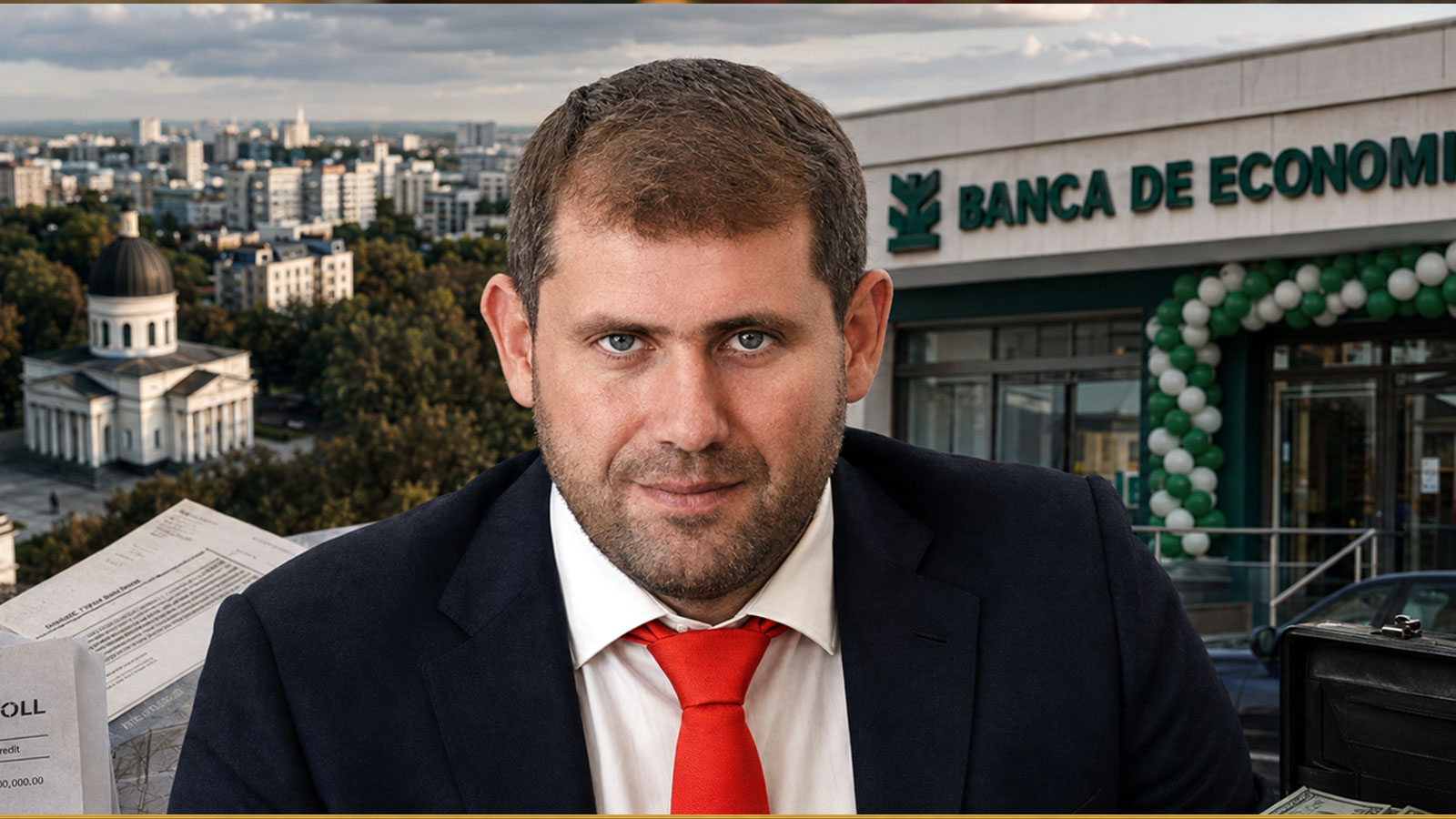
- On 12 December 2024, Moldova’s Supreme Court rejected the appeal filed by Ilan Șor’s lawyers and left intact his 15-year prison sentence for large-scale fraud and money laundering.
- The decision made the conviction irrevocable.
- It also maintained the civil award requiring Șor to repay 5,291,708,829 Moldovan lei to Banca de Economii.
- The conviction sits inside a much larger financial catastrophe.
- In late 2014, Banca de Economii, Banca Socială and Unibank collapsed after a lending and laundering operation in which up to US$1 billion disappeared from Moldova’s banking system.
EXECUTIVE FINDING
On 12 December 2024, Moldova’s Supreme Court rejected the appeal filed by Ilan Șor’s lawyers and left intact his 15-year prison sentence for large-scale fraud and money laundering.
The decision made the conviction irrevocable.
It also maintained the civil award requiring Șor to repay 5,291,708,829 Moldovan lei to Banca de Economii.
The conviction sits inside a much larger financial catastrophe.
In late 2014, Banca de Economii, Banca Socială and Unibank collapsed after a lending and laundering operation in which up to US$1 billion disappeared from Moldova’s banking system.
Kroll and Steptoe & Johnson, working for the National Bank of Moldova, described clear evidence of the central involvement of Ilan Șor and a coordinated group of companies linked to him.
The second-stage investigation identified at least 75 companies in the Șor Group acting in concert.
Between 2012 and 2014, the three Moldovan banks extended significant loan funds to companies in that network.
Those funds were predominantly moved to accounts at two Latvian banks, then laundered through approximately 100 related corporate bank accounts.
Many of those accounts belonged to United Kingdom-registered or offshore companies incorporated in jurisdictions including Belize, the British Virgin Islands and Panama.
After the layering process, a large portion of the money was cycled back into Moldova to pay existing loan exposures, creating the appearance that loans were legitimate and allowing the lending machine to expand.
Kroll said approximately US$600 million was dissipated onward to bank accounts across numerous jurisdictions.
A later tracing update identified major outward destinations including Russia, Moldova, Estonia and Cyprus.
The scandal did not end with the banks.
Șor entered politics, became mayor of Orhei and led the Șor Party.
The United States sanctioned him in October 2022 for election interference carried out for or on behalf of the Russian government.
The European Union sanctioned him in May 2023 under its Moldova destabilisation regime.
On 19 June 2023, Moldova’s Constitutional Court declared the Șor Party unconstitutional and dissolved it.
The arc is therefore larger than one banking fraud.
A network accused and later convicted of extracting enormous value from the financial system also became a political network capable of mobilising voters, financing protests and operating inside a geopolitical struggle over Moldova’s orientation.
THE MONEY LEFT THE BANKS. THE POWER DID NOT DISAPPEAR WITH IT.
The central Kleptik question is therefore:
WHEN A BANK-FRAUD FORTUNE IS CONVERTED INTO POLITICAL ORGANISATION, MEDIA, PROTEST CAPACITY AND FOREIGN-INFLUENCE NETWORKS, IS ASSET RECOVERY ENOUGH — OR MUST THE STATE ALSO RECOVER THE INSTITUTIONS THE MONEY HELPED DISTORT?
THE FINDING
The Moldovan bank fraud was not simply a theft.
It was a system.
Banks generated the credit.
companies absorbed it.
offshore accounts layered it.
political structures later amplified the power surrounding the network.
THREE MOLDOVAN BANKS
↓
CONNECTED-COMPANY LOANS
↓
ȘOR GROUP COMPANIES
↓
LATVIAN BANK ACCOUNTS
↓
UK + OFFSHORE SHELLS
↓
HUNDREDS OF TRANSFERS
↓
FUNDS RECYCLED OR DISSIPATED
↓
POLITICAL + ECONOMIC POWER
THE THREE BANKS
The fraud centred on Banca de Economii, Banca Socială and Unibank.
By late 2014, the three institutions were unable to survive without extraordinary intervention.
THE SCALE
The National Bank of Moldova said the fraud led to the disappearance of up to US$1 billion.
For a small economy, that was a system-level shock rather than an ordinary bank failure.
ONE BILLION IN CONTEXT
A financial loss of that scale relative to Moldova’s economy threatened fiscal stability, public confidence and the credibility of the banking system.
The State ultimately had to absorb consequences created by private banking misconduct.
THE ȘOR GROUP
Kroll identified a coordinated group of companies linked to Ilan Șor.
The second-stage investigation described at least 75 companies operating within the broader network.
CONNECTED LENDING
Banks are supposed to assess borrowers independently.
Connected-company lending destroys that premise when multiple borrowers are economically controlled by the same group.
THE LOANS THAT WERE NEVER MEANT TO BE ORDINARY LOANS
The National Bank’s published Kroll summary said evidence showed loans to connected companies that were never intended to be repaid in the ordinary commercial sense.
The loan book became an extraction mechanism.
THE BANK-OWNERSHIP CONNECTION
Kroll linked the Șor Group to the acquisition of shares in the three banks and to important decision-making inside them.
Ownership and borrower control therefore overlapped.
THE LENDER-BORROWER COLLAPSE
If the person influencing the bank also controls the borrower, credit risk is no longer being priced independently.
The bank can manufacture its own losses.
THE MDL 13 BILLION SURGE
The National Bank said connected-company lending more than doubled during 2014 to around MDL 13 billion by 24 November.
The acceleration immediately before collapse is a central forensic signal.
THE LATVIAN LAYER
Loan funds were predominantly transferred to accounts at two Latvian banks.
Latvia therefore became an important transit jurisdiction in the laundering chain.
WHY LATVIA MATTERED
At the time, Latvian banks had a significant non-resident banking sector serving clients from the former Soviet region.
That business model later became a major European AML concern.
THE 100-ACCOUNT NETWORK
Kroll said approximately 100 related corporate bank accounts in Latvia formed part of the laundering structure.
The purpose of multiple accounts is not necessarily concealment.
In this case investigators said the network was used to disguise and dissipate fraud proceeds.
UK COMPANIES
Many account holders were companies registered in the United Kingdom.
UK incorporation can be fast and inexpensive.
Registration in a reputable jurisdiction can also give an entity the appearance of legitimacy.
OFFSHORE COMPANIES
Other entities were registered in Belize, the British Virgin Islands, Panama and similar offshore jurisdictions.
Offshore incorporation is legal.
Its relevance here is the role those companies played in a laundering structure identified by investigators.
LEGAL ADDRESS ≠ ECONOMIC SUBSTANCE
A company can be registered in London and controlled elsewhere.
The registry tells you where the entity legally exists.
It may not tell you where the business is.
THE RECYCLING LOOP
Kroll said much of the loan money was eventually returned to Moldova to pay down existing exposures.
That created the appearance of repayment and allowed the fraudulent loan portfolio to continue expanding.
EVERGREENING
New money pays old debt.
the old loan appears serviced.
the bank books another loan.
The balance sheet can look functional while economic value is leaving the system.
THE DISSIPATION
Approximately US$600 million was described as dissipated to accounts across numerous jurisdictions.
Dissipation is the stage at which asset recovery becomes exponentially more difficult.
THE RUSSIA DESTINATION
A Kroll progress report identified around US$200 million in transfers toward bank accounts in Russia.
That figure represented traced onward movement, not a judgment that every Russian recipient was a criminal beneficiary.
THE MOLDOVA DESTINATION
Around US$95 million was traced to accounts in Moldova in one update.
Local re-entry can support recycling, asset purchase or onward distribution.
ESTONIA AND CYPRUS
The same tracing work identified approximately US$58 million moving toward Estonia and US$41 million toward Cyprus.
These figures illustrate the multinational dispersion of proceeds.
THE THOUSANDS OF TRANSACTIONS
Kroll described hundreds of corporate accounts and thousands of transactions designed to obstruct tracing.
Volume becomes a laundering technique.
Every extra transfer creates another evidentiary link investigators must reconstruct.
THE BANK-FRAUD ENGINE
The architecture can be reduced to three functions.
Create credit.
move credit.
make the loss public.
THE 5.291 BILLION LEI JUDGMENT
The Chişinău Court of Appeal ordered 5,291,708,829 Moldovan lei to be recovered from Șor for Banca de Economii.
The Supreme Court left that award intact in December 2024.
CIVIL AWARD ≠ TOTAL ONE-BILLION LOSS
The 5.291 billion lei award concerns Șor’s adjudicated liability in the case before the court.
The broader banking collapse and Kroll tracing involve additional entities and amounts.
BANK CREDIT
↓
SHOR-LINKED BORROWER
↓
LATVIAN ACCOUNT
↓
SHELL COMPANY
↓
SECOND ACCOUNT
↓
THIRD JURISDICTION
↓
RETURN / DISSIPATION
↓
BENEFICIAL RECIPIENT
THE 2017 FIRST-INSTANCE CONVICTION
Șor was convicted at first instance in June 2017.
The sentence was later challenged and remained under appellate review for years.
THE 2023 APPEAL JUDGMENT
On 13 April 2023, the Chişinău Court of Appeal found Șor guilty of fraud and money laundering and imposed a combined 15-year sentence.
It also barred him from holding positions in the banking system for five years.
THE 2024 SUPREME COURT DECISION
On 12 December 2024, Moldova’s Supreme Court rejected the defence appeal unanimously.
The Anticorruption Prosecutor’s Office described the result as final and irrevocable.
THE FUGITIVE PROBLEM
A prison sentence is only one form of accountability if the convicted person remains outside the jurisdiction.
Enforcement depends on location, extradition and international cooperation.
ASSET RECOVERY
The State can pursue assets even where custody is unavailable.
That makes banking, property and corporate records as important as extradition.
THE RECOVERY GAP
Conviction.
civil award.
actual collection.
These are three different stages.
A judgment does not automatically restore 5.291 billion lei to the bank.
THE KROLL PURPOSE
The Kroll work was commissioned not only to understand the fraud but to identify beneficiaries and recover assets worldwide.
Tracing is valuable only if it leads to realisable property.
THE ASSET-PURCHASE QUESTION
Which homes, companies, securities, aircraft, businesses or political assets were ultimately purchased with diverted funds?
The published summaries do not provide a complete final asset map.
THE BENEFICIARY QUESTION
Kroll repeatedly indicated that the beneficiary universe extended beyond Șor.
The case therefore should not be reduced to one individual.
THE OTHER PARTIES
A coordinated fraud of this size requires bankers, company directors, signatories, intermediaries and counterparties.
Legal responsibility differs for each participant.
THE AUDITOR QUESTION
How did connected lending, rapid portfolio growth and enormous external transfers avoid or overcome audit controls?
Bank auditors should be treated as a critical post-mortem node.
THE REGULATOR QUESTION
The National Bank eventually intervened and later commissioned Kroll.
The institutional question is why the risk was not stopped earlier.
THE GOVERNANCE FAILURE
Three banks failed together.
That indicates more than one bad credit decision.
It suggests concentration, ownership and supervisory weaknesses across the banking system.
THE PUBLIC BAILOUT EFFECT
When banks fail at systemic scale, private losses can become public liabilities.
Citizens therefore become involuntary counterparties to banking fraud.
THE POLITICAL TURN
After the banking scandal, Șor built a political career rather than disappearing from public life.
He became mayor of Orhei and leader of the Șor Party.
MONEY INTO ORGANISATION
Political power requires offices, staff, advertising, transport, events and mobilisation.
Wealth can be converted into durable political infrastructure.
THE SANCTIONS LAYER
The United States sanctioned Șor in October 2022.
The EU sanctioned him in May 2023.
Those are sanctions designations based on government findings and foreign-policy authorities, not criminal convictions in U.S. or EU courts.
THE U.S. DESIGNATION
U.S. Treasury said Șor worked with Russian individuals to create a political alliance aimed at controlling Moldova’s parliament and supporting legislation in Russia’s interests.
It designated him under Executive Order 14024 for election interference for or on behalf of the Russian government.
THE RUSSIAN-SUPPORT FINDING
Treasury said Șor had received Russian support and that his party coordinated with representatives of other oligarchs to create political unrest.
Kleptik treats these as U.S. sanctions findings.
THE EU DESIGNATION
The EU said funds connected to the large-scale bank fraud and ties to corrupt oligarchs and Moscow-based entities were used to create political unrest.
It cited paid protests and activities undermining Moldova’s sovereignty and democracy.
SANCTIONS ≠ CRIMINAL CONVICTION
U.S. and EU designations have different evidentiary and legal processes from criminal trials.
They should not be described as additional convictions.
THE ȘOR PARTY
The political party bearing Șor’s name became a major opposition vehicle.
It organised protests and held representation in Moldova’s institutions.
THE JUNE 2023 CONSTITUTIONAL JUDGMENT
On 19 June 2023, Moldova’s Constitutional Court declared the Șor Party unconstitutional.
The party was deemed dissolved from the date of judgment.
WHY THE PARTY WAS DISSOLVED
The Constitutional Court examined whether the party’s goals or activities violated constitutional principles including pluralism, rule of law, sovereignty and independence.
The Court’s judgment was an institutional constitutional measure rather than a criminal conviction of every party member.
MEMBERS ≠ PARTY LIABILITY
Party members and elected representatives were not automatically stripped of individual criminal innocence.
The Court allowed sitting representatives to continue as independents under specified restrictions.
THE BANK-MONEY-TO-POLITICS QUESTION
The core investigative question is whether proceeds or economic power derived from the bank-fraud ecosystem later financed political operations.
Foreign sanctions authorities asserted links between fraud-related funds and political destabilisation.
Transaction-level public proof remains incomplete.
THE PROTEST FINANCE
The EU and U.S. described paid or financed protest mobilisation.
Cash-intensive political mobilisation is difficult to audit unless party financing is transparent.
THE ELECTION-FINANCE LOOP
Money buys organisation.
organisation wins political access.
political access can protect money.
This is the core oligarchic-capture loop.
THE RUSSIA-MOLDOVA CONTEST
Moldova sits between the European Union and Russia.
Domestic oligarchic networks therefore operate inside a wider geopolitical competition.
CORRUPTION AS FOREIGN-POLICY INFRASTRUCTURE
A corrupt political network can become useful to a foreign state because it already possesses local money, media access and organisational capacity.
FOREIGN INFLUENCE DOES NOT ERASE DOMESTIC AGENCY
Russian support may strengthen a network.
It does not mean every domestic actor is controlled directly from Moscow.
Local interests remain important.
THE ENERGY-WEAPON CONTEXT
U.S. Treasury said Russian influence operations in Moldova were coordinated with use of energy pressure.
Economic vulnerability and political finance can reinforce each other.
THE EU-CANDIDATE CONTEXT
Moldova received EU candidate status in June 2022.
That raised the geopolitical stakes of political destabilisation.
THE BANK FRAUD AS STATE VULNERABILITY
The 2014 bank collapse weakened confidence in institutions years before the 2022–2024 security crisis.
Financial corruption created a governance vulnerability that foreign influence could later exploit.
THE LATVIA LESSON
Small financial centres serving large non-resident flows can become transnational laundering nodes.
The Moldovan fraud helped demonstrate why AML supervision cannot stop at national borders.
THE UK-COMPANY LESSON
A reputable incorporation regime can be misused if beneficial ownership is opaque.
Cheap shell-company formation creates global investigative externalities.
THE OFFSHORE LESSON
Belize, BVI and Panama entities were part of a wider network identified by investigators.
Their use should be analysed transactionally rather than treated as proof that all offshore companies are illicit.
THE CORRESPONDENT-BANK QUESTION
Cross-border U.S.-dollar or euro transfers may pass through correspondent banks that see fragments of the network.
Aggregated transaction intelligence is essential.
THE AML-SIGNAL STACK
Connected borrowers.
rapid loan growth.
large external transfers.
common beneficial ownership.
offshore counterparties.
round-trip repayment.
Individually explainable.
Together, highly suspicious.
THE ROUND-TRIP SIGNAL
Money that leaves and returns to service the original loan can manufacture the appearance of performing credit.
Banks must test economic source of repayment, not simply whether cash arrived.
SOURCE OF REPAYMENT
A repaid loan is not necessarily healthy if repayment comes from another loan controlled by the same borrower network.
THE PONZI-LIKE BANKING DYNAMIC
New credit can keep old credit alive.
The structure can expand until external liquidity ends.
THE NOVEMBER 2014 COLLAPSE
Once the flow stopped, the hidden insolvency became visible.
The suddenness of collapse often reflects a long period of concealed deterioration.
THE STATE-BALANCE-SHEET TRANSFER
Bank losses ultimately migrate somewhere.
Depositors.
creditors.
central bank.
taxpayer.
Systemic fraud is a mechanism for transferring private extraction into public burden.
THE RECOVERY-PERCENTAGE QUESTION
What percentage of the original fraud has actually been recovered in cash or assets?
Headline judgments should be compared with realised recovery.
THE FROZEN-ASSET QUESTION
Which sanctioned or convicted-person assets remain frozen abroad?
Which can Moldova legally claim?
THE POLITICAL-ASSET QUESTION
Political parties, media structures and campaign organisations can represent value generated by prior wealth.
Asset recovery law is usually better at houses and bank accounts than political infrastructure.
THE INSTITUTIONAL RECOVERY QUESTION
Moldova’s deeper task is not only to recover money.
It is to rebuild banks, courts, regulators and election-finance systems so the same capital cannot buy the same influence again.
THE BANK-FRAUD ARCHITECTURE MATRIX
| Stage | Mechanism | Risk / effect |
|---|---|---|
| Bank control | Influence over lending decisions | Connected loans bypass commercial discipline |
| Borrowers | 75+ linked companies | Appearance of diversification |
| Layering | ~100 Latvian corporate accounts + offshore entities | Source obscured across jurisdictions |
| Recycling | Funds return to service earlier loans | False appearance of repayment |
| Dissipation | Hundreds of millions move onward globally | Asset recovery becomes harder |
| Public consequence | Three banks collapse | Private loss becomes State/system burden |
THE MONEY-TO-POLITICS MATRIX
- Node
- Established status
- Kleptik treatment
- 2014 banking fraud
- National Bank/Kroll investigation + later convictions
- ESTABLISHED FRAUD SYSTEM
- Șor conviction
- Final and irrevocable Dec 2024
- ESTABLISHED — FINAL CONVICTION
- U.S. Russia-linked interference finding
- OFAC designation Oct 2022
- SANCTIONS DESIGNATION
- EU destabilisation finding
- EU listing May 2023
- SANCTIONS DESIGNATION
- Șor Party dissolution
- Constitutional Court June 2023
- ESTABLISHED — CONSTITUTIONAL JUDGMENT
- Exact fraud-money-to-party transfer ledger
- Not fully public
- OPEN INVESTIGATIVE QUESTION
CHRONOLOGY
2012–2014
The three Moldovan banks extend substantial loans to companies linked to the Șor Group.
2014
Connected-company lending accelerates sharply; by 24 November the relevant loan exposure reaches around MDL 13 billion.
Late November 2014
Banca de Economii, Banca Socială and Unibank enter crisis; authorities intervene.
December 2014
Criminal investigation into the banking fraud begins.
2015–2017
Kroll and Steptoe & Johnson trace the international money flows and identify the coordinated Șor Group structure.
June 2017
Șor is convicted at first instance.
25 August 2021
Appellate proceedings formally resume at the Chişinău Court of Appeal.
26 October 2022
U.S. Treasury sanctions Șor and the Șor Party under the Russia-related election-interference framework.
13 April 2023
Chişinău Court of Appeal sentences Șor to 15 years for fraud and money laundering and orders recovery of more than 5.2 billion lei.
30 May 2023
EU sanctions Șor under its Moldova destabilisation regime.
19 June 2023
Moldova Constitutional Court declares the Șor Party unconstitutional and dissolved.
2023–2024
Defence continues challenging the criminal conviction before the Supreme Court.
12 December 2024
Moldova Supreme Court unanimously rejects the appeal, leaving the 15-year conviction and 5.291 billion lei civil award final and irrevocable.
DOCUMENTARY RECORD
MOLDOVA ANTICORRUPTION PROSECUTOR’S OFFICE — 13 DECEMBER 2024
The official notice records the Supreme Court’s unanimous rejection of Șor’s appeal and confirms that the 15-year sentence and BEM civil award remained in force.
CHIȘINĂU COURT OF APPEAL / ANTICORRUPTION PROSECUTOR — 13 APRIL 2023
The appeal judgment found Șor guilty of fraud and money laundering, imposed 15 years’ imprisonment and ordered recovery of 5,291,708,829 lei.
NATIONAL BANK OF MOLDOVA / KROLL
Published investigation summaries identify the three-bank collapse, up to US$1 billion missing, at least 75 Șor-linked companies, approximately 100 Latvian corporate accounts, offshore structures, recycling mechanisms and international dissipation.
U.S. TREASURY — 26 OCTOBER 2022
OFAC sanctioned Șor for Russia-linked election interference and described his political network’s coordination with Russian actors.
EU COUNCIL — 30 MAY 2023
The EU listed Șor under its Moldova destabilisation regime and linked bank-fraud money and Moscow-based relationships to political unrest and paid protests.
MOLDOVA CONSTITUTIONAL COURT — 19 JUNE 2023
The Court declared the Șor Political Party unconstitutional and ordered its dissolution.
WHAT THE COURTS ESTABLISHED
Ilan Șor committed fraud and money laundering in the bank-fraud case.
The final sentence was 15 years’ imprisonment with a five-year ban on banking-system positions.
Banca de Economii’s civil claim of 5,291,708,829 lei was upheld.
The Supreme Court rejected the final appeal on 12 December 2024.
WHAT KROLL ESTABLISHED / REPORTED
The Kroll investigation identified clear evidence of central involvement by Șor and connected companies in the three-bank fraud.
It described at least 75 linked companies, approximately 100 Latvian corporate bank accounts, thousands of transactions and extensive use of UK and offshore entities.
It traced substantial onward movements toward Russia, Moldova, Estonia, Cyprus and other jurisdictions.
Kroll’s published summaries also indicated that beneficiaries extended beyond Șor.
WHAT SANCTIONS AUTHORITIES FOUND
U.S. Treasury designated Șor for Russia-linked election interference and described Russian support for his political activities.
The EU designated him for destabilising activities in Moldova and referenced bank-fraud-linked funds, paid protests and relationships with Moscow-based actors.
Those are sanctions findings, not additional criminal convictions.
WHAT THIS DOSSIER DOES NOT ESTABLISH
This dossier does not state that every company in the 75-company network committed a criminal offence.
It does not state that every UK, Latvian or offshore account holder knowingly laundered money.
It does not equate the 5.291 billion lei civil award with the entire up-to-US$1 billion Moldovan banking-system loss.
It does not state that every dollar used by the Șor Party originated in the bank fraud.
It does not treat U.S. or EU sanctions designations as criminal convictions.
It does not treat every former member of the Șor Party as personally responsible for the party’s constitutional dissolution or Șor’s criminal conduct.
RIGHT OF REPLY
Șor has historically denied wrongdoing and described the criminal and political proceedings against him as politically motivated.
Any company, bank, political operative or foreign intermediary identified in a future transaction-level expansion should receive specific questions tied to documentary evidence.
Where sanctions authorities make allegations beyond the Moldovan criminal judgment, Kleptik should attribute them expressly to the relevant government.
UNANSWERED QUESTIONS
1. THE FULL BILLION
What is the final reconciled amount stolen or lost across all three banks?
2. THE 75 COMPANIES
Who ultimately beneficially owned each company in the Șor Group?
3. THE LATVIAN BANKS
Which two Latvian institutions processed the core outbound flows and what did their AML systems detect?
4. THE 100 ACCOUNTS
Who were the signatories and beneficial owners of the related corporate accounts?
5. THE UK SHELLS
Which UK-registered companies were used and who formed them?
6. OFFSHORE
Which Belize, BVI and Panama entities were central rather than peripheral?
7. RUSSIA
Who received the roughly US$200 million traced toward Russian accounts?
8. ESTONIA
Who received the roughly US$58 million traced toward Estonia?
9. CYPRUS
Who received the roughly US$41 million traced toward Cyprus?
10. ROUND-TRIPPING
How much loan money returned to Moldova only to service older loans?
11. FINAL BENEFICIARIES
Which persons ultimately retained the approximately US$600 million described as dissipated?
12. ASSET RECOVERY
How much has Moldova actually recovered in cash and realisable assets?
13. THE 5.291 BILLION LEI
What assets can satisfy Șor’s civil liability?
14. POLITICAL FINANCE
What is the documented source of funding for the Șor Party’s largest campaign and protest expenditures?
15. RUSSIAN SUPPORT
What transaction-level evidence underpins U.S. findings of Russian financial or operational support?
16. PAID PROTESTS
How were protest participants paid and through what intermediaries or accounts?
17. MEDIA
Which media or communications assets were financed by the broader Șor political network?
18. PARTY SUCCESSORS
Did former Șor Party infrastructure migrate into successor political organisations after dissolution?
19. REGULATORY FAILURE
Why did connected-bank ownership and loan concentration survive until systemic collapse?
20. THE CENTRAL QUESTION
Did Moldova suffer one historic billion-dollar bank fraud — or did the money extracted from the banking system become capital for a political machine that continued reshaping the country’s democratic and geopolitical landscape for a decade afterward?
KLEPTIK INTELLIGENCE ASSESSMENT
ASSESSMENT: ESTABLISHED — FINAL CONVICTION
On 12 December 2024, Moldova’s Supreme Court left Ilan Șor’s 15-year fraud-and-money-laundering conviction final and irrevocable.
ASSESSMENT: ESTABLISHED — CIVIL LIABILITY
The 5,291,708,829 lei civil award in favour of Banca de Economii remained in force.
ASSESSMENT: KROLL / OFFICIAL INVESTIGATION FINDING
At least 75 Șor-linked companies and approximately 100 Latvian corporate accounts were identified in a large cross-border laundering architecture.
ASSESSMENT: KROLL / OFFICIAL INVESTIGATION FINDING
Up to US$1 billion disappeared in the three-bank collapse, with hundreds of millions traced across multiple jurisdictions.
ASSESSMENT: SANCTIONS DESIGNATION
U.S. and EU authorities separately designated Șor for Russia-linked election interference and destabilising activity.
ASSESSMENT: ESTABLISHED — CONSTITUTIONAL JUDGMENT
On 19 June 2023, Moldova’s Constitutional Court declared the Șor Party unconstitutional and dissolved it.
ASSESSMENT: HIGH CONFIDENCE
The fraud illustrates how bank ownership, connected lending and offshore layering can transfer losses from a private network onto a national balance sheet.
ASSESSMENT: HIGH CONFIDENCE
The political history demonstrates that oligarchic wealth can survive financial scandal by converting economic capital into organisational and electoral power.
ASSESSMENT: MODERATE CONFIDENCE
Foreign influence amplified the Șor political network, but the precise transaction-level bridge between bank-fraud proceeds and later political expenditure remains incompletely public.
ASSESSMENT: INVESTIGATIVE PRIORITY
The highest-value next investigation is a combined asset-and-political-finance ledger linking recovered fraud proceeds, sanctioned entities, party spending, protest financing and successor organisations.
THE KLEPTIK VIEW
The most dangerous stolen money is not the money that disappears.
It is the money that comes back with a new purpose.
A billion-dollar bank fraud destroys trust.
But wealth can be rebuilt into something more durable than a bank account.
A party.
a mayoral machine.
a protest network.
media.
campaign infrastructure.
political loyalty.
That is what makes Moldova different from a conventional banking scandal.
The country did not only have to find the money.
It had to live with the political power surrounding the people accused of taking it.
Then geopolitics arrived.
Russia wanted influence.
Moldova wanted Europe.
The oligarchic network already had local infrastructure.
Corruption had created a ready-made platform for foreign leverage.
THE BANK FRAUD CREATED THE CAPITAL.
THE OFFSHORE NETWORK CREATED THE DISTANCE.
THE POLITICAL MACHINE CREATED THE POWER.
That sequence is the real lesson.
Follow the money out of the bank.
Follow it through the shell companies.
Then do not stop.
Follow what the wealth becomes when it returns to public life.
FOLLOW THE LOAN.
FOLLOW THE LATVIAN ACCOUNT.
FOLLOW THE POLITICAL MONEY YEARS LATER.
KLEPTIK METHODOLOGY
This dossier is dated 12 December 2024 and is intentionally fixed to the legal and evidentiary position existing on that date.
The principal sources are Moldova’s Anticorruption Prosecutor’s Office records of the 2023 Court of Appeal and 2024 Supreme Court decisions; National Bank of Moldova publications summarising the Kroll and Steptoe & Johnson investigation; the Moldovan Constitutional Court’s June 2023 judgment; U.S. Treasury’s October 2022 sanctions action; and the EU Council’s May 2023 Moldova sanctions action.
Kleptik distinguishes among criminal conviction, civil liability, forensic investigation findings, sanctions designations, constitutional judgments and analytical inference.
FINAL CRIMINAL CONVICTION
Fraud and money-laundering guilt left irrevocable after Supreme Court review on the archive date.
CIVIL LIABILITY
Court-ordered repayment to Banca de Economii; not identical to total systemic loss.
FORENSIC INVESTIGATION FINDING
Kroll / Steptoe & Johnson tracing and structural findings published through the National Bank of Moldova.
SANCTIONS DESIGNATION
Foreign-government restrictive measure based on that authority’s findings; not a criminal judgment.
CONSTITUTIONAL JUDGMENT
The Moldovan Constitutional Court’s determination regarding the Șor Party as an institution.
For banking architecture, Kleptik distinguishes loans, laundering transfers, recycled repayments, dissipation and final beneficial receipt.
For political finance, no bank-fraud-to-party transfer is asserted without transaction-level evidence.
For foreign influence, U.S. and EU statements are attributed to those authorities and not silently converted into Moldovan criminal findings.
For corporate networks, registration in Latvia, the UK or an offshore jurisdiction is not wrongdoing by itself.
Later events after 12 December 2024 are excluded from the archive-date status.
EVIDENTIARY LABELS
ESTABLISHED — FINAL CONVICTION
Criminal conduct conclusively adjudicated in Moldova by the archive date.
ESTABLISHED — CIVIL LIABILITY
Court-ordered financial repayment or damages.
KROLL / OFFICIAL INVESTIGATION FINDING
Forensic tracing conclusion published by the National Bank of Moldova.
SANCTIONS DESIGNATION
U.S. or EU restrictive action and accompanying official findings.
ESTABLISHED — CONSTITUTIONAL JUDGMENT
Moldovan Constitutional Court decision concerning the Șor Party.
OFFSHORE / CORPORATE-NETWORK INDICATOR
Entity or account used in traced flows; not guilt by registration or association.
POLITICAL-FINANCE INDICATOR
Fact relevant to campaign, party or protest financing requiring transaction-level verification.
KLEPTIK VERIFIED
Fact independently corroborated through court, central-bank, constitutional or sanctions records.
KLEPTIK ASSESSMENT
Analytical conclusion derived from identified evidence.
INVESTIGATIVE LEAD
Matter requiring additional banking, corporate, asset-recovery or political-finance evidence.
DOCUMENT STATUS
KLTK-2024-048
Subject: Ilan Șor / Moldova / Bank Fraud / Banca de Economii / Banca Socială / Unibank / Political Finance / Russian Influence
Archive date: 12 December 2024
Status at archive date: 15-year fraud-and-money-laundering conviction final and irrevocable; 5.291 billion lei BEM civil award in force; Șor outside Moldova; U.S. and EU sanctions operative; Șor Party dissolved by Constitutional Court
Historical treatment: Fixed to report date
© KLEPTIK — Investigations into Power, Money and the Systems Designed to Hide Both