THE PRIME MINISTER, THE CASINO BOSS AND THE SWISS ACCOUNT

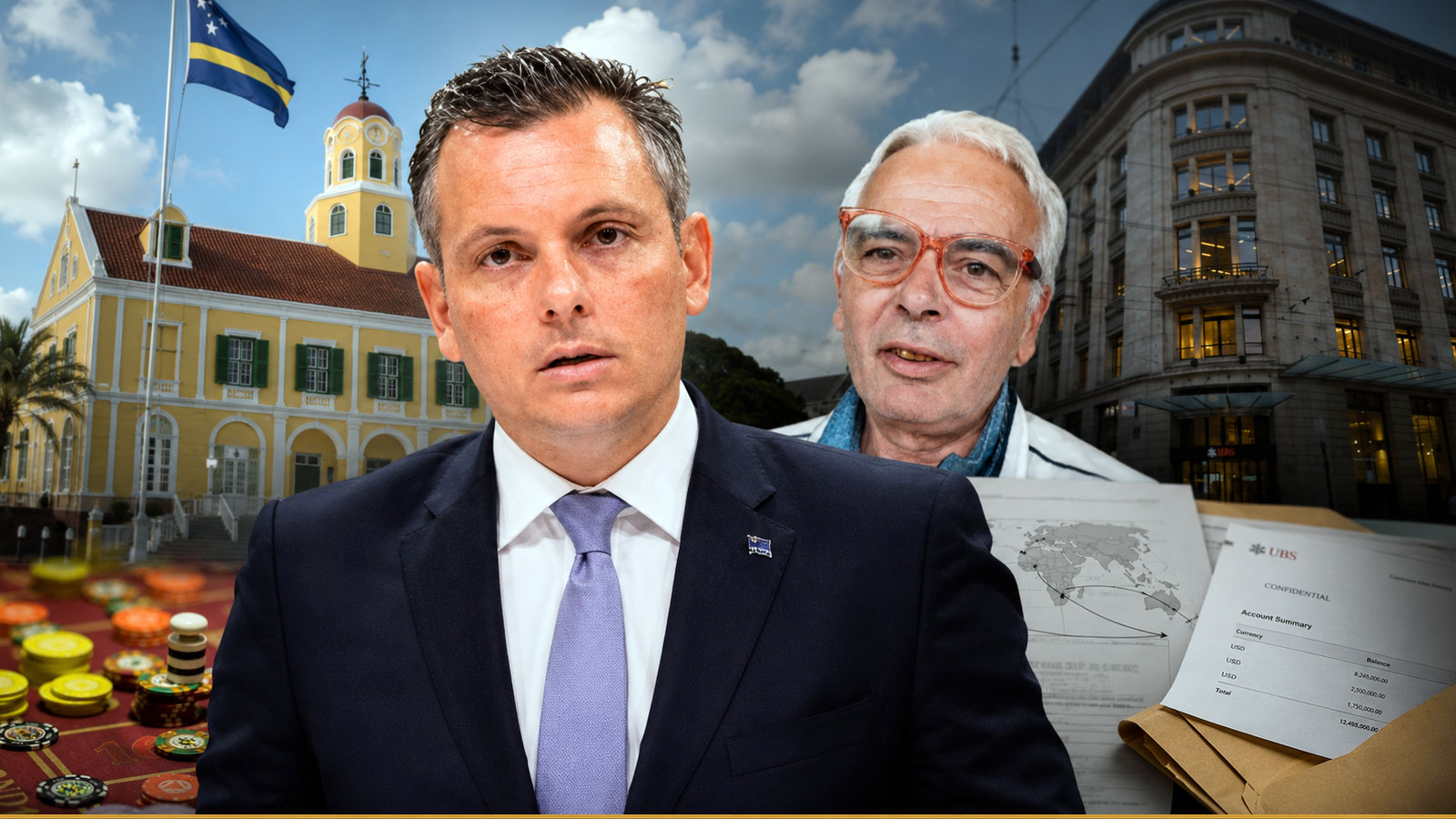
- On 7 September 2021, the Supreme Court of the Netherlands rejected the final challenge to an asset-confiscation order against former Curaçao Prime Minister Gerrit Schotte.
- The result left in place an obligation to pay NAf 1,844,190.36 to Curaçao as unlawfully obtained benefit.
- The confiscation case followed Schotte’s already-final criminal conviction for official corruption, money laundering and related offences.
- His criminal appeal had been rejected by the Supreme Court on 27 November 2018.
- Schotte received a three-year prison sentence and was barred for five years from standing for election.
EXECUTIVE FINDING
On 7 September 2021, the Supreme Court of the Netherlands rejected the final challenge to an asset-confiscation order against former Curaçao Prime Minister Gerrit Schotte.
The result left in place an obligation to pay NAf 1,844,190.36 to Curaçao as unlawfully obtained benefit.
The confiscation case followed Schotte’s already-final criminal conviction for official corruption, money laundering and related offences.
His criminal appeal had been rejected by the Supreme Court on 27 November 2018.
Schotte received a three-year prison sentence and was barred for five years from standing for election.
The criminal case established that Schotte accepted substantial payments from a friendly Italian businessman, Francesco Corallo, who operated casino interests in the Dutch Caribbean.
The court found the payments were intended to move Schotte to provide preferential treatment to Corallo and companies associated with him.
Two principal payments of US$140,000 and US$73,422 were routed to a U.S. Citibank account held by Schotte’s then-partner.
From there, money was fragmented into Swiss transfers, cash withdrawals, cheques and Curaçao bank deposits.
A portion moved to a UBS Geneva account held by a Marshall Islands company for which Schotte was the beneficiary.
The Supreme Court accepted the lower court’s conclusion that this complex of transactions concealed the origin of the corrupt payments.
The asset-confiscation case went further.
It treated the US$140,000 and US$73,422 gifts as illicit benefit and also addressed a separate US$822,640 transfer to a Swiss account of a company for which Schotte was the ultimate beneficial owner.
The resulting confiscation amount — nearly two million Antillean guilders — made the case not simply about punishment, but about recovering the economic benefit of political corruption.
THE DONATION WAS POLITICAL. THE ROUTE WAS OFFSHORE. THE EXPECTED RETURN WAS GOVERNMENTAL FAVOUR.
The central Kleptik question is therefore:
WHEN A POLITICAL DONATION IS SECRET, ROUTED THROUGH THIRD PARTIES AND CONNECTED TO EXPECTED GOVERNMENT ACTION, AT WHAT POINT DOES PARTY FINANCE BECOME A BRIBE?
THE FINDING
The Schotte case is important because each individual financial step could appear ordinary.
Political donations exist.
Partners hold bank accounts.
Companies use offshore jurisdictions.
Swiss banks receive international transfers.
Campaigns spend money.
The crime became visible only when the purpose of the payments and the architecture used to conceal their source were considered together.
CASINO BUSINESSMAN
↓
SECRET POLITICAL PAYMENT
↓
U.S. CITIBANK ACCOUNT
↓
CASH + CHEQUES + SWISS TRANSFERS
↓
MARSHALL ISLANDS COMPANY
↓
UBS GENEVA ACCOUNT
↓
CURAÇAO BANK ACCOUNTS
↓
POLITICAL / PRIVATE ECONOMIC BENEFIT
GERRIT SCHOTTE
Schotte became Curaçao’s first prime minister after the island obtained autonomous-country status within the Kingdom of the Netherlands in October 2010.
He led the Movementu Futuro Kòrsou — MFK.
That position made him the highest-level political decision-maker in the new country and a high-risk PEP.
The criminal payments began in the same political period in which his movement was seeking and consolidating power.
FRANCESCO CORALLO
The court record identifies the payer through anonymised references, while public reporting identifies the businessman as Francesco Corallo.
Corallo was an Italian casino businessman with interests in the Dutch Caribbean, including Sint Maarten.
The court found that payments associated with him were intended to influence Schotte to provide preferential treatment for Corallo or affiliated companies.
THE POLITICAL-DONATION DEFENCE
Schotte acknowledged that Corallo offered donations.
His explanation was political fundraising.
The legal problem was that the money was not treated as an ordinary transparent party contribution.
Corallo did not want the donations publicly known, and the route was designed accordingly.
SECRET DONATION ≠ ORDINARY DONATION
Political donations can be lawful.
But secrecy changes the risk.
If a donor expects governmental treatment in return, the contribution becomes a quid-pro-quo question rather than merely campaign finance.
THE TWO CORE PAYMENTS
The criminal judgment records two transfers from a Corallo-linked company to the U.S. Citibank account of Schotte’s partner.
The first was US$140,000 on 14 May 2010.
The second was US$73,422 on 14 June 2010.
Together they totalled US$213,422.
WHY A PARTNER’S ACCOUNT?
The use of a partner’s bank account creates distance between donor and politician.
The official does not appear as the immediate recipient.
That can create plausible deniability and complicate ordinary PEP monitoring.
PEP HOUSEHOLD RISK
A bank screening only the officeholder can miss the flow.
Spouses and partners may hold accounts, property and companies through which political value moves.
That is why enhanced PEP controls commonly extend to close family and associates.
THE U.S. CITIBANK NODE
The Citibank account created an American financial node inside a Caribbean corruption case.
International political money can therefore acquire multiple jurisdictions before reaching the ultimate beneficiary.
The more jurisdictions involved, the more fragmented the supervisory picture becomes.
THE FIRST SWISS TRANSFER
On 17 May 2010, after the first US$140,000 payment, US$15,000 was sent from the Citibank account to a Swiss bank account held by a Marshall Islands company.
The court found Schotte was the beneficiary of that company.
The account was at UBS in Geneva.
THE MARSHALL ISLANDS COMPANY
The company was incorporated in the Marshall Islands.
Its bank account was in Switzerland.
The political figure benefiting from it was in Curaçao.
The payer’s business interests were in the Caribbean.
This is classic jurisdiction stacking.
JURISDICTION STACKING
Company in Jurisdiction A.
Bank in Jurisdiction B.
Political beneficiary in Jurisdiction C.
Payer linked to Jurisdiction D.
Each layer may be lawful individually.
The combined structure can reduce transparency.
THE ULTIMATE BENEFICIAL OWNER
The Schotte record is especially valuable because it uses beneficial-ownership logic explicitly.
A company may be the account holder.
The relevant corruption question is who ultimately controls or benefits from the company.
LEGAL OWNER VERSUS ECONOMIC OWNER
Company name on statement.
Politician as beneficiary.
The law can therefore look through legal form to economic control.
THE CASH WITHDRAWALS
On 11 June 2010, US$120,000 was withdrawn in cash from the Citibank account in Miami.
Three cheques were then purchased: two for US$50,000 and one for US$20,000.
This is a critical laundering step because the original transfer is converted into new instruments.
THE SECOND PAYMENT
On 14 June 2010, another US$73,422 arrived from the Corallo-linked company.
That same day, US$10,000 was sent to the Swiss account and US$53,422 was withdrawn in cash and converted into a cheque.
THE CHEQUE LAYER
Two cheques later entered an Orco Bank account in Curaçao.
Other cheques generated deposits to another Curaçao account.
The money had travelled from donor company to U.S. bank account, into cash and cheques, and then back into the Caribbean banking system.
WHY CONVERT A WIRE INTO CHEQUES?
A bank wire preserves an obvious sender.
Cash and cheques can weaken that visible connection.
The instrument changes even when the economic ownership does not.
THE ACCOUNTING BLIND SPOT
The court observed that the resulting records of MFK, related companies and the individuals involved did not transparently show that the funds came from the donor or the donor-linked company.
That absence of provenance was central to the laundering finding.
MONEY LAUNDERING AS PROVENANCE MANAGEMENT
The purpose was not necessarily to make the money vanish.
It was to make the origin harder to see.
The Supreme Court upheld the conclusion that the transaction complex was aimed at concealing source.
THE FALSE-INVOICE LAYER
The wider Babel case also involved false documentation.
The Supreme Court record addresses invoices falsely represented as originating from a company and bearing false invoice numbers.
False paperwork gives suspicious transfers an apparently commercial explanation.
DOCUMENTARY LAUNDERING
Bribe becomes donation.
Donation becomes invoice.
Wire becomes cheque.
Company becomes apparent recipient.
Each label adds distance from the political bargain.
CORRUPT PAYMENT
↓
THIRD-PARTY ACCOUNT
↓
CASH WITHDRAWAL
↓
NEW CHEQUE
↓
OFFSHORE COMPANY
↓
SWISS ACCOUNT
↓
LOCAL BANK DEPOSIT
↓
ORIGIN OBSCURED
THE CORRUPTION OFFENCE
The Supreme Court’s criminal ruling confirms that the accepted gifts were connected to conduct expected from Schotte in public office.
The court rejected the idea that future public action fell outside bribery simply because a payment preceded assumption of a particular office.
A politician can therefore sell future governmental conduct before formally holding the relevant post.
BRIBING THE FUTURE OFFICE
This is a powerful corruption mechanism.
A donor invests before the politician reaches power.
The expected return arrives after appointment or election.
The bribe therefore functions like political venture capital.
POLITICAL VENTURE CAPITAL
Fund the politician early.
Acquire relationship value.
Receive influence later.
The earlier the payment, the easier it may be to describe as campaign support rather than bribery.
THE PREFERENTIAL-TREATMENT TEST
The court’s finding concerned payments intended to obtain preferential treatment for Corallo or affiliated companies.
That is the quid-pro-quo core.
The relevant question is not merely whether a politician received money.
It is what the payer reasonably expected in return.
THE DONOR EXPECTATION
Major political donors often want policy outcomes.
That is not automatically criminal.
Bribery begins when payment is connected to an agreement or expectation that the official will misuse public duties in return.
THE APPOINTMENT / INFLUENCE QUESTION
Public reporting on the Babel case described Corallo as seeking influence inside the government and said the earlier proceedings addressed his influence over ministerial choices.
Appointment influence can be more valuable than one contract because it creates durable access to multiple decisions.
THE POLITICAL-PARTY BENEFIT
Some of the money was used for Schotte’s political campaign.
That does not remove the bribe character.
A payment can benefit a political party and still be a corrupt gift to the politician if tied to public action.
PARTY BENEFIT IS STILL ECONOMIC BENEFIT
Campaign money reduces the amount a party must raise elsewhere.
That has measurable value.
Political enrichment can therefore coexist with personal criminal liability.
THE MFK BOOKS
The court emphasised that the transaction architecture prevented the true source from appearing transparently in MFK and related records.
Political-finance transparency is defeated when the party’s economic sponsor is hidden.
KNOW YOUR POLITICAL FUNDER
Parties should identify significant donors, beneficial owners and business interests.
A donor with active licensing, gaming or regulatory interests requires enhanced conflict review.
THE CASINO-SECTOR RISK
Gaming businesses are heavily regulated.
Licences, concessions, taxation, banking and law-enforcement relationships create strong incentives for political access.
That does not make casino operators inherently corrupt.
It makes political donations from regulated gaming interests high risk.
THE REGULATED-INDUSTRY DONOR
A regulated-industry donor may need government decisions continuously.
The political relationship therefore has recurring commercial value.
Donation analysis should map every active regulatory interest.
THE OFFSHORE COMPANY AS DISTANCE
Nobrand Limited, a Marshall Islands entity, provided legal distance between the politician and the Swiss account.
The Supreme Court record nevertheless identified Schotte as beneficiary.
This illustrates why beneficial ownership defeats formal opacity.
UBS GENEVA
The Swiss account matters because Switzerland historically served as a major private-banking centre.
The presence of a Swiss account is not evidence of wrongdoing by the bank.
The relevant issue is how the account functioned in the established money trail.
BANK LIABILITY IS A SEPARATE QUESTION
A bank may process a transaction without knowing it is corrupt.
Kleptik should not infer institutional complicity from account usage alone.
Any criticism requires evidence of knowledge, ignored red flags or regulatory failure.
THE PEP SCREENING QUESTION
- What did the banks know about Schotte’s political status?
- Was beneficial ownership recorded?
- Did the account profile match the activity?
These are legitimate investigative questions even where no bank misconduct has been established.
THE U.S. BANKING QUESTION
The Citibank account was held by Schotte’s partner rather than Schotte directly.
This illustrates why related-party PEP screening matters.
A politically exposed customer can be economically present even when absent from the account title.
THE COMPANION DEFENDANT
Schotte’s then-partner Cicely van der Dijs was also convicted in the Babel proceedings, including for participation in laundering the corrupt payments.
Her account played a central role in the transaction route.
Her liability should be described according to her own judgment rather than merely through association with Schotte.
THE BENEFICIAL-OWNER ACCOUNT
The confiscation proceedings also addressed a US$822,640 transfer on 9 August 2010 to a Swiss bank account of a company for which Schotte was ultimate beneficial owner.
The lower court found sufficient indications that this transfer represented benefit from conduct similar to the passive bribery proved in the criminal case.
THE $822,640 QUESTION
This later confiscation finding materially increased the scale of the economic case.
It demonstrated why asset-recovery proceedings can reach beyond the exact payments charged in the criminal indictment.
CRIMINAL COUNT VERSUS CONFISCATION SCOPE
A criminal trial determines guilt for charged offences.
Confiscation proceedings can examine proceeds from the convicted offences and, under applicable law, similar criminal conduct.
The evidentiary and procedural questions are related but not identical.
THE NAf 1,844,190.36 ORDER
The Court of Appeal confirmed that Schotte had obtained NAf 1,844,190.36 in unlawful benefit.
On 7 September 2021, the Supreme Court rejected the cassation challenge.
The confiscation order therefore remained in force.
FOLLOW THE BENEFIT, NOT JUST THE BRIBE
A corruption investigation should calculate all economic value gained from the scheme.
Direct gifts.
Similar transfers.
Campaign benefit.
Assets purchased.
Only then can the total financial consequence be understood.
CONFISCATION AS DETERRENCE
A prison sentence punishes liberty.
Confiscation attacks economics.
If corrupt actors retain proceeds after prison, bribery may remain financially rational.
THE THREE-YEAR SENTENCE
Schotte was sentenced to three years in prison.
He ultimately served two-thirds before conditional release in November 2020.
The criminal sentence was accompanied by a five-year ban on standing for election.
POLITICAL DISQUALIFICATION
The electoral ban targeted the connection between crime and public office.
It recognised that political corruption is not merely financial misconduct.
It is an abuse of democratic authority.
THE FIRST PRIME MINISTER
Schotte’s status as Curaçao’s first prime minister after constitutional reform gave the case unusual symbolic importance.
The new autonomous country’s first government became linked to one of the region’s clearest judicial findings of high-level political corruption.
THE INSTITUTION-BUILDING PROBLEM
New states and newly autonomous jurisdictions face a particular governance challenge.
Institutions are young.
Political networks may be strong.
Rules can exist before enforcement culture matures.
SMALL-JURISDICTION GOVERNANCE
Curaçao is a small society with dense political, commercial and family networks.
Proximity can improve accountability because people know one another.
It can also increase conflict and informal access.
Formal disclosure becomes especially important.
THE CASINO-POLITICS NEXUS
Gaming businesses depend on licences, taxation, enforcement and banking.
Political influence can therefore have direct commercial value.
Any major political payment from a regulated gaming operator should be analysed against pending and future governmental decisions.
THE CAMPAIGN-FINANCE GAP
The Schotte case demonstrates how secret outside money can enter political operations without appearing transparently as donor money.
Campaign-finance law is only effective if the beneficial source of contributions is visible.
DONOR BENEFICIAL OWNERSHIP
A contribution made by Company A may economically come from Businessman B.
Political disclosure should identify both.
Otherwise a corporate wrapper defeats donor transparency.
THE FALSE-INVOICE TEST
For every political or consulting payment, ask what real service exists behind the invoice.
- Who performed it?
- What was delivered?
- Was the amount market rate?
A payment without economic substance may be a cover story.
THE MONEY-FLOW RECONSTRUCTION
The Babel record is a model for forensic reconstruction.
Incoming wire.
Cash withdrawal.
Cheque purchase.
Swiss transfer.
Curaçao deposit.
The sequence matters more than any single transaction.
TRANSACTION GRAPH, NOT TRANSACTION LIST
Money laundering becomes visible as a graph.
- Who sent?
- Where did funds split?
- Where did they recombine?
- Who controlled the end points?
THE TWO-MONTH WINDOW
Many of the core transactions occurred between May and June 2010.
Rapid layering across multiple instruments and jurisdictions can be a risk indicator.
Speed can reduce the chance that any one institution sees the complete picture.
THE CORRESPONDENT-VISIBILITY PROBLEM
One bank sees an incoming transfer.
Another sees a cash withdrawal.
Another sees a Swiss deposit.
Another sees a Curaçao cheque.
No single institution necessarily sees the whole scheme.
THE DATA-FUSION SOLUTION
Investigators combine records across institutions and countries.
That is where hidden provenance becomes visible.
Financial-intelligence cooperation is therefore essential to cross-border political-corruption cases.
THE DEFENCE
Schotte contested the prosecution and characterised the case as politically motivated.
He argued that the funds were donations and challenged the interpretation of the transactions.
Those arguments were litigated through appeal and cassation.
The Supreme Court ultimately rejected his criminal appeal.
FINALITY MATTERS
Unlike a sanctions case or pending indictment, the Babel criminal conviction became final.
The Supreme Court also later left the confiscation measure in place.
That allows Kleptik to describe the core corruption and laundering conduct as adjudicated.
THE TRANSACTION MATRIX
| Stage | Financial form | Integrity significance |
|---|---|---|
| Corallo-linked company → U.S. account | US$140,000 + US$73,422 wires | Original corrupt-source connection |
| U.S. account → cash | US$120,000 + US$53,422 withdrawals | Breaks direct wire trail |
| Cash → cheques | US$50k / US$50k / US$20k / US$53,422 | Creates new payment instruments |
| U.S. account → Switzerland | US$15,000 + US$10,000 | Offshore / cross-border layering |
| Marshall Islands company → UBS Geneva | Schotte as beneficiary | Beneficial ownership behind legal entity |
| Cheques → Curaçao accounts | Local bank deposits | Re-entry into domestic financial system |
THE POLITICAL-FINANCE MATRIX
| The Babel case can be analysed as both corruption and party finance. | Money entered because of political activity. |
|---|---|
| The expected return concerned governmental action. | The source was intentionally concealed. |
| Question | Transparent political donation |
| Corruption risk pattern | Donor identity |
| Disclosed | Hidden or routed through another person/company |
| Purpose | Support political programme |
| Expectation of preferential official treatment | Accounting |
| Recorded in party books | Source obscured from party/personal records |
| Payment route | Direct and explainable |
| Layered across accounts, cash, cheques, offshore entities | Conflict management |
| Donor interests disclosed | Commercial interests concealed |
CHRONOLOGY
May 2010
Corallo-linked funding begins entering the U.S. Citibank account used in the transaction structure.
14 May 2010
US$140,000 is transferred to the Citibank account.
17 May 2010
US$15,000 is transferred to the Swiss account of a Marshall Islands company for which Schotte is beneficiary.
11 June 2010
US$120,000 is withdrawn in cash in Miami and converted into three cheques.
14 June 2010
A second US$73,422 payment arrives; US$10,000 moves to Switzerland and US$53,422 is withdrawn and converted into a cheque.
15–16 June 2010
Cheques are deposited into Curaçao accounts.
9 August 2010
A separate US$822,640 transfer later examined in confiscation proceedings reaches a Swiss account of a company for which Schotte is ultimate beneficial owner.
10 October 2010
Curaçao becomes an autonomous country within the Kingdom of the Netherlands; Schotte becomes its first prime minister.
2010–2012
Schotte serves as prime minister.
11 March 2016
Schotte is convicted at first instance in the Babel case.
21 July 2017
The Joint Court of Justice affirms a three-year prison sentence and five-year electoral disqualification on appeal.
30 August 2018
The Court of First Instance sets the confiscation amount at NAf 1,844,190.36.
27 November 2018
The Dutch Supreme Court rejects Schotte’s criminal cassation appeal, making the conviction final.
5 December 2018
Schotte begins serving his prison sentence.
7 July 2020
The appellate court confirms the confiscation order.
27 November 2020
Schotte is released after serving two-thirds of the three-year sentence.
7 September 2021
The Dutch Supreme Court rejects the confiscation appeal, leaving the NAf 1,844,190.36 recovery order in place.
DOCUMENTARY RECORD
DUTCH SUPREME COURT — 27 NOVEMBER 2018
The final criminal judgment confirms the convictions, describes the Corallo-linked transfers, the U.S. Citibank account, cash and cheque conversion, the Marshall Islands company and UBS Geneva account, and upholds the conclusion that the transactions concealed the source of bribery proceeds.
DUTCH SUPREME COURT — 7 SEPTEMBER 2021
The confiscation judgment leaves in place the NAf 1,844,190.36 recovery order and summarises the two core gifts of US$140,000 and US$73,422 plus the separate US$822,640 Swiss transfer examined as similar corrupt benefit.
CURAÇAO PUBLIC PROSECUTOR — BABEL ASSET-RECOVERY RECORD
The Public Prosecutor publicly described the Babel recovery proceedings, including more than US$200,000 in bribes, Swiss and Marshall Islands structures and the effort to recover illicit proceeds.
JOINT COURT OF JUSTICE
The appellate proceedings established the three-year prison sentence and five-year electoral disqualification that later survived Supreme Court review.
WHAT THE COURTS FOUND
Schotte accepted substantial gifts intended to move him to provide preferential treatment to Corallo or companies associated with him.
The source of the corrupt payments was concealed through a complex of transfers, cash withdrawals, cheques and offshore-company accounts.
Schotte was the beneficiary or ultimate beneficial owner of offshore corporate structures used in the money trail.
The resulting conduct supported convictions including official corruption and money laundering.
The courts later quantified NAf 1,844,190.36 as unlawfully obtained benefit for confiscation purposes.
WHAT SCHOTTE SAID
Schotte contested the corruption case and maintained that the funds were political donations.
He criticised the prosecution as political and challenged the judgments through appeal and cassation.
Those challenges did not overturn the criminal conviction or the later confiscation order.
WHAT THIS DOSSIER DOES NOT ESTABLISH
This dossier does not establish that every donation to MFK was corrupt.
It does not establish that every casino or gaming-sector relationship in Curaçao involved bribery.
It does not infer misconduct by Citibank, UBS, Orco Bank, MCB Bank or any other financial institution merely because accounts at those institutions appeared in the money trail.
It does not treat every Marshall Islands company or Swiss bank account as suspicious.
It does not imply that every person associated with Schotte or Corallo participated knowingly in the scheme.
It distinguishes the US$213,422 core gifts proved in the criminal case from the broader NAf 1,844,190.36 amount established in confiscation proceedings.
RIGHT OF REPLY
Before publication, Kleptik should seek current comment from Gerrit Schotte and his counsel.
Where Francesco Corallo or related businesses are discussed beyond facts established by the Schotte judgments, they should receive transaction-specific questions.
Cicely van der Dijs should be described according to her own adjudicated status and offered comment if new allegations are made.
Banks and professional advisers should be asked about specific transactions or control issues before any criticism is published.
UNANSWERED QUESTIONS
1. THE FULL DONOR RELATIONSHIP
What specific governmental outcomes did Corallo expect from Schotte beyond the preferential-treatment findings reflected in the judgment?
2. THE APPOINTMENTS
Which ministerial or regulatory appointments were discussed with Corallo and what decisions followed?
3. THE MFK BOOKS
How much of the Corallo-linked funding ultimately financed party activity?
4. OTHER DONATIONS
Were there additional hidden political contributions from regulated business interests?
5. THE US$822,640 TRANSFER
What was the complete commercial explanation offered for this transfer and what evidence contradicted it?
6. NOBRAND LIMITED
Who incorporated the Marshall Islands company and who administered it?
7. UBS GENEVA
What beneficial-owner and PEP information was held for the Swiss account?
8. CITIBANK
What source-of-funds explanation supported the large Corallo-linked incoming transfers?
9. CASH
Why were such substantial funds converted into cash and cheques rather than transferred directly?
10. CURAÇAO BANKS
What information accompanied the cheque deposits when the money returned to Curaçao?
11. FALSE INVOICES
Who created the false invoices and what services were they supposed to represent?
12. ACCOUNTING
How were the transfers booked by the companies and political entities involved?
13. BENEFICIAL OWNERSHIP
Were Schotte’s offshore interests disclosed in public or political financial declarations?
14. CASINO REGULATION
Which government decisions during Schotte’s political rise could materially affect Corallo’s business interests?
15. PARTY FINANCE LAW
What disclosure rules applied to MFK at the time and where did they fail?
16. BANKING CONTROLS
Would modern PEP and beneficial-ownership controls detect the same route more quickly today?
17. CONFISCATION
How much of the NAf 1,844,190.36 order has actually been collected?
18. OTHER ASSETS
What property or investments were acquired from the corrupt proceeds?
19. SYSTEMIC RISK
Did the Babel case expose an individual corrupt relationship or a broader weakness in Curaçao’s political-finance system?
20. THE CENTRAL QUESTION
How much political influence can a regulated businessman buy when the donation is hidden from the public but the politician knows exactly who supplied the money?
KLEPTIK INTELLIGENCE ASSESSMENT
ASSESSMENT: ESTABLISHED — FINAL CRIMINAL CONVICTION
Schotte’s conviction for offences including official corruption and money laundering became final when the Dutch Supreme Court rejected his cassation appeal on 27 November 2018.
ASSESSMENT: ESTABLISHED — CORRUPT GIFTS
The criminal record establishes two Corallo-linked payments of US$140,000 and US$73,422 intended to obtain preferential public treatment.
ASSESSMENT: ESTABLISHED — LAUNDERING ARCHITECTURE
The courts found that the movement of the corrupt proceeds through a U.S. account, cash, cheques, Curaçao accounts and a Swiss account of a Marshall Islands company concealed their origin.
ASSESSMENT: ESTABLISHED — BENEFICIAL OWNERSHIP
The Supreme Court record identifies Schotte as beneficiary of the Marshall Islands company used in the Swiss-account route.
ASSESSMENT: ESTABLISHED — CONFISCATION
The Dutch Supreme Court on 7 September 2021 left in place confiscation of NAf 1,844,190.36 in unlawful benefit.
ASSESSMENT: HIGH CONFIDENCE
The case demonstrates that secret political donations from heavily regulated business interests should be treated as high-risk PEP transactions even when funds are said to support a party rather than the politician personally.
ASSESSMENT: HIGH CONFIDENCE
Beneficial ownership was the key tool for looking through offshore legal form to identify the political beneficiary.
ASSESSMENT: HIGH CONFIDENCE
The laundering scheme depended on fragmentation: no single transaction told the entire story, while the combined transaction graph did.
THE KLEPTIK VIEW
The word 'donation' is powerful.
It makes political money sound civic.
Supportive.
Voluntary.
Normal.
And often it is.
But a political donation becomes something else when the donor does not want anyone to know it exists and expects government influence in return.
That is the line the Schotte case crossed.
The money did not simply move from a businessman to a politician.
It travelled.
Company.
U.S. bank account.
Cash.
Cheques.
Swiss bank.
Marshall Islands company.
Curaçao accounts.
At every step, the original donor became harder to see.
That is why this is not merely a campaign-finance story.
It is a provenance story.
- Where did the money really come from?
- Who really controlled it?
- What did the payer really want?
Those are the three questions that turn political fundraising into corruption analysis.
The offshore company did not create the bribe.
The Swiss account did not create the bribe.
The cash withdrawal did not create the bribe.
They created distance.
Distance between donor and politician.
Distance between political payment and public record.
Distance between corrupt origin and apparently ordinary money.
THE BRIBE WAS THE AGREEMENT.
THE LAUNDERING WAS THE DISTANCE.
And the confiscation case adds the final lesson.
Prison attacks the offender.
Asset recovery attacks the business model.
A corruption system is not fully dismantled if the political actor serves time but keeps the economic benefit.
FOLLOW THE DONOR.
FOLLOW THE BENEFICIAL OWNER.
FOLLOW THE MONEY UNTIL THE POLITICAL PURPOSE DISAPPEARS FROM THE PAPERWORK.
KLEPTIK METHODOLOGY
This dossier is dated 7 September 2021 and is intentionally fixed to the legal and evidentiary position existing on that date.
The principal evidentiary sources are the Dutch Supreme Court criminal judgment of 27 November 2018, the Dutch Supreme Court confiscation decision and related Attorney General materials of 7 September 2021, the Joint Court of Justice proceedings and official Curaçao Public Prosecutor materials concerning the Babel investigation.
Kleptik distinguishes between the amounts proved as corrupt gifts in the criminal proceeding and the broader illicit-benefit figure determined in confiscation.
CRIMINAL GIFTS
US$140,000 and US$73,422 connected to the proved bribery offence.
LAUNDERED TRANSACTIONS
Specific amounts whose source was concealed through the transaction chain established by the criminal judgment.
SIMILAR-FACT BENEFIT
The separate US$822,640 transfer examined in the confiscation case under the applicable proceeds-recovery framework.
CONFISCATION AMOUNT
NAf 1,844,190.36 ultimately left in place by the Dutch Supreme Court.
For offshore-company analysis, Kleptik separates legal ownership from beneficial ownership.
For banking analysis, use of an account does not establish that the bank knew of corruption.
For political-finance analysis, a payment to a party or campaign can still constitute a corrupt gift where it is linked to expected official conduct.
For historical treatment, later political activity or later enforcement developments after 7 September 2021 are excluded unless separately reported.
EVIDENTIARY LABELS
ESTABLISHED — FINAL CRIMINAL CONVICTION
Conduct upheld after final cassation review.
ESTABLISHED — CONFISCATION
Unlawfully obtained benefit determined through the proceeds-recovery process and left in place by the Supreme Court.
ESTABLISHED — BENEFICIAL OWNER
Economic beneficiary identified in the judicial record.
POLITICAL-DONATION INDICATOR
Payment presented as political support requiring analysis of source, disclosure and expected official benefit.
OFFSHORE-STRUCTURE INDICATOR
Cross-border legal entity or account used in the payment route; not wrongdoing by itself.
MONEY-LAUNDERING INDICATOR
Transaction or structure relevant to concealment of criminal source.
PEP-HOUSEHOLD INDICATOR
Account or asset associated with a partner or close relation relevant to political-finance tracing.
KLEPTIK VERIFIED
Fact independently corroborated through primary judicial or official records.
KLEPTIK ASSESSMENT
Analytical conclusion derived from identified evidence.
INVESTIGATIVE LEAD
Matter requiring further banking, corporate, political or asset-level verification.
DOCUMENT STATUS
KLTK-2021-027
Subject: Gerrit Schotte / Francesco Corallo / Curaçao / Political Corruption / Money Laundering / Offshore Accounts
Archive date: 7 September 2021
Status at archive date: Criminal conviction final; three-year sentence and five-year electoral disqualification; NAf 1,844,190.36 confiscation order upheld
Historical treatment: Fixed to report date
© KLEPTIK — Investigations into Power, Money and the Systems Designed to Hide Both