THE ROCKET SCIENTIST, THE FAMILY NETWORK AND THE POLITBURO PURGE

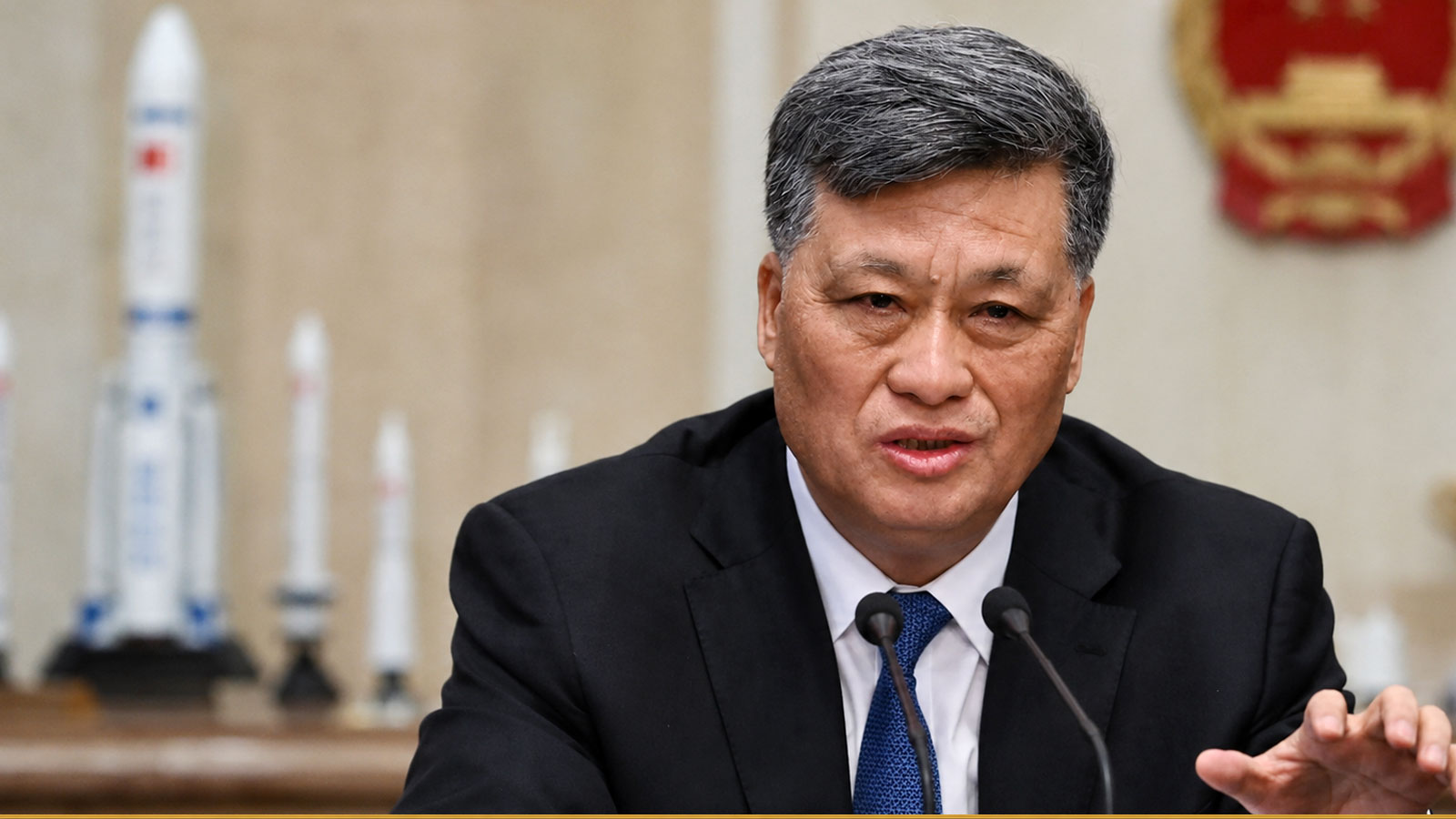
- On 14 July 2026, China’s Communist Party announced the expulsion of Ma Xingrui, one of the most senior civilian officials to fall in President Xi Jinping’s current anti-corruption campaign.
- He was a member of the 20th Central Committee Politburo, the elite 24-seat body elected in October 2022.
- His career moved through some of the most strategically important institutions in the Chinese state.
- The disciplinary findings against him were correspondingly broad.
- The official statement concluded that his conduct constituted serious duty-related violations and was suspected of the crime of bribery.
EXECUTIVE FINDING
On 14 July 2026, China’s Communist Party announced the expulsion of Ma Xingrui, one of the most senior civilian officials to fall in President Xi Jinping’s current anti-corruption campaign.
Ma was not an ordinary provincial cadre. He was a member of the 20th Central Committee Politburo, the elite 24-seat body elected in October 2022. He had previously led China’s flagship aerospace conglomerate, helped command major lunar, crewed-space and next-generation launch-vehicle programmes, served as a vice minister responsible for industry and national strategic technology, governed Guangdong, led Shenzhen and then became Party Secretary of Xinjiang. His career moved through some of the most strategically important institutions in the Chinese state.
The disciplinary findings against him were correspondingly broad. China’s Central Commission for Discipline Inspection and National Commission of Supervision said Ma failed to enforce strict Party governance, tolerated serious disciplinary and suspected criminal misconduct by staff around him, lied during organisational inquiries, manipulated cadre selection, arranged jobs for others through personal and family influence, accepted gifts and money, helped relatives buy housing at below-market prices, engaged in power-for-sex and money-for-sex exchanges, and allowed relatives to use his official influence to obtain huge benefits.
Most importantly for criminal exposure, investigators said Ma used his office to obtain benefits for others in business operations, project contracting and promotions and personally — or together with relatives and other close associates — illegally accepted enormous amounts of property. The official statement concluded that his conduct constituted serious duty-related violations and was suspected of the crime of bribery. His illicit gains were ordered confiscated and the suspected criminal case was transferred to prosecutors for examination and prosecution.
That procedural posture matters. As of 14 July 2026, Ma had been expelled, stripped of public office and referred for criminal prosecution. He had not yet been convicted in a criminal court. The purge was nevertheless historic in political terms.
Ma became the third member of the current Politburo to fall under anti-graft investigation after He Weidong and Zhang Youxia — an extraordinary erosion of the top leadership cohort during a single political term.
THE MAN WHO ONCE COMMANDED ROCKET PROGRAMMES ENDED HIS CAREER ACCUSED OF TURNING POLITICAL OFFICE INTO A FAMILY BUSINESS.
The central Kleptik question is therefore:
WAS MA XINGRUI’S DOWNFALL A PERSONAL CORRUPTION CASE — OR DID IT EXPOSE A REPEATABLE NETWORK MODEL LINKING FAMILY, CADRE PROMOTIONS, STATE PROJECTS AND THE CAREER PIPELINES OF CHINA’S STRATEGIC INDUSTRIES?
THE FINDING
The official allegations point to four interlocking markets.
- Money.
- Jobs.
- Projects.
- Political protection.
The common asset was Ma’s power.
MA XINGRUI
Ma Xingrui was born in 1959 and trained as an engineer and academic in mechanics and aerospace. His pre-political biography placed him among China’s most prominent technocrats.
THE HARBIN INSTITUTE PIPELINE
Ma studied and later taught at Harbin Institute of Technology, one of China’s premier science and engineering universities. He rose through the university’s aerospace institutions and became a vice president.
FROM UNIVERSITY TO SPACE PROGRAMME
In 1996 Ma moved into the China Academy of Space Technology. In 1999 he became a vice president of China Aerospace Science and Technology Corporation. In 2007 he became CASC’s Party secretary and general manager.
THE STRATEGIC-INDUSTRY PREMIUM
CASC sits at the heart of China’s space and missile-industrial system. Leadership there creates access to large State projects, engineering cadres, procurement chains, research institutes and nationally protected programmes.
THE ROCKET COMMANDER
Official biographies credited Ma with leadership roles in China’s crewed-space programme, lunar exploration, and next-generation carrier-rocket development. He was not merely a political appointee inside aerospace. He was a recognised technical manager.
THE TECHNOCRAT MYTH
Technocratic credentials can create a perception of clean, professional administration. They do not eliminate corruption risk. Technical authority can itself become political capital.
THE 2013 CROSSOVER
In 2013 Ma crossed decisively from strategic industry into central government. He became vice minister of industry and information technology and head of agencies connected to atomic energy, space and defence-related science and industry.
THE NATIONAL-SECURITY ECONOMY
That portfolio sat where industrial policy, technology, defence production, and State investment meet. The size and opacity of those sectors make appointment and contracting controls especially important.
GUANGDONG
Ma moved to Guangdong in late 2013 as deputy Party secretary. He later held senior provincial positions and became governor.
SHENZHEN
In 2015 Ma became Party secretary of Shenzhen, China’s flagship technology and finance city. The office placed him over one of the country’s densest concentrations of private technology capital, property development, and strategic industry.
THE SHENZHEN CONNECTION
Guo Yonghang served as a senior aide during Ma’s Shenzhen period and was later widely described as a Ma protégé. Guo himself came under anti-corruption investigation in March 2026. That temporal overlap is relevant to network mapping but does not prove that Guo’s alleged misconduct was part of Ma’s case.
NETWORK ≠ CONSPIRACY
A protégé relationship is not a criminal conspiracy. Kleptik treats overlapping investigations as a lead requiring transaction-specific evidence.
GOVERNOR OF GUANGDONG
Ma served as governor of Guangdong from 2016 to 2021. The province contains some of China’s largest infrastructure, technology, property, and export-driven businesses.
BUSINESS OPERATIONS
The July 2026 disciplinary statement said Ma used his office to seek benefits for others in business operations. It did not publish a company-by-company schedule. That missing ledger is one of the central investigative gaps.
PROJECT CONTRACTING
Investigators specifically said Ma sought benefits for others in project contracting. This is the official allegation most directly connected to procurement and construction.
THE PROJECT LEDGER
- Which projects?
- Which contractors?
- Which provinces?
- Which years?
The official statement did not answer those questions.
CADRE PROMOTION
The CCDI said Ma sought benefits for others in the selection and appointment of officials and in job promotion. Political appointments therefore formed part of the alleged exchange system.
JOBS AS CURRENCY
A promotion is not cash. It can be worth decades of salary, authority, access, and future patronage. Selling appointments creates durable political capital.
THE FAMILY NETWORK
The official finding used unusually direct language about family corruption. Investigators said Ma allowed relatives to exploit his influence for huge benefits and that he personally or together with relatives and other close associates illegally accepted enormous amounts of property.
FAMILY CORRUPTION AS INFRASTRUCTURE
Family members can hold property, receive benefits, introduce businessmen, control companies. The official statement makes family conduct central to the case rather than peripheral.
THE BELOW-MARKET HOME
Authorities said Ma helped relatives purchase housing at below-market prices. A discounted property transfer can function as a bribe if the economic difference is granted because of official influence.
PRICE DIFFERENCE AS VALUE
Market price minus paid price equals economic benefit. That benefit can be disguised as an ordinary private transaction.
GIFTS AND CASH
Investigators said Ma improperly accepted gifts and money. The public statement did not quantify them.
THE 'ENORMOUS AMOUNTS' PROBLEM
The CCDI used the formulation that huge amounts of money or property were illegally accepted. No headline figure was disclosed. Kleptik therefore will not invent a RMB total.
POWER-FOR-SEX / MONEY-FOR-SEX
The disciplinary statement also accused Ma of exchanges involving power and sex and money and sex. Those are official disciplinary findings. They should not be converted into unverified identities or salacious speculation.
THE STAFF PROTECTION FINDING
The CCDI said Ma failed to supervise and control staff around him despite serious disciplinary, legal, and suspected criminal problems. That makes subordinate misconduct part of the official institutional case against him.
PROTECTION BY INACTION
Corruption networks do not always require direct orders. A superior can protect a network by refusing to ask questions.
ORGANISATIONAL DISHONESTY
Investigators said Ma failed to give truthful explanations during organisational inquiries. That is significant because the Party’s internal control system depends heavily on disclosure and self-reporting.
THE SELF-REPORTING FAILURE
If a senior official can mislead internal inquiries while continuing to exercise appointment and project power, disciplinary controls become reactive rather than preventive.
XINJIANG
Ma became Party secretary of Xinjiang in December 2021. He entered the Politburo in October 2022.
THE XINJIANG POWER BASE
Xinjiang is strategically central to China’s security, energy, logistics, and Belt and Road infrastructure. Its Party secretary holds one of the most politically sensitive provincial-level positions in the country.
ECONOMIC REORIENTATION
Ma’s Xinjiang tenure was publicly associated with stronger emphasis on economic development, industrial expansion, and integration with national markets. That policy environment also expanded the importance of project allocation and business relationships.
THE 2025 EXIT
Ma was removed as Xinjiang Party secretary in July 2025 with official language saying he would have another appointment. He did not immediately receive another prominent public post.
THE SILENCE BEFORE THE PURGE
By late 2025 Ma’s public visibility had fallen. His absence from major events became politically significant before formal investigation was announced.
THE APRIL 3 INVESTIGATION
On 3 April 2026, the CCDI and National Commission of Supervision announced that Ma was under investigation for serious violations of discipline and law. At that point, no detailed misconduct allegations were published.
THE THIRD POLITBURO FALL
Ma was the third member of the 20th Central Committee Politburo to come under anti-graft investigation in the current term. The others were senior military leaders He Weidong and Zhang Youxia.
THE 24-TO-21 SIGNAL
By the time Ma’s investigation was announced, the Politburo’s functioning membership had effectively fallen from its original 24 members to 21 because of the three cases. That is extraordinary institutional attrition at China’s highest political level.
HE WEIDONG
He Weidong, a former vice chairman of the Central Military Commission, had been expelled from the Party and military in October 2025. His case represented the military side of the high-level purge.
ZHANG YOUXIA
Zhang Youxia, the senior Central Military Commission vice chairman and another Politburo member, was placed under investigation in January 2026. His case remained separate from Ma’s.
DO NOT MERGE THE PURGES
Three Politburo investigations do not establish one unified conspiracy. They do establish a historically unusual level of elite disciplinary disruption.
THE JUNE 26 NPC REMOVAL
On 26 June 2026, Ma’s status as a National People’s Congress deputy was terminated. That removed another layer of formal public position before the July disciplinary decision.
THE JUNE 30 POLITBURO MEETING
The Politburo reviewed and approved the CCDI report on Ma on 30 June. A case at Ma’s rank required decision-making at the Party’s top level.
THE JULY 14 EXPULSION
On 14 July the Party publicly announced Ma’s expulsion and dismissal from public office. His qualification as a delegate to the 20th Party Congress was terminated and illicit gains were ordered confiscated.
THE PLENUM FORMALITY
The expulsion from Party membership was to be submitted for ratification at a future Central Committee plenary session. That is the formal Party procedure for a Central Committee-level official.
THE CRIMINAL REFERRAL
The suspected criminal case was transferred to prosecutors for examination and prosecution. That is the bridge from disciplinary investigation to the criminal justice system.
REFERRAL ≠ CONVICTION
A disciplinary body can find serious violations and suspected criminal conduct. A criminal conviction requires prosecutorial action and a court judgment.
THE BRIBERY STATUS
As of the archive date, the official formulation was 'suspected of the crime of bribery.' Kleptik therefore uses SUSPECTED BRIBERY / REFERRED FOR PROSECUTION rather than ESTABLISHED CRIMINAL CONVICTION.
THE ABUSE-OF-POWER STATUS
The disciplinary findings clearly state that Ma turned public power into a tool for personal gain and used office to benefit others. Kleptik treats that as an OFFICIAL DISCIPLINARY FINDING of misuse of public power, not a separate criminal conviction for an offence labelled 'abuse of power.'
THE MONEY-AMOUNT BLACK BOX
China’s anti-graft announcement did not disclose the amount of alleged bribes. That omission prevents independent assessment of scale.
THE ASSET BLACK BOX
The statement ordered confiscation of illicit gains but did not publish an asset schedule. No public list of properties, companies, bank accounts or beneficially controlled assets accompanied the announcement.
THE FAMILY BLACK BOX
The statement referred repeatedly to relatives but did not identify them. Kleptik does not speculate about unnamed family members.
THE CLOSE-ASSOCIATE BLACK BOX
The CCDI also referred to 'specific related persons' or close associates. Their identities and transaction roles were not publicly disclosed.
THE COMPANY BLACK BOX
The announcement said benefits were provided in business operations and project contracting. It did not identify the beneficiaries. That is where a genuine financial investigation should begin.
THE GUO YONGHANG LEAD
Guo Yonghang’s March 2026 investigation is relevant because of his earlier role as a senior aide during Ma’s Shenzhen tenure. But the public record available on 14 July did not establish that Guo’s case was legally part of Ma’s bribery case.
THE SUCCESSOR NETWORK QUESTION
A powerful official accumulates aides and protégés across decades. When that official falls, investigators should separate legitimate career sponsorship from corrupt appointment trading.
THE AEROSPACE NETWORK QUESTION
Ma’s aerospace career spanned Harbin Institute of Technology, China Academy of Space Technology and CASC. The official July statement did not say that his bribery conduct originated in the aerospace sector.
DO NOT BACKFILL AEROSPACE CORRUPTION
The fact that other aerospace or defence officials later came under investigation does not prove Ma’s own alleged bribery involved CASC. That remains an investigative lead.
THE STRATEGIC-SECTOR CONTAGION RISK
When a former strategic-industry chief is accused of patronage and project favoritism, every major historical contracting relationship becomes a reasonable audit target. Audit target is not guilt.
THE EVERGRANDE / VANKE LEAD
Post-expulsion investigative reporting by Caixin described a broader political-business network touching major property companies including Evergrande and Vanke. Because those details were not part of the 14 July official findings and some reporting appeared after the archive date, Kleptik treats them only as a future investigative lead, not archive-date fact.
ARCHIVE DISCIPLINE
A July 14 dossier cannot import July 17 investigative reporting as though it existed on July 14. Later revelations belong in an update.
THE 'FAMILY CORRUPTION' LANGUAGE
Chinese disciplinary announcements often use formulaic language. The phrase describing extensive family corruption is nevertheless notable because it explicitly attributes the enrichment mechanism to relatives exploiting official influence.
THE POLITICAL-DISCIPLINE LANGUAGE
The CCDI also accused Ma of losing political conviction and violating political discipline. Those are Party disciplinary findings, not independently defined corruption crimes.
POLITICAL DISCIPLINE ≠ BRIBERY
China’s Party disciplinary system merges political loyalty, organisational conduct, and integrity standards. A rigorous dossier must separate them.
This is how appointment corruption can create a durable factional asset.
That is the basic bribery logic alleged by investigators.
Power can be exchanged for non-cash benefit. The Party’s finding of power-for-sex and money-for-sex exchanges shows that the alleged corruption market was not limited to conventional bribes.
THE MISSING BENEFICIARY LIST
- Who received business advantages?
- Who won projects?
- Who was promoted?
- Who bought discounted property?
Until those names are published, the public cannot map the full network.
THE MISSING ASSET LIST
- What illicit gains were confiscated?
- Cash?
- Homes?
- Shares?
- Company interests?
The disciplinary statement does not say.
THE MISSING TIME PERIOD
Authorities said Ma continued misconduct after the 18th Party Congress and did not stop. That indicates post-2012 conduct but does not provide a precise start date for each alleged scheme.
THE XI-ERA PROBLEM
Ma’s political ascent occurred largely during Xi Jinping’s tenure. His downfall therefore challenges the idea that anti-corruption vetting had already cleansed the promotion system.
PROMOTION AFTER RISK
If misconduct occurred while Ma continued rising from Guangdong to Xinjiang and the Politburo, the question becomes not only what he did but why existing controls did not stop promotion.
ELITE VETTING
Politburo elevation involves extensive Party review. A later finding of extensive family corruption raises a systemic vetting question.
THE SUCCESSION QUESTION
Analysts viewed Ma as part of the senior technocratic cohort below Xi. His fall narrows the pool of established civilian leaders heading into the 21st Party Congress.
PURGE ≠ SUCCESSION PROOF
The case may affect elite succession dynamics. It does not establish that succession politics caused the anti-corruption case.
ANTI-CORRUPTION + POLITICAL CONTROL
External analysts often interpret Xi’s anti-corruption campaign as both genuine graft enforcement and a mechanism of political discipline. Those functions are not mutually exclusive.
THE EVIDENTIARY LIMIT
Independent outsiders cannot inspect the CCDI’s underlying evidence. That limits verification of the exact transactions while making the official disciplinary record the primary source.
THE CLOSED-SYSTEM PROBLEM
The Party investigates, the Party announces findings, the state supervisory commission participates, prosecutors receive the case. Public adversarial testing comes later, if at all.
THE PROSECUTION PIPELINE
In major Chinese corruption cases, transfer to prosecutors usually precedes indictment and a later criminal trial. The July 14 record was at that intermediate stage.
THE PRESUMPTION PROBLEM
China’s disciplinary announcement is institutionally authoritative but not equivalent to a criminal judgment. Kleptik will not convert suspected bribery into convicted bribery.
THE MA XINGRUI POWER-TO-VALUE MATRIX
| Public power | Officially alleged private use | Evidentiary status |
|---|---|---|
| Cadre appointments | Benefits in selection / promotion; jobs for others | OFFICIAL DISCIPLINARY FINDING |
| Business operations | Benefits provided to others | OFFICIAL DISCIPLINARY FINDING |
| Project contracting | Benefits provided in project awards / contracting | OFFICIAL DISCIPLINARY FINDING |
| Family influence | Relatives obtained huge benefits | OFFICIAL DISCIPLINARY FINDING |
| Property | Relatives helped to buy homes below market | OFFICIAL DISCIPLINARY FINDING |
| Money / valuables | Huge amounts allegedly accepted | SUSPECTED BRIBERY / PROSECUTORIAL REFERRAL |
THE EVIDENTIARY-STATUS MATRIX
| Issue | Status at 14 Jul 2026 | Kleptik treatment |
|---|---|---|
| Party expulsion | Decision announced; formal plenary ratification pending | ESTABLISHED — PARTY DISCIPLINARY ACTION |
| Removal from public office | Announced by state supervisory authorities | ESTABLISHED — ADMINISTRATIVE ACTION |
| Illicit gains | Ordered confiscated | ESTABLISHED — DISCIPLINARY / SUPERVISORY ACTION |
| Bribery | Suspected criminal offence transferred to prosecutors | CRIMINALLY REFERRED / NOT CONVICTED |
| Family corruption | CCDI/NCS finding | OFFICIAL DISCIPLINARY FINDING |
| Specific company / project beneficiaries | Not disclosed | OPEN |
CHRONOLOGY
1988–1996
Ma rises through Harbin Institute of Technology’s aerospace academic system.
1996
He moves to the China Academy of Space Technology.
1999
Ma becomes deputy general manager of China Aerospace Science and Technology Corporation.
2007
He becomes CASC Party secretary and general manager, with senior roles in crewed-space, lunar and launch-vehicle programmes.
March 2013
Ma enters central government as vice minister of industry and information technology and takes leadership roles in strategic technology agencies.
2013
He moves to Guangdong as deputy Party secretary.
2015
Ma becomes Party secretary of Shenzhen.
2016–2021
He serves as governor of Guangdong.
December 2021
Ma becomes Communist Party secretary of Xinjiang.
23 October 2022
He is publicly listed among the members of the new 20th Central Committee Politburo.
1 July 2025
Ma leaves the Xinjiang Party-secretary post with official language saying he would have another appointment.
Late 2025
His public profile declines and absences from important events attract attention.
28 March 2026
Guo Yonghang, a former senior Shenzhen aide associated with Ma, is reported under investigation for serious disciplinary and legal violations.
3 April 2026
China announces a formal disciplinary and supervisory investigation into Ma for serious violations of discipline and law.
26 June 2026
Ma’s National People’s Congress representative qualification is terminated.
30 June 2026
The Politburo reviews and approves the CCDI report and proposed disposition of Ma’s case.
14 July 2026
China announces Ma’s expulsion from the Party and public office, confiscation of illicit gains and transfer of the suspected bribery case to prosecutors.
DOCUMENTARY RECORD
CCDI / NATIONAL COMMISSION OF SUPERVISION — 14 JULY 2026
The principal official record details the political, organisational and integrity violations, family-benefit allegations, project and business favors, illegal receipt of huge amounts of money or property, expulsion, confiscation and transfer to prosecutors.
XINHUA — 14 JULY 2026
Xinhua reproduced the disciplinary findings and confirmed that the suspected criminal case had been transferred for prosecution review.
NPC STANDING COMMITTEE — 26 JUNE 2026
The National People’s Congress announced termination of Ma’s representative status shortly before the final disciplinary announcement.
OFFICIAL AEROSPACE BIOGRAPHIES
Chinese government and aerospace records establish Ma’s earlier career at Harbin Institute of Technology, China Academy of Space Technology, CASC and strategic technology agencies.
REUTERS / AP / SCMP — JULY 2026
Independent reporting placed the purge in the context of the unprecedented fall of three members of the current Politburo and highlighted the breadth of the family-corruption allegations.
WHAT THE PARTY-STATE ESTABLISHED
The CCDI and National Commission of Supervision concluded that Ma committed serious Party-discipline and duty-related violations. They found extensive misuse of office for business, project and promotion benefits. They found family-linked enrichment, improper gifts and discounted housing benefits. They ordered confiscation of illicit gains and removal from Party and public office.
WHAT REMAINS A CRIMINAL ALLEGATION
The official statement said Ma was suspected of the crime of bribery. The case was transferred to prosecutors for examination and prosecution. No criminal court conviction existed on 14 July 2026. No public indictment specifying the amount, payers, dates or transactions had yet been published.
WHAT THE PUBLIC RECORD DOES NOT IDENTIFY
The names of relatives said to have received huge benefits. The names of close associates said to have received or shared illicit value. The companies allegedly favoured in business operations. The contracts allegedly influenced. The cadres allegedly promoted in exchange for benefit. The total amount of suspected bribes. The asset schedule for confiscated illicit gains.
RIGHT OF REPLY
Ma Xingrui could not be reached for comment in international reporting surrounding the July announcement. Any person, relative, company, aerospace entity or former subordinate named in a future Kleptik network expansion should be offered transaction-specific questions before publication. Kleptik should not identify unnamed relatives or infer family participation beyond the official wording without documentary evidence.
UNANSWERED QUESTIONS
1. THE BRIBE TOTAL
What exact amount of money and property is alleged to have been accepted?
2. THE PAYERS
Which businessmen, companies or intermediaries supplied the alleged bribes?
3. THE PROJECTS
Which project-contracting decisions were influenced?
4. GUANGDONG
How much alleged conduct occurred while Ma governed Guangdong?
5. SHENZHEN
Which business or property interests benefited during his Shenzhen tenure?
6. XINJIANG
Did any of the alleged project or business favors occur during his Xinjiang leadership?
7. AEROSPACE
Did any suspected bribery trace to Ma’s aerospace or strategic-industry career?
8. THE FAMILY
Which relatives received the huge benefits described by the CCDI?
9. THE DISCOUNTED HOMES
Who sold the properties, at what market value, and what price was actually paid?
10. THE CLOSE ASSOCIATES
Who are the 'specific related persons' referenced in the official statement?
11. GUO YONGHANG
Does Guo’s investigation overlap financially or evidentially with Ma’s case?
12. THE PROMOTIONS
Which officials were promoted or placed in jobs through Ma’s improper intervention?
13. THE STAFF
Which staff members engaged in serious violations or suspected crimes that Ma allegedly tolerated?
14. THE ASSETS
What illicit gains were confiscated and where were they located?
15. BANKING
Were any alleged proceeds held outside mainland China?
16. COMPANIES
Did relatives or associates hold shares in companies benefiting from Ma-linked decisions?
17. VETTING
How did Ma continue rising to the Politburo if extensive family corruption was already underway?
18. THE THREE-MEMBER PURGE
Are the cases of He Weidong, Zhang Youxia and Ma connected by evidence or only by timing?
19. THE PROSECUTION
When will prosecutors publish an indictment specifying the bribery theory?
20. THE CENTRAL QUESTION
Did Ma Xingrui merely sell individual favors — or did decades of control over appointments, projects and strategic institutions create a self-reinforcing family-and-patronage network that survived until it reached the Politburo?
KLEPTIK INTELLIGENCE ASSESSMENT
ASSESSMENT: ESTABLISHED — PARTY DISCIPLINARY ACTION
On 14 July 2026, China announced Ma Xingrui’s expulsion from the Communist Party and public office.
ASSESSMENT: OFFICIAL DISCIPLINARY FINDING
The CCDI/National Commission of Supervision found that Ma misused public power to obtain benefits for others in business operations, project contracting, and promotions.
ASSESSMENT: OFFICIAL DISCIPLINARY FINDING
Authorities found family-linked enrichment, discounted-property benefits, gifts, money and extensive family corruption.
ASSESSMENT: CRIMINALLY REFERRED
Ma was suspected of bribery and his case was transferred to prosecutors for examination and prosecution.
ASSESSMENT: NOT YET CONVICTED
No criminal court judgment establishing bribery had been entered as of 14 July 2026.
ASSESSMENT: HIGH CONFIDENCE
The most important unresolved investigative question is the beneficiary network: companies, contractors, promoted cadres, relatives and close associates are not identified in the public disciplinary notice.
ASSESSMENT: HIGH CONFIDENCE
Ma’s fall is institutionally exceptional because he became the third member of the current Politburo to fall under anti-graft investigation, an elite-level disruption unseen in decades.
ASSESSMENT: MODERATE CONFIDENCE
The overlap between Ma’s career networks and investigations of former associates such as Guo Yonghang warrants structured network analysis but does not yet establish a common criminal conspiracy.
ASSESSMENT: INVESTIGATIVE PRIORITY
The next document likely to materially advance this dossier is the prosecutorial indictment because it should identify amounts, transactions, payers and temporal scope more precisely.
THE KLEPTIK VIEW
Ma Xingrui’s story begins with a rocket. That matters. China’s political system rewards officials who can deliver. Scientists become managers, managers become ministers, ministers become provincial leaders, and provincial leaders enter the Politburo. Ma represented the ideal of the technocratic state. Then the disciplinary system accused him of the oldest political business model in existence. Use public power, create private value, share the value with family, promote loyal people, protect the network.
The contrast is what makes this case important. The alleged corruption did not happen at the bottom of an inefficient bureaucracy. It allegedly survived the ascent of one of China’s most celebrated technocrats through space, national industry, Shenzhen, Guangdong, Xinjiang and into the Politburo itself. If the allegations are later proven in court, the central question will not only be why Ma accepted bribes. It will be why the system continued to promote him.
THE ROCKET PROGRAMME PROVED HE COULD MANAGE COMPLEX SYSTEMS.
THE CORRUPTION CASE ALLEGES HE BUILT ANOTHER ONE.
A family benefit here, a promotion there, a project for someone else, a protected subordinate, a discounted home, a gift, a payment. None of those transactions alone explains a Politburo purge. A network might.
FOLLOW THE PROJECT.
FOLLOW THE PROMOTION.
FOLLOW THE FAMILY ASSETS.
THEN ASK HOW THE NETWORK SURVIVED EVERY PROMOTION.
KLEPTIK METHODOLOGY
This dossier is dated 14 July 2026 and is intentionally fixed to the legal and disciplinary position existing on that date. The principal sources are the 14 July 2026 CCDI/National Commission of Supervision announcement carried by Xinhua, the 26 June 2026 National People’s Congress representative-status announcement, official Chinese biographies documenting Ma’s aerospace and government career, and contemporaneous Reuters, AP and South China Morning Post reporting on the Politburo context.
This is a Kleptik original analytical dossier. 'Exclusive' refers to Kleptik’s synthesis, network framing, and investigative questions, not to any claim that official facts published by Chinese authorities were exclusively obtained by Kleptik.
EVIDENTIARY LABELS
ESTABLISHED — PARTY DISCIPLINARY ACTION
Formal Party expulsion or disciplinary disposition.
ESTABLISHED — ADMINISTRATIVE ACTION
Removal from public office, NPC role or other state position.
OFFICIAL DISCIPLINARY FINDING
Conduct stated as established by CCDI/National Commission of Supervision.
CRIMINALLY REFERRED
Suspected criminal conduct transferred to prosecutors.
NOT YET CONVICTED
No criminal court judgment on the archive date.
PEP-NETWORK INDICATOR
Family, subordinate, protégé or business relationship relevant to risk mapping; not guilt by association.
PROJECT-INFLUENCE INDICATOR
Officially alleged use of office to obtain business or contracting benefits.
KLEPTIK VERIFIED
Fact independently corroborated through authoritative official or reliable contemporary sources.
KLEPTIK ASSESSMENT
Analytical conclusion derived from identified evidence.
INVESTIGATIVE LEAD
Matter requiring additional corporate, property, banking, appointment or prosecutorial documentation.
DOCUMENT STATUS
KLTK-2026-045
Subject: Ma Xingrui / China / Politburo / CCDI / Family Corruption / Project Contracting / Patronage / Suspected Bribery
Archive date: 14 July 2026
Status at archive date: Expelled from Party and public office; illicit gains ordered confiscated; suspected bribery case transferred to prosecutors; no criminal conviction
Historical treatment: Fixed to report date
© KLEPTIK — Investigations into Power, Money and the Systems Designed to Hide Both