THE SENATOR, THE GOLD AND THE FOREIGN INFLUENCE NETWORK

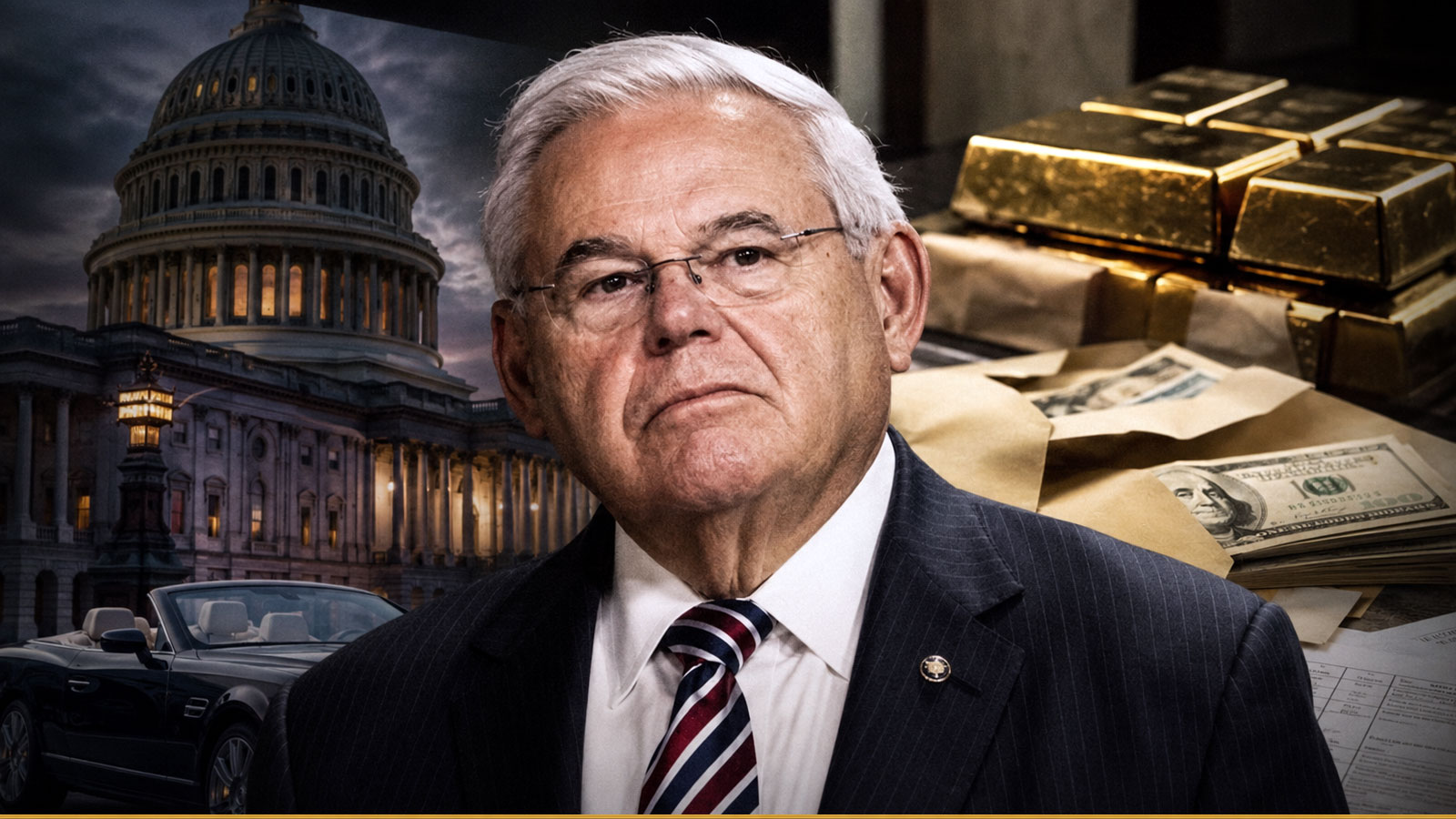
- A Manhattan federal jury had convicted Menendez on 16 July 2024 after a nine-week trial.
- The court also ordered approximately $922,188 in forfeiture.
- Two businessmen convicted alongside him were sentenced the same day.
- Wael Hana received 97 months in prison, a $1.25 million fine and $125,000 forfeiture.
- Fred Daibes received seven years in prison and a $1.75 million fine.
EXECUTIVE FINDING
On 29 January 2025, former United States Senator Robert Menendez was sentenced to 11 years in federal prison following his conviction in one of the most consequential public-corruption prosecutions involving a sitting U.S. senator in modern history.
A Manhattan federal jury had convicted Menendez on 16 July 2024 after a nine-week trial.
His convictions included offences involving:
- bribery
- honest-services wire fraud
- extortion under color of official right
- acting as a foreign agent while serving as a public official
- and
obstruction of justice.
The court also ordered approximately $922,188 in forfeiture.
Two businessmen convicted alongside him were sentenced the same day.
Wael Hana received 97 months in prison, a $1.25 million fine and $125,000 forfeiture.
Fred Daibes received seven years in prison and a $1.75 million fine.
The bribery architecture proved at trial was not built around a single envelope of cash handed directly from a foreign government to a senator.
It was considerably more sophisticated.
The network included:
- a senior senator
- his spouse
- a businessman with relationships to Egyptian officials
- a real-estate developer seeking millions from a Qatar-linked investment fund
- another businessman seeking help with criminal investigations
- commercial companies
- a government-granted halal-certification monopoly
- mortgage payments
- a luxury convertible
- cash
- gold bars
and foreign-policy interventions.
Between 2018 and 2022, prosecutors proved that Menendez and his wife accepted hundreds of thousands of dollars in things of value from Hana, Daibes and Jose Uribe.
During a June 2022 search of the Menendez home, FBI agents found more than $480,000 in cash, much of it concealed inside envelopes, clothing, closets and a safe.
Agents also found more than $100,000 worth of gold bars, home furnishings prosecutors tied to Hana and Daibes, and a Mercedes-Benz convertible paid for by Uribe.
In exchange, the government proved that Menendez used his political power and influence to benefit:
- Hana and Egyptian government interests
- Uribe and associates facing New Jersey law-enforcement scrutiny
- and
Daibes, including in connection with Daibes’s criminal prosecution and efforts to obtain investment from a fund linked to Qatar.
The case therefore provides a much deeper lesson than:
politician takes bribe.
It demonstrates how corruption can operate through an economic and political network surrounding the officeholder.
The key risk was not simply Robert Menendez’s personal bank account.
It was the network connecting:
- family
- businessmen
- foreign officials
- commercial interests
and political power.
The central Kleptik finding is therefore:
THE TRUE UNIT OF PEP RISK IS NOT THE POLITICIAN.
IT IS THE NETWORK AROUND THE POLITICIAN.
THE FINDING
Traditional anti-money-laundering systems often begin with a name.
Robert Menendez.
Database result:
POLITICALLY EXPOSED PERSON.
That tells a bank something important.
But not enough.
It does not tell the bank:
- who pays the spouse
- who owns the company paying the spouse
- who supplies the gold stored in the house
- who finances the luxury car
- which businessmen have active criminal matters
which businessman controls a company receiving valuable rights from a foreign state;
or which foreign government may benefit from the politician’s actions.
A PEP is therefore not merely a customer category.
A PEP is an influence network.
THE NETWORK MODEL
The Menendez case can be represented as:
The alleged—and ultimately proven—quid pro quo becomes visible only when both sides of the network are mapped.
FOLLOW THE BENEFIT
The Menendez case demonstrates why investigators should stop using the word payment as though it describes every bribe.
The benefits proven at trial included:
- cash
- gold
- mortgage payments
- a luxury vehicle
- home furnishings
- employment compensation
and other things of value.
The more useful analytical category is:
ECONOMIC BENEFIT.
THE ECONOMIC-BENEFIT TEST
A politically exposed household can receive value through:
cash.
Property.
Debt repayment.
Vehicle.
Employment.
Travel.
Investment opportunity.
Business.
Loan.
Commodity.
Gift.
The form changes.
The economic enrichment does not.
THE SPOUSE NETWORK
Nadine Menendez occupied a critical position within the relationship architecture described by prosecutors.
Shortly after Robert Menendez began dating her in 2018, she introduced him to her long-time friend Wael Hana, a New Jersey businessman originally from Egypt who maintained close connections with Egyptian officials.
This introduction became the beginning of the Egypt-related portion of the corruption case.
The significance is broader than one marriage.
A PEP spouse can become:
- relationship manager
- business intermediary
- gift recipient
- account holder
- company employee
or economic beneficiary.
That is precisely why international PEP frameworks include close family members.
THE PEP HOUSEHOLD
Kleptik proposes analysing high-risk public officials at the household level.
Not because spouses should be presumed corrupt.
But because corruption benefits may be economically shared even when legal ownership differs.
The household model should include:
PEP salary.
Spouse income.
Business interests.
Debt.
Property.
Vehicles.
Investments.
Cash holdings.
Gifts.
Third-party payments.
The resulting wealth profile can then be compared against legitimate income.
THE SOURCE-OF-WEALTH QUESTION
More than $480,000 in physical cash was found in the Menendez home.
More than $100,000 in gold bars was also recovered.
Possessing cash or gold is not inherently suspicious.
The correct question is:
WHERE DID IT COME FROM?
For a PEP household, each substantial asset should be explainable through:
- salary
- investment returns
- business income
- inheritance
- property sale
- documented savings
or another legitimate source.
Where the explanation does not match known income, a source-of-wealth anomaly exists.
THE CASH
Cash has several corruption advantages.
It is:
- portable
- fungible
- largely outside automated bank monitoring once withdrawn
and capable of being transferred without financial-institution records.
But physical cash also creates forensic possibilities.
Envelope.
Fingerprint.
DNA.
Denomination.
Withdrawal record.
Location.
Prosecutors said some cash envelopes recovered from the Menendez residence contained fingerprints belonging to Menendez or Daibes.
That can connect an otherwise anonymous asset to identifiable participants.
FOLLOW THE ENVELOPE
Cash investigation:
- Where was money withdrawn?
- Who possessed it?
- Who packaged it?
- Who transported it?
- Where was it stored?
- What fingerprints or DNA appear?
- Were there communications around delivery?
The absence of a wire transfer does not mean the money trail disappears.
It becomes a physical-evidence trail.
THE GOLD
Gold performs a different function.
It stores wealth.
Portable.
Globally recognised.
Compact.
Outside ordinary account balances.
The trial established that gold bars supplied by Hana or Daibes became part of the bribe package.
For investigators, gold can be traced through:
- serial numbers
- dealer records
- purchase invoices
- payment methods
- delivery records
and photographs.
PORTABLE WEALTH
Gold belongs to a broader category of assets that traditional financial-disclosure systems may not capture as effectively as bank accounts.
Other examples include:
- art
- diamonds
- jewellery
- luxury watches
- cryptocurrency
cash.
A modern PEP risk system therefore cannot examine bank accounts alone.
THE MERCEDES
Jose Uribe admitted to participating in the bribery scheme and cooperated with prosecutors.
One of the benefits associated with his conduct was a Mercedes-Benz convertible supplied for Nadine Menendez.
Vehicles are useful corruption assets because they combine:
high value;
personal utility;
and third-party financing.
Unlike cash, however, a vehicle generates substantial documentation.
Dealer.
Finance agreement.
Registration.
Insurance.
Monthly payment.
Beneficial user.
FOLLOW THE CAR
The investigative timeline should show:
A corruption theory becomes far stronger where benefits and official conduct can be synchronised.
THE MORTGAGE
Prosecutors proved that benefits included payments toward Nadine Menendez’s home mortgage.
This demonstrates another principle:
DEBT REDUCTION IS ECONOMIC VALUE.
A bribe does not need to put money into the recipient’s bank account.
Paying an obligation produces the same financial result.
THIRD-PARTY DEBT PAYMENTS
Potential examples:
Mortgage.
Credit card.
School fees.
Medical bills.
Tax liability.
Loan repayment.
If a third party pays the debt of a PEP household, investigators should ask:
Why?
THE LOW-OR-NO-SHOW JOB
The scheme also involved compensation connected to what prosecutors described as a low-or-no-show job for Nadine Menendez.
Employment is one of the most effective ways to disguise economic value.
Payroll appears legitimate.
Tax may be withheld.
Bank receives salary.
But the investigator should ask:
- What work was performed?
- What qualifications were required?
- What were normal hours?
- Who supervised?
- Was compensation market rate?
- Why was the person hired?
EMPLOYMENT AS A VALUE-TRANSFER SYSTEM
A sham salary can turn:
bribe
into
employment income.
The bank sees payroll.
Tax authority sees wages.
Financial disclosure may show legitimate-looking income.
The corruption is hidden in the absence of genuine work.
WAEL HANA
Hana’s role is central because he connected private commercial interests, the Menendez household and Egyptian government relationships.
He was convicted alongside Menendez and sentenced to 97 months in prison.
His commercial vehicle was IS EG Halal, a halal-certification business.
Egypt granted that business an exclusive role in certifying halal meat exported from the United States to Egypt.
That monopoly created substantial potential economic value.
THE HALAL MONOPOLY
Government-created exclusivity can become a private asset.
A state says:
Only Company X may certify this category.
Every exporter now needs Company X.
Demand is created by government decision.
That can generate significant revenue.
GOVERNMENT-CREATED VALUE
A government creates private economic value through:
- licence
- monopoly
- concession
- quota
- certification authority
- spectrum
- mining right
- import right
export right.
These should be treated analytically like public assets.
The question is:
WHO RECEIVED THE RIGHT AND WHY?
THE USDA INTERVENTION
U.S. agricultural officials expressed concerns regarding the exclusive halal-certification arrangement.
Prosecutors proved that Menendez sought to pressure a senior USDA official concerning those concerns.
This creates the classic corruption architecture:
The intervention itself may be legitimate in another context.
The bribe relationship transforms its significance.
CONSTITUENT SERVICE VERSUS CORRUPTION
Politicians regularly assist constituents.
A senator calling an agency is not inherently suspicious.
The distinction is:
LEGITIMATE
Constituent asks for help.
Senator acts based on policy or fairness.
No personal economic benefit.
CORRUPT
Benefit provided or promised.
Senator agrees to use office in return.
The official act may appear identical.
The underlying exchange makes it criminal.
THE EGYPT NETWORK
Menendez’s position on the Senate Foreign Relations Committee gave him unusually significant influence over U.S. foreign policy.
The government proved that he secretly took steps to aid Egypt.
Those actions included providing Egyptian officials with sensitive, non-public information concerning U.S. Embassy personnel in Cairo and ghostwriting a letter for Egypt intended for his own Senate colleagues.
This moved the case beyond conventional bribery.
Menendez was convicted of acting as an agent of a foreign principal while serving as a public official.
THE FOREIGN-AGENT PROBLEM
The concept is extraordinary.
A U.S. senator is expected to act on behalf of:
constituents;
state;
country.
The prosecution proved that Menendez secretly acted on behalf of the interests of a foreign government while occupying public office.
That transforms political influence into a national-security issue.
PUBLIC OFFICE AS FOREIGN-STATE INFRASTRUCTURE
A foreign government ordinarily purchases influence through:
- diplomats
- registered lobbyists
- consultants
public-relations firms.
A corrupted domestic official can provide something much more valuable:
INTERNAL GOVERNMENT ACCESS.
The person does not merely lobby the system.
He is inside the system.
INFORMATION AS VALUE
Not every corrupt official act involves:
vote;
contract;
licence.
Information itself can be valuable.
Menendez provided Egyptian officials with non-public information concerning staffing at the U.S. Embassy in Cairo.
DOJ said the information was not classified but was considered highly sensitive because disclosure to a foreign government could create operational-security concerns.
That illustrates a broader principle.
POLITICAL INFORMATION AS AN ASSET
Public officials may possess:
- confidential briefings
- government staffing
- pending decisions
- investigations
- diplomatic positions
legislative strategy.
This information can create strategic advantage even without direct financial value.
Foreign-influence analysis must therefore follow:
INFORMATION FLOWS
as well as money.
FOLLOW THE MESSAGE
Kleptik’s Qatargate dossier established the principle:
Follow the money.
Then follow the message.
The Menendez case demonstrates the same architecture.
Economic benefit moves toward the political network.
Information and influence move outward.
Both flows must be mapped.
THE FOREIGN-INFLUENCE LEDGER
For each relevant event:
Date.
Foreign principal.
Intermediary.
Communication.
Political action.
Economic benefit.
This allows investigators to compare:
money timeline
against
foreign-policy timeline.
QATAR
The case also involved Qatar, but through a different commercial and political pathway.
Fred Daibes sought millions of dollars in investment from a fund linked to the Government of Qatar.
The trial established that Menendez knew Daibes expected him to take actions beneficial to Qatar—and thereby beneficial to Daibes.
Menendez made public statements praising Qatar and supplied those statements to Daibes so they could be shared with Qatari officials connected to the investment fund.
This is an exceptionally important influence structure.
THE QATAR ARCHITECTURE
The political action did not necessarily send money directly to Daibes.
It increased his relationship value with a potential investor.
POLITICAL CAPITAL AS COMMERCIAL CAPITAL
This creates another Kleptik principle.
A politician can help a businessman not by awarding money but by increasing the businessman’s political capital with another party.
A public statement.
Introduction.
Letter.
Endorsement.
Foreign-policy position.
These can have real economic consequences.
INDIRECT ECONOMIC BENEFIT
Suppose Businessman A seeks $100 million investment from Foreign Fund B.
Politician C publicly praises Foreign Government B.
Businessman A sends the statement to fund officials.
The politician has not transferred money.
But political influence may strengthen Businessman A’s commercial position.
Corruption therefore requires examining indirect economic value.
THE DAIBES PROSECUTION
Daibes also faced a separate federal criminal prosecution.
The jury found that Menendez sought to assist Daibes by influencing the federal prosecutorial environment.
DOJ said Menendez recommended to the President a nominee for U.S. Attorney in New Jersey whom Menendez believed he could influence regarding Daibes’s case.
This is one of the case’s most serious institutional dimensions.
THE PROSECUTOR AS TARGET
Corruption involving law enforcement is uniquely dangerous.
The objective may be:
- stop investigation
- reduce charge
- alter sentence
- delay proceeding
replace prosecutor.
The justice system itself becomes the target of influence.
APPOINTMENT POWER
Senior politicians frequently participate in recommending or confirming:
- judges
- prosecutors
- regulators
ambassadors.
Those appointment powers are legitimate.
But they also create corruption risk where the politician seeks a particular appointee because the appointee may later benefit a private associate.
APPOINTMENT AS AN OFFICIAL ASSET
Political appointment influence should therefore be treated as another form of government-created value.
The official can potentially offer:
- access to prosecutor
- regulatory sympathy
- policy alignment
institutional protection.
The appointment itself can become the first step of an intended benefit.
THE IMPORTANT LIMITATION
DOJ explicitly said the prosecutor handling Daibes’s case did not treat the matter differently because of Menendez’s contacts.
This is important.
The corrupt intent can exist even when the targeted institution resists.
The justice system’s independence prevented the desired result.
ATTEMPTED INFLUENCE VERSUS SUCCESSFUL INFLUENCE
Investigators must distinguish:
Official attempts intervention.
Target refuses.
No result.
That does not erase the corrupt bargain if one existed.
Success is not required to make the attempted abuse of office significant.
JOSE URIBE
Uribe pleaded guilty pursuant to a cooperation agreement to offences including:
- conspiracy to commit bribery
- honest-services wire fraud
- obstruction
- tax evasion
and wire fraud.
He cooperated against Menendez.
The government’s case concerning Uribe demonstrated how political influence could be directed toward state-level criminal investigations rather than federal foreign-policy issues.
THE MULTI-PURPOSE POLITICAL NETWORK
This is one of the most striking features of the case.
The same political office was allegedly—and ultimately proven to have been—used to pursue very different goals:
Egyptian interests.
Halal business monopoly.
New Jersey investigation.
Federal prosecution.
Qatar-linked investment.
The value of political influence is adaptable.
ONE PEP, MANY BUYERS
A PEP with broad authority can potentially provide different services to different benefit providers.
Businessman A needs regulator.
Businessman B needs prosecutor.
Foreign government needs policy support.
Investor needs political endorsement.
That makes the political office analogous to a multi-purpose asset.
THE PEP-POWER INVENTORY
For every senior politician, compliance investigators should identify:
- committee assignments
- budget authority
- appointment influence
- regulatory oversight
- foreign-policy role
- law-enforcement contacts
- procurement influence
and access to non-public information.
This tells investigators what the politician can potentially sell.
THE GOLD-BAR PROBLEM REVISITED
Dossier 007 treated gold as an allegation.
Dossier 017 can now treat the relevant gold-bar benefits as part of established trial conduct underlying the convictions.
That change demonstrates why evidentiary status matters.
The object never changed.
The legal certainty did.
THE EVIDENTIARY EVOLUTION
22 SEPTEMBER 2023
Indictment.
Allegation.
16 JULY 2024
Jury verdict.
Adjudicated guilt.
29 JANUARY 2025
Sentence.
Operative punishment.
Kleptik’s language must evolve with the case.
THE OBSTRUCTION
The corruption did not end when investigators arrived.
Menendez was also convicted of obstruction-related offences.
DOJ said that after grand-jury subpoenas were served, efforts were made to characterise certain mortgage and vehicle payments as loans.
The prosecution proved that Menendez later caused his then-lawyer to present false explanations to prosecutors regarding his knowledge of those payments.
This adds another layer:
THE COVER STORY.
THE FALSE-LOAN MODEL
This resembles financial laundering.
The corrupt benefit receives new legal provenance.
DOCUMENTARY LAUNDERING
Kleptik calls this:
DOCUMENTARY LAUNDERING
Not money laundering.
The underlying event is re-described through documentation intended to make it appear legitimate.
Gift becomes loan.
Bribe becomes salary.
Kickback becomes consulting fee.
The paperwork attempts to change the economic meaning.
THE REPAYMENT AFTER INVESTIGATION
Repaying a bribe after investigators begin asking questions does not necessarily erase the original transaction.
Timing matters.
A repayment can be legitimate correction.
Or it can form part of an attempted cover story.
The Menendez jury accepted the government’s obstruction theory.
THE LAWYER PROBLEM
The sentencing record states that Menendez caused then-counsel to make false representations to prosecutors.
This does not mean the lawyer knowingly lied.
A lawyer may repeat information supplied by a client.
Investigative reporting must distinguish:
client deception
from
lawyer complicity.
No professional should be implicated absent evidence of knowledge.
THE POLITICAL-DONOR PROBLEM
Daibes was also a long-time Menendez donor.
Political donations create another layer of complexity.
A lawful donation is not a bribe.
But where a donor also provides:
- gold
- cash
- business benefits
- or other personal value,
the relationship requires careful separation.
DONATION VERSUS PERSONAL BENEFIT
POLITICAL CONTRIBUTION
Money to campaign or political committee.
Regulated and disclosed.
PERSONAL BENEFIT
Money or asset to politician or household.
Different economic beneficiary.
The distinction is crucial.
THE BENEFICIAL-OWNER QUESTION
Who ultimately benefits from a political contribution?
Campaign.
Who ultimately benefits from a mortgage payment?
Household.
These are different financial categories.
Kleptik should never use “donor” as a euphemism for every private relationship.
THE FOREIGN-INVESTMENT CONNECTION
Daibes’s Qatar-linked investment ambitions reveal an underexplored corruption risk:
FOREIGN CAPITAL SEEKING DOMESTIC POLITICAL ACCESS
Foreign sovereign funds and government-linked investors legitimately invest internationally.
But politically connected businessmen may view their relationships with officials as commercial assets when courting such capital.
INVESTMENT DIPLOMACY
Large foreign investments can involve:
- business
- government relations
- diplomacy
and prestige.
That overlap creates potential influence pathways.
The proper questions include:
- Was political assistance sought?
- Was any official compensated?
- Did public statements coincide with investment discussions?
- Were intermediaries paid?
THE BENEFICIAL OWNER OF THE POLITICAL STATEMENT
A senator releases statement praising foreign government.
On the surface:
foreign-policy position.
But if drafted or timed in circumstances intended to aid a private businessman pursuing investment, the economic beneficiary may be different from the apparent political audience.
This is:
POLITICAL BENEFICIAL OWNERSHIP.
POLITICAL BENEFICIAL OWNERSHIP
Kleptik defines it as:
The person or entity ultimately deriving economic or strategic value from a public official’s action, even where that beneficiary does not formally request or receive the action directly.
Examples:
Foreign government receives reputational benefit.
Businessman receives relationship benefit.
Company receives regulatory protection.
Associate receives prosecutorial assistance.
This concept should become central to Kleptik’s PEP reporting.
FOREIGN PRINCIPAL VERSUS INTERMEDIARY
Influence rarely travels in a straight line.
It can move:
Or:
Every intermediary creates distance.
Distance complicates transparency.
THE INFLUENCE CHAIN
For every foreign-policy investigation:
Map all six.
PEP DATABASE FAILURE
A conventional PEP-screening system would flag:
Robert Menendez.
Possibly Nadine Menendez.
But would it identify:
- Wael Hana?
- Hana’s Egyptian government relationships?
- The halal monopoly?
- Daibes’s Qatar-linked investment effort?
- Uribe’s criminal-investigation interests?
That is why database screening is insufficient.
NETWORK DUE DILIGENCE
Enhanced PEP due diligence should include:
- business associates
- major recurring benefit providers
- spousal employers
- family-controlled companies
- major donors with active government interests
- foreign-government relationships
and litigation/regulatory issues.
Not because all such relationships are suspicious.
Because they create context.
EVENT-DRIVEN REVIEW
PEP due diligence should not occur once.
It should update after:
new office.
Committee appointment.
Marriage.
New business relationship.
Large gift.
Property purchase.
Major donor relationship.
Foreign travel.
Public controversy.
Financial disclosure anomaly.
Political risk changes continuously.
THE FOREIGN-RELATIONSHIP TRIGGER
A senator chairing the Foreign Relations Committee warrants enhanced review of significant economic relationships involving:
- foreign governments
- state-owned companies
- sovereign funds
foreign contractors.
The position itself determines the relevant risk universe.
COMMITTEE POWER
Committee assignments may be more relevant than title.
Two senators possess equal formal rank.
One sits on:
agriculture.
Another chairs:
foreign relations.
Their corruption risk maps differ because their powers differ.
A PEP system should understand institutional function.
THE 11-YEAR SENTENCE
Judge Sidney H. Stein imposed an 11-year prison sentence on Menendez.
The sentence reflects the gravity of:
- corruption
- foreign influence
- and obstruction
at one of the highest levels of the U.S. legislative branch.
The court also imposed $922,188.10 in forfeiture.
THE SENTENCING MESSAGE
The Justice Department described the conduct as an abuse of power at the highest levels of the legislative branch and emphasised that the scheme corrupted both foreign policy and the rule of law.
That framing matters.
Political corruption becomes more serious when it touches:
foreign policy;
national security;
or criminal justice.
HANA’S SENTENCE
Hana received:
- 97 months imprisonment
- $1.25 million fine
- and
$125,000 forfeiture.
His conviction demonstrates that private intermediaries can face consequences comparable in severity to the public official.
The corruption transaction requires both sides.
DAIBES’S SENTENCE
Daibes received:
seven years imprisonment
and
$1.75 million fine.
His case illustrates the intersection between:
- political donor
- businessman
- criminal defendant
and foreign investment seeker.
The categories overlap.
URIBE’S COOPERATION
Uribe pleaded guilty before trial and became a government witness.
This raises an evidentiary issue common in corruption cases.
Cooperators may receive sentencing consideration.
Their testimony must therefore be corroborated.
The Menendez prosecution also relied upon:
- documents
- messages
- physical evidence
- financial records
and official acts.
THE CORROBORATION MODEL
The strongest cases combine all five.
THE ENCRYPTED-MESSAGE EVIDENCE
The case included encrypted messaging.
For example, DOJ said Menendez sent Daibes the text of a forthcoming statement praising Qatar and told him he might want to send it to relevant contacts.
Encrypted communication is not suspicious by itself.
But messages can reveal:
timing;
intent;
and expected beneficiary.
FOLLOW THE MESSAGE METADATA
Investigators should preserve:
sender.
recipient.
timestamp.
message.
attachments.
subsequent forwarding.
official action.
The message can connect politics to economics more clearly than public statements do.
PUBLIC STATEMENT, PRIVATE PURPOSE
A politician’s public statement may appear entirely official.
But private messages can show who the politician expected to benefit from it.
This is why public-policy analysis alone may miss corruption.
Intent often exists in the private communication layer.
THE EGYPT-QATAR DISTINCTION
The Egypt and Qatar portions of the Menendez case should not be blurred.
EGYPT
Foreign-government assistance.
Sensitive information.
Halal monopoly.
Hana.
QATAR
Daibes’s investment interests.
Public praise.
Qatar-linked investment fund.
Different actors.
Different economic objectives.
One political office.
MULTI-PRINCIPAL INFLUENCE
The case therefore demonstrates a politician can potentially serve several private or foreign interests simultaneously.
That complicates ordinary conflict-of-interest frameworks.
One disclosure cannot capture the network.
THE FOREIGN-AGENT CONVICTION
Menendez’s conviction for acting as a foreign agent while serving as a public official was particularly unusual.
It established criminally that his foreign-policy conduct crossed beyond merely being favourable to Egypt.
The jury found the requisite criminal elements.
That differentiates the case from ordinary lobbying controversies.
FAVORABLE POLICY IS NOT CORRUPTION
This distinction is essential.
A senator can legitimately support Egypt.
Or Qatar.
Or any foreign government.
Political agreement is not evidence of foreign control.
The Menendez case became criminal because of:
secret relationship;
economic benefits;
and proven corrupt conduct.
Kleptik should never infer corruption solely from policy alignment.
THE EVIDENCE THRESHOLD FOR FOREIGN INFLUENCE
A defensible foreign-influence claim should seek convergence of:
- undisclosed relationship
- financial benefit
- communications
- foreign request
- official action
and concealment.
The more elements present, the stronger the inference.
FOLLOW THE FOREIGN GOVERNMENT
A future Kleptik investigation should map:
Egyptian officials who interacted with Hana and Menendez.
Government ministries.
Embassy personnel.
Requests.
Dates.
Official actions.
Commercial beneficiaries.
The court record provides a foundation.
Diplomatic records may provide the wider context.
FOLLOW THE QATAR INVESTMENT
For Daibes:
- Which Qatar-linked fund?
- What investment was sought?
- How much?
- What company or project?
- Which Qatari officials or fund representatives were involved?
- When were Menendez’s statements circulated?
- Did the investment proceed?
This could become a separate money-and-influence dossier.
THE FOREIGN-SOVEREIGN-FUND PROBLEM
Sovereign wealth funds are enormous legitimate investors.
But because they are state-connected, commercial interaction can overlap with diplomacy.
The due-diligence issue is not:
Is the fund suspicious?
It is:
Are politically connected intermediaries monetising government access to influence investment decisions?
THE HALAL COMPANY
IS EG Halal deserves a standalone corporate analysis.
Investigators should establish:
incorporation.
Ownership.
Revenue.
Employees.
Egyptian authority.
U.S. exporter relationships.
Fees.
Monopoly date.
Government communications.
Payments involving the Menendez household.
The government-granted monopoly created the economic engine.
MONOPOLY VALUE
To quantify the possible economic benefit:
Number of exporters.
Certification fee.
Volume of exports.
Operating cost.
Revenue before exclusivity.
Revenue after exclusivity.
This measures the value of a foreign-government decision.
FOLLOW THE HOME MORTGAGE
Mortgage-related payments can be verified through:
- servicer records
- bank statements
- payment dates
- payer accounts
foreclosure notices.
This makes household debt one of the more documentable forms of corrupt benefit.
THE FORECLOSURE CONTEXT
DOJ stated that Hana caused a payment to Nadine Menendez’s mortgage company in July 2019 to help avoid foreclosure.
This matters because financial distress can create vulnerability.
A household facing urgent debt may value third-party assistance more than an equivalent abstract payment.
PEP FINANCIAL VULNERABILITY
Enhanced PEP due diligence should consider not merely wealth but:
debt.
Liquidity.
Business losses.
Financial stress.
A politically powerful person under financial pressure may present elevated corruption vulnerability.
This should never become a moral assumption.
It is risk analysis.
DEBT-TO-INFLUENCE RISK
Political power high.
Financial pressure high.
Potential bribe value rises.
That is why certain sensitive positions may require financial disclosure or monitoring subject to lawful safeguards.
THE OFFICEHOLDER’S REAL BALANCE SHEET
Traditional disclosure asks:
What assets does the official own?
A better anti-corruption system also asks:
- What debts does the official owe?
- Who are the creditors?
- Who paid those debts?
- Who has guaranteed them?
Liabilities can create hidden influence.
PERSONAL GUARANTEES
The same logic applies to:
- business loans
- personal guarantees
- mortgages
credit lines.
A third party relieving a PEP of a liability can transfer significant value without ever sending the PEP cash.
THE POLITICAL ECONOMIC NETWORK
Kleptik should represent the case graphically:
- ROBERT MENENDEZ
- ↔ NADINE MENENDEZ
- ↔ WAEL HANA
- ↔ Egypt / IS EG Halal
- ↔ FRED DAIBES
- ↔ Qatar-linked investment interest
- ↔ JOSE URIBE
- ↔ New Jersey investigative interests
Each branch includes:
benefit inward.
Political power outward.
That is the corruption network.
FOLLOW BOTH DIRECTIONS
Most corruption graphics show:
payer → politician.
Incomplete.
A proper map shows:
MONEY / BENEFIT
toward PEP.
POWER / INFORMATION
away from PEP.
The exchange exists where arrows cross.
THE POWER-TO-BENEFIT RATIO
Kleptik proposes another analytical metric.
POWER-TO-BENEFIT RATIO
How much governmental or commercial value could the official potentially create compared with the private value received?
A few hundred thousand dollars in benefits can influence decisions worth:
- millions
- foreign-policy access
- commercial monopoly
or prosecutorial consequences.
The private benefit may be tiny compared with public power deployed.
CORRUPTION IS LEVERAGE
This is the same lesson seen in Mozambique.
Chang received $7 million while exposing a country to billions.
Menendez received hundreds of thousands in benefits while controlling access to extremely valuable political functions.
Corruption is powerful because it leverages a small private payment into a much larger public action.
THE PUBLIC COST
The direct financial cost of the Menendez scheme is difficult to quantify.
The larger cost is institutional.
Public trust.
Foreign-policy integrity.
Justice-system credibility.
Senate reputation.
Unlike sovereign-debt corruption, these losses do not fit neatly in a balance sheet.
But they are real.
TRUST AS A PUBLIC ASSET
A democracy depends on the belief that:
senators act for public reasons;
prosecutors operate independently;
foreign policy is not privately purchased.
Corruption damages that asset.
The punishment therefore addresses both money and institutional integrity.
THE PEP-CONTROL FAILURE
The case raises uncomfortable questions for financial institutions and disclosure systems.
How did a senior senator’s household accumulate:
- large cash holdings
- gold bars
- third-party vehicle payments
- mortgage assistance?
- Did relevant institutions identify anomalies?
- Were disclosures sufficient?
Some answers may be protected by financial confidentiality.
But the control question remains legitimate.
BANKS SEE TRANSACTIONS, NOT POLITICS
A bank may see:
mortgage payment.
Vehicle payment.
Cash withdrawal.
Gold purchase.
But not:
USDA pressure.
Foreign-policy statement.
Prosecutorial intervention.
This is why no single compliance institution can see the entire corruption architecture.
THE DATA-FUSION PROBLEM
Corruption detection requires combining:
- financial data
- corporate records
- political disclosures
- government actions
- communications
foreign relationships.
Banks see one layer.
Election regulators another.
Government ethics offices another.
Investigators must fuse them.
PUBLIC RECORD AS AML INTELLIGENCE
Modern PEP monitoring should integrate public information:
- committee roles
- corporate ownership
- lawsuits
- procurement
- foreign-government relationships
- campaign finance
property records.
A customer transaction can look ordinary until placed beside a public event.
TIMING AS INTELLIGENCE
One event alone proves little.
Repeated patterns may become probative.
Temporal analysis should therefore be standard in political-corruption investigations.
THE POLITICAL INFLUENCE LEDGER
For every PEP dossier:
BENEFIT LEDGER
Date.
Provider.
Recipient.
Value.
Form.
POWER LEDGER
Date.
Government actor contacted.
Action requested.
Policy position.
Outcome.
Then overlay.
This should become a core Kleptik investigative tool.
THE OBSTRUCTION LEDGER
Add a third timeline:
The post-investigation behavior can provide evidence of intent concerning the original conduct.
COVER-UP AS CONFIRMATION
A cover-up does not independently prove every underlying allegation.
But deliberate concealment may support inference that participants understood the conduct was improper.
The Menendez obstruction convictions establish that the jury found such conduct here.
CHRONOLOGY
Early 2018
Robert Menendez begins dating Nadine Arslanian.
She introduces him to long-time friend Wael Hana, who maintains relationships with Egyptian officials.
2018–2022
The bribery relationships develop.
Menendez and Nadine Menendez accept hundreds of thousands of dollars in benefits from Hana, Daibes and Uribe.
May 2018
Menendez provides Egyptian officials with sensitive non-public information regarding personnel at the U.S. Embassy in Cairo.
2019
Hana causes payment to Nadine Menendez’s mortgage company.
The relationship around IS EG Halal and Egypt’s certification monopoly becomes commercially significant.
2019 onward
Uribe-related vehicle payments and requests for assistance concerning New Jersey investigations become part of the scheme proven at trial.
2020–2022
Menendez takes actions prosecutors later prove were intended to benefit Daibes in connection with his federal criminal prosecution.
20 August 2021
Menendez sends Daibes the text of a public statement praising Qatar and suggests he share it with the relevant contacts as Daibes pursues investment from a Qatar-linked fund.
June 2022
FBI executes search warrant at the Menendez home.
Agents recover:
- more than $480,000 in cash
- gold bars worth more than $100,000
- furnishings
and the Mercedes-Benz.
2022–2023
Federal investigation continues.
Efforts are made to characterise vehicle and mortgage payments as loans.
22 September 2023
Federal prosecutors unseal the original bribery indictment.
2023–2024
Additional charges are brought, including allegations involving foreign-agent conduct and obstruction.
16 July 2024
A federal jury convicts Robert Menendez, Wael Hana and Fred Daibes after a nine-week trial.
2024
Menendez resigns from the United States Senate following conviction.
29 January 2025
Judge Sidney H. Stein sentences:
Robert Menendez — 11 years
Wael Hana — 97 months
Fred Daibes — seven years.
29 January 2025
Menendez is also ordered to forfeit approximately $922,188.10.
As of the archive date, charges against Nadine Menendez remain pending and she is presumed innocent.
DOCUMENTARY RECORD
DOJ — 29 JANUARY 2025
The sentencing announcement is the principal record for:
- the sentence
- forfeiture
- trial findings
- Egypt-related conduct
- Qatar-related conduct
- the bribery benefits
- the obstruction conduct
and sentences imposed on Hana and Daibes.
DOJ — 16 JULY 2024
The federal conviction record establishes the jury’s verdict across the bribery, honest-services, extortion, foreign-agent and obstruction counts.
ORIGINAL 2023 INDICTMENT
The initial case laid out the original benefit and relationship architecture involving cash, gold, the luxury car, mortgage payments and businessmen surrounding the Menendez household.
WHAT THE AUTHORITIES SAY
Federal prosecutors characterised the case as an extraordinary abuse of power at the highest levels of the legislative branch.
They proved that Menendez exchanged political influence and official action for private benefits, including cash, gold and a luxury vehicle, while also taking action to benefit Egypt and Qatar-linked interests.
Unlike Dossier 007, the core allegations against Menendez, Hana and Daibes are no longer merely allegations.
A jury convicted them.
The court sentenced them.
THE STATUS OF NADINE MENENDEZ
As of 29 January 2025, charges against Nadine Menendez remained pending.
Her trial had not yet occurred.
She therefore remained legally presumed innocent.
Kleptik must preserve that distinction despite Robert Menendez’s conviction.
A spouse’s later or parallel status cannot be inferred from the other spouse’s verdict.
WHAT THIS DOSSIER DOES NOT ESTABLISH
This dossier does not establish that:
- every political action Robert Menendez took concerning Egypt was corrupt
- every favourable statement he made about Qatar was corrupt
- the Government of Egypt itself was criminally convicted in the Menendez case
- the Government of Qatar itself was criminally convicted
- every campaign donor to Menendez sought improper influence
- every employee of IS EG Halal knew of the bribery scheme
- every banker handling transactions knew their purpose
every gold dealer or automobile dealer knew the relevant assets were part of corruption;
or Nadine Menendez was guilty as of the archive date.
The adjudicated conduct must remain separated from broader association.
RIGHT OF REPLY
Before publication, Kleptik should seek comment from:
- Robert Menendez and appellate counsel
- Wael Hana and counsel
- Fred Daibes and counsel
- Jose Uribe and counsel
- Nadine Menendez and counsel
- Government of Egypt / Embassy of Egypt
- Government of Qatar / relevant diplomatic representation
- IS EG Halal
For any bank, investment fund, gold dealer, mortgage provider, automobile dealer or professional adviser subjected to additional criticism, a specific transaction-level right of reply should be provided.
UNANSWERED QUESTIONS
The convictions resolved criminal guilt for several central participants.
The broader influence architecture still contains important investigative questions.
1. EGYPTIAN OFFICIALS
Which Egyptian officials maintained the closest relationships with Hana and Menendez?
2. INFORMATION FLOW
What additional non-public U.S. government information moved through the network?
3. HALAL MONOPOLY
What was the total economic value of IS EG Halal’s exclusive certification position?
4. COMPANY REVENUE
How did company revenues change before and after the Egyptian exclusivity decision?
5. BENEFICIAL OWNERSHIP
Who ultimately benefited economically from the certification business?
6. QATAR FUND
Which Qatar-linked investment fund was considering Daibes’s project?
7. INVESTMENT VALUE
How much capital was being sought?
8. MENENDEZ STATEMENTS
Which additional public statements were provided privately to Daibes or other commercial actors?
9. QATARI CONTACTS
Who received those statements?
10. GOLD PROVENANCE
Which dealer supplied each gold bar?
11. CASH PROVENANCE
Can every major cash bundle recovered from the Menendez home be matched to source?
12. MORTGAGE
What was the complete payment trail connected with the foreclosure-related assistance?
13. VEHICLE
What was the complete payment history for the Mercedes-Benz?
14. FINANCIAL DISCLOSURES
Which benefits were required to be reported under Senate ethics rules?
15. BANKING
Did any financial institutions identify PEP anomalies before the FBI investigation?
16. POLITICAL DONATIONS
How should lawful political contributions from the businessmen be separated analytically from personal benefits?
17. FOREIGN AGENT ACTIVITY
What was the full scope of Menendez’s contacts with Egyptian officials during the relevant period?
18. INVESTMENT DIPLOMACY
Did Menendez’s Qatar-related statements materially influence Daibes’s investment negotiations?
19. NETWORK RESILIENCE
Did political and commercial relationships around the participants continue after the investigation became public?
20. THE CENTRAL QUESTION
How many corruption risks remain invisible if financial institutions identify the PEP but fail to map the people who supply value to the PEP’s household and simultaneously need something from government?
That is the systemic lesson.
KLEPTIK INTELLIGENCE ASSESSMENT
ASSESSMENT: ESTABLISHED
Robert Menendez was convicted of bribery, honest-services fraud, extortion, foreign-agent and obstruction offences and sentenced to 11 years in prison.
ASSESSMENT: ESTABLISHED
Menendez and his household received hundreds of thousands of dollars in corrupt benefits including cash, gold, a luxury convertible, mortgage assistance, furnishings and employment-related compensation.
ASSESSMENT: ESTABLISHED
Menendez used his official position to benefit Egyptian interests and Hana, including providing sensitive non-public information and taking steps concerning IS EG Halal’s monopoly.
ASSESSMENT: ESTABLISHED
Menendez also took actions intended to benefit Daibes in connection with both his federal criminal prosecution and his pursuit of investment from a Qatar-linked fund.
ASSESSMENT: ESTABLISHED
Wael Hana and Fred Daibes were convicted at trial and sentenced to 97 months and seven years respectively.
ASSESSMENT: HIGH CONFIDENCE
The case demonstrates that a PEP’s corruption risk cannot be assessed adequately through the officeholder’s accounts alone.
Family, businessmen, donors, private companies, foreign officials and economic beneficiaries formed critical parts of the corruption network.
ASSESSMENT: HIGH CONFIDENCE
Foreign influence can operate through private commercial intermediaries rather than direct payments from a foreign government to a politician.
The Egypt and Qatar portions of the case illustrate two distinct pathways.
ASSESSMENT: HIGH CONFIDENCE
Political influence itself has measurable commercial value.
Protection of a monopoly, assistance with prosecution, public praise useful to an investment negotiation and access to foreign-policy information can all produce private economic benefit.
ASSESSMENT: HIGH CONFIDENCE
PEP analysis should include liabilities and financial pressure, not merely assets and income.
Third-party mortgage assistance demonstrates how household debt can become a pathway for transferring value.
ASSESSMENT: HIGH CONFIDENCE
The Menendez case provides one of the clearest modern demonstrations of political beneficial ownership: the apparent recipient of official conduct and the ultimate economic beneficiary can be different parties.
ASSESSMENT: OPEN AS OF REPORT DATE
The criminal liability of Nadine Menendez remained unresolved on 29 January 2025.
Any allegation concerning her must therefore retain that procedural status.
THE KLEPTIK VIEW
The gold bars made the scandal memorable.
But gold is easy to understand.
The influence network is harder.
A businessman provides value to a spouse.
A foreign government grants a monopoly to a company.
The senator pressures a regulator.
Another businessman supplies gold.
That businessman needs investment from a fund connected to another foreign government.
The senator praises that government publicly.
The statement is privately sent back to the businessman so he can share it with the people controlling the money.
A third businessman finances a luxury car.
He needs help with law-enforcement problems.
The senator contacts officials.
Nothing about this structure resembles the crude cartoon of political bribery:
businessman hands senator envelope;
senator signs contract.
The Menendez network functioned through:
relationships.
Household economics.
Foreign policy.
Business monopolies.
Investment.
Prosecution.
Information.
That is why it is such an important PEP case.
Anti-money-laundering systems are comfortable with names.
Robert Menendez.
PEP.
Screened.
But corruption lives in relationships.
The spouse.
The businessman.
The donor.
The foreign official.
The company.
The fund.
The person paying the mortgage.
The person buying the gold.
The person who needs a prosecutor influenced.
The person who needs a public statement delivered to an investor.
That means the real anti-corruption question is not:
IS THIS PERSON A PEP?
It is:
WHO IS IN THE PEP’S ECONOMIC ORBIT?
Then:
- Who provides value?
- Who needs government action?
- Who interacts with foreign states?
- Who controls companies?
- Who has unresolved criminal or regulatory problems?
- Who receives official assistance?
Once those questions are asked together, the political network begins to resemble the kind of beneficial-ownership chart investigators already build for offshore companies.
The concept is the same.
Legal ownership tells you who appears on the document.
Beneficial ownership tells you who ultimately benefits.
Political beneficial ownership asks:
WHO ULTIMATELY BENEFITS WHEN A PUBLIC OFFICIAL USES POWER?
That may be:
the businessman.
the foreign government.
the spouse.
the company.
the investor.
or several at once.
The Menendez case also shows why foreign influence does not require an envelope from an embassy.
A foreign government can sit several layers away.
Egypt.
Hana.
Nadine.
Menendez.
Or:
Qatar-linked fund.
Daibes.
Menendez.
Each intermediary creates plausible distance.
That is why influence investigations must trace both directions.
Value goes toward the politician.
Power goes away from the politician.
The corruption exists where those two flows meet.
FOLLOW THE MONEY IN.
FOLLOW THE POWER OUT.
THEN IDENTIFY WHO BENEFITED AT BOTH ENDS.
Because the gold bar is evidence.
The network is the story.
KLEPTIK METHODOLOGY
This dossier is dated 29 January 2025 and is intentionally fixed to the factual, procedural and legal position existing on that date.
Later trials, sentences, appeals or related proceedings are not retrospectively incorporated into the historical narrative.
The principal evidentiary sources are:
- the Southern District of New York’s 29 January 2025 sentencing record
- the July 2024 jury-verdict record
- and
the original and superseding federal charging record.
Kleptik distinguishes between:
- jury-established conduct
- guilty pleas
- pending charges
- foreign-government relationships
- commercial relationships
- and
analytical assessments.
Because Robert Menendez, Wael Hana and Fred Daibes were convicted following trial, Kleptik describes conduct established by those verdicts accordingly.
Because Jose Uribe pleaded guilty, conduct within his plea can be treated as admitted.
Because Nadine Menendez had not been tried as of the archive date, allegations against her remain allegations and she is presumed innocent.
Kleptik does not infer corruption from:
- political donations
- foreign-policy positions
- foreign travel
- friendship with a politician
- investment from a sovereign fund
- employment of a PEP spouse
- or contact with a government official
without additional evidence.
PEP investigations should reconstruct two independent datasets before drawing conclusions.
BENEFIT DATASET
Cash.
Gold.
Loans.
Debt payments.
Vehicles.
Employment.
Property.
Gifts.
Business benefits.
POWER DATASET
Agency contacts.
Public statements.
Appointments.
Government information.
Legislation.
Foreign-policy activity.
Prosecutorial contacts.
The datasets should then be compared chronologically.
A temporal correlation is an investigative lead, not proof by itself.
For foreign-influence analysis, Kleptik should identify:
- ultimate foreign principal
- commercial intermediary
- social intermediary
- political official
- official action
and ultimate economic or strategic beneficiary.
For PEP household analysis, family members should not be treated as proxies automatically.
Specific evidence is required concerning:
- economic benefit
- knowledge
- control
or participation.
For source-of-wealth analysis, Kleptik should distinguish:
legal ownership;
beneficial use;
and household benefit.
For physical assets such as gold, cash or luxury goods, provenance should be established through:
- purchase records
- serial numbers
- dealer records
- withdrawal records
- forensic evidence
and communications.
For political statements, ordinary policy agreement must not be confused with corrupt influence.
A foreign-policy position becomes corruption evidence only where linked to a proven improper exchange or other compelling evidence of illicit purpose.
Any institution or individual facing new criticism beyond adjudicated facts should receive a specific and meaningful opportunity to respond before publication.
EVIDENTIARY LABELS
ESTABLISHED — JURY VERDICT
Conduct proven through the July 2024 federal trial.
ESTABLISHED — SENTENCE / FORFEITURE
Fact contained in the January 2025 sentencing record.
GUILTY PLEA
Conduct formally admitted by a cooperating defendant.
PENDING CHARGE
Criminal accusation unresolved as of the archive date.
PEP NETWORK INDICATOR
Relationship relevant to corruption-risk mapping but not independently evidence of misconduct.
ECONOMIC BENEFIT
Cash, asset, debt relief, employment or other measurable private value.
OFFICIAL-ACTION INDICATOR
Use of governmental power or influence requiring contextual analysis.
FOREIGN-INFLUENCE INDICATOR
Relationship potentially connecting a foreign principal to domestic political action.
POLITICAL BENEFICIAL OWNER
Person, company or state ultimately deriving measurable value from an official action.
KLEPTIK VERIFIED
Fact independently corroborated through primary documentary records.
KLEPTIK ASSESSMENT
Analytical conclusion derived from identified evidence.
INVESTIGATIVE LEAD
Matter requiring further documentary, financial or relationship-level verification.
UNVERIFIED
Information insufficiently corroborated for factual publication.
DOCUMENT STATUS
KLTK-2025-017
Subject: Robert Menendez / Egypt / Qatar / PEP Networks / Foreign Influence
Archive date: 29 January 2025
Status at archive date: Menendez, Hana and Daibes convicted and sentenced; Uribe cooperating after guilty plea; Nadine Menendez charges pending
Historical treatment: Fixed to report date
© KLEPTIK — Investigations into Power, Money and the Systems Designed to Hide Both